Top Japandi Bathroom Design Ideas for a Serene Space
Introduction
If your bathroom feels busy, cluttered, or simply doesn’t help you relax, you’re not alone. It’s easy for this space to become filled with products, mismatched storage, and outdated finishes that make it feel more stressful than calming. The good news is that you don’t need a complete renovation to create a peaceful retreat. The right Japandi bathroom design ideas can help you build a clean, welcoming space using natural materials, soft colors, and thoughtful details.
Japandi style combines the warmth of Scandinavian interiors with the quiet simplicity of Japanese design. The result is a bathroom that feels open, practical, and comforting without looking empty or cold. Every material has a purpose, every accessory feels intentional, and the room encourages you to slow down.
In this guide, you’ll discover 10 inspiring ideas that are easy to adapt to bathrooms of all sizes. From natural wood vanities to calming color palettes and smart storage, these tips will help you create a bathroom that feels timeless, functional, and beautifully serene.
1. Japandi Bathroom Design Ideas with a Floating Oak Vanity
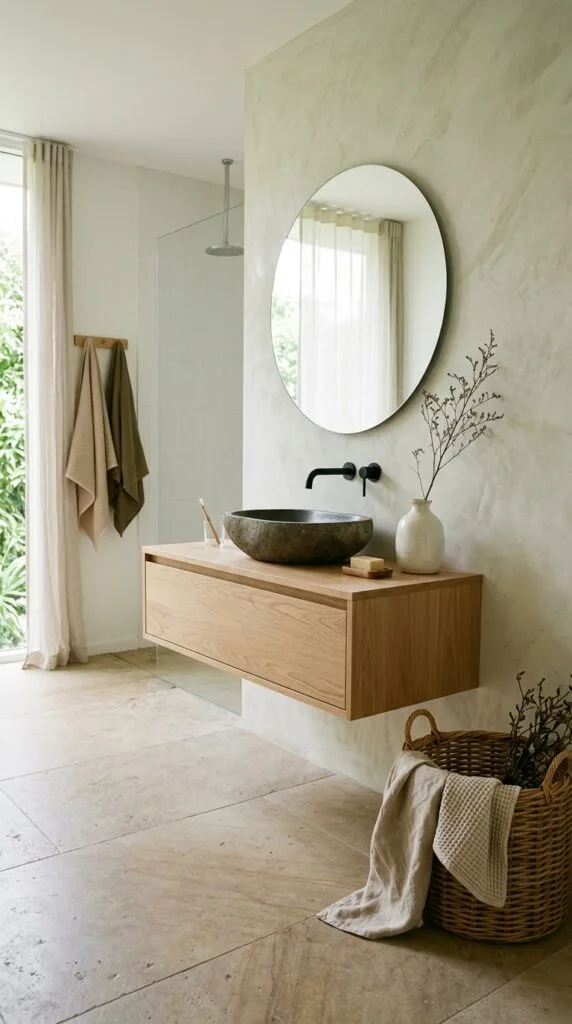
A floating oak vanity instantly creates a calm and airy feeling. By lifting the cabinet off the floor, the room appears more spacious while the natural wood introduces warmth that balances clean white walls and stone finishes. The simple lines allow the wood grain to become the main feature without making the space feel busy.
Choose light oak or ash with flat panel doors and hidden handles for a clean appearance. Leave open floor space beneath the vanity or place one woven basket underneath for towel storage. In my experience, the biggest mistake is choosing overly dark wood that can make smaller bathrooms feel heavier. Floating vanities generally cost between $300 and $900, depending on size and material.
2. Build Your Color Palette Around Warm Neutrals
The beauty of Japandi style comes from quiet colors that help your mind relax. Soft white, sand, beige, warm gray, mushroom, and muted taupe create a soothing backdrop that feels bright without looking stark. These shades reflect natural light beautifully and make wood textures stand out.
Keep walls, flooring, and larger fixtures within the same earthy palette while adding contrast through black accents or natural greenery. What I personally love about neutral colors is that they stay timeless even as decorating trends change. Paint and accessories for this update typically cost between $40 and $150.
3. Japandi Bathroom with Natural Stone Surfaces
Natural stone introduces quiet texture without overwhelming the room. A stone countertop, sink, or accent wall adds depth while maintaining the clean simplicity that defines Japandi interiors. Gentle variations in color and texture help the bathroom feel connected to nature.
Choose limestone, travertine, marble with soft veining, or high quality stone look porcelain if you’re working with a tighter budget. Pair stone with wood and linen for balance rather than mixing too many different materials. A lot of people overlook texture, but it makes all the difference in a simple room. Stone surfaces typically range from $150 to $800 depending on the installation.
4. Keep Countertops Almost Empty
One of the easiest ways to create a serene bathroom is to remove visual clutter. A nearly empty countertop allows the materials and lighting to stand out while making the room feel larger and easier to clean. In a Japandi bathroom, less truly feels more.
Store skincare products, toiletries, and cleaning supplies inside drawers or cabinets. Leave only a ceramic soap dispenser, a small tray, and perhaps one plant or candle on display. In my experience, the biggest mistake is letting everyday bottles gradually take over the vanity. A few simple organizers usually cost between $10 and $40, making this one of the most affordable decor updates.
5. Add Texture with Linen and Cotton
A minimalist bathroom can still feel warm and inviting when you layer in natural textiles. Soft linen towels, a woven cotton bath mat, and a simple fabric shower curtain add comfort without introducing unnecessary patterns or colors. The gentle texture makes the space feel lived in rather than overly polished.
Choose towels in shades like oatmeal, ivory, or light gray and keep the palette consistent throughout the room. I always recommend buying a few high quality towels instead of several mismatched sets because the coordinated look feels much calmer. A full set of natural fiber towels and a bath mat usually costs between $50 and $150.
6. Use Open Shelving with Purpose
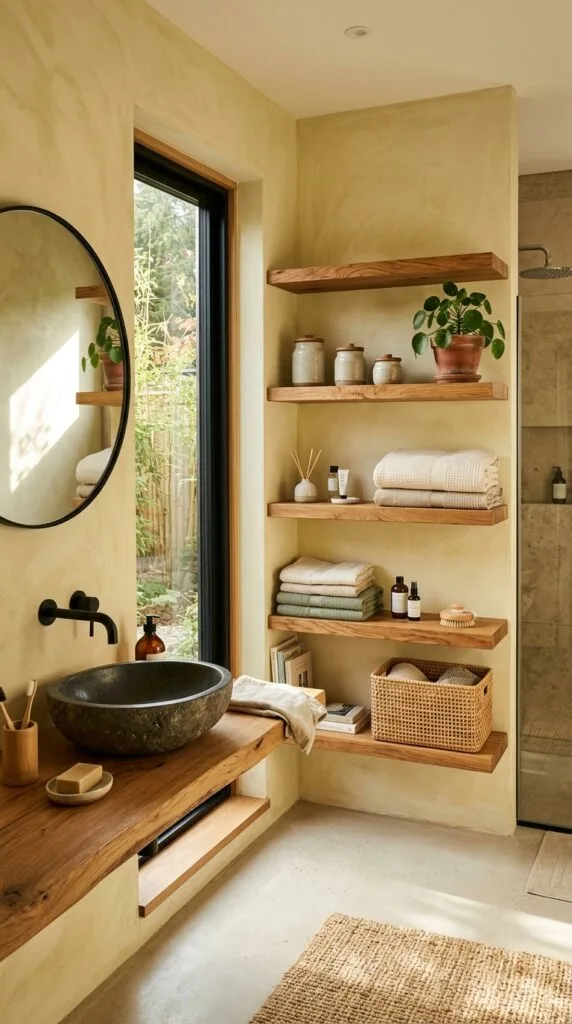
Open shelving works beautifully in Japandi design when it stays intentional and uncluttered. A few folded towels, ceramic jars, and a small plant create a balanced display that feels practical and decorative at the same time. The negative space between objects is just as important as the objects themselves.
Install simple floating shelves in oak or ash and avoid filling every inch with storage containers. What I personally love about this idea is that it encourages you to keep only the items you actually use. Quality wood shelves generally range from $40 to $120.
7. Bring in Greenery for a Fresh, Calm Atmosphere
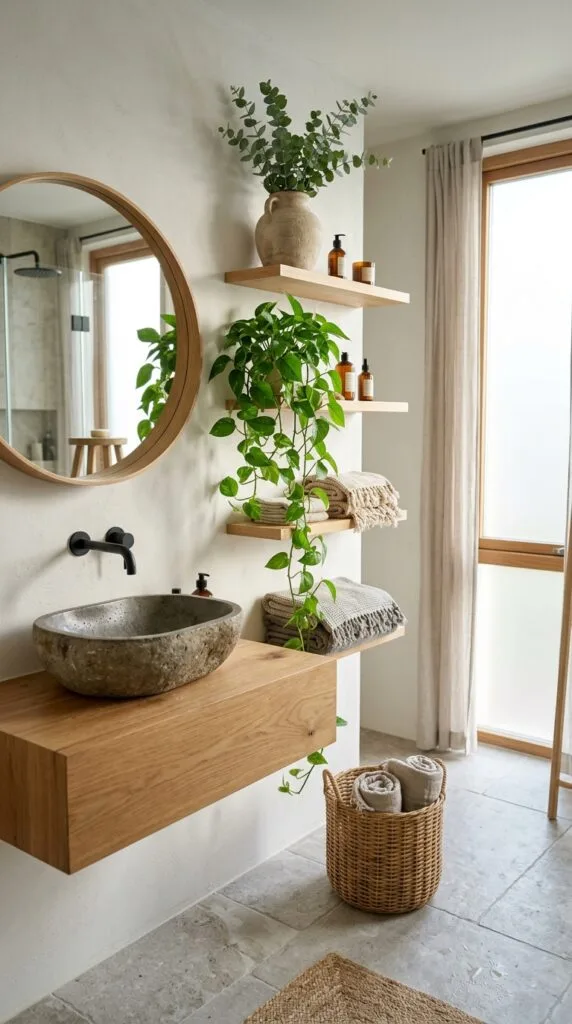
Plants are one of the easiest ways to soften a minimalist bathroom. A trailing pothos, a small snake plant, or a few eucalyptus stems add life and color while keeping the room connected to nature. The greenery feels refreshing without making the space look busy.
Choose low maintenance plants that tolerate humidity and indirect light. Place them near a window or on a floating shelf where they can receive enough brightness. A lot of people add too many decorative objects, but one healthy plant often creates a stronger impact than several accessories. Small bathroom plants usually cost between $10 and $40.
8. Choose Soft, Layered Lighting
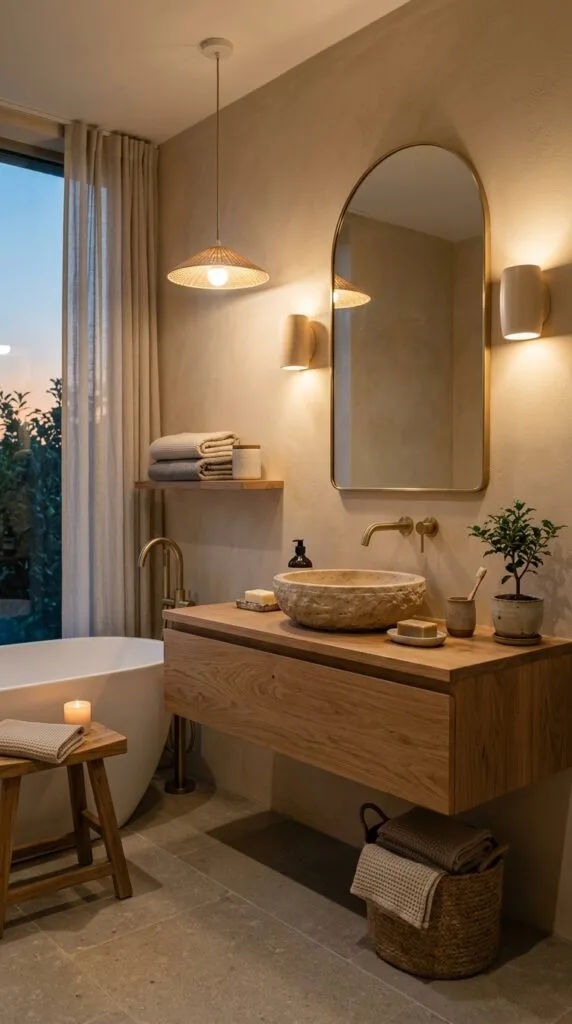
Harsh overhead lighting can make even the most beautiful bathroom feel cold. Japandi spaces feel more relaxing when the light is warm and layered. Wall sconces, a simple pendant, and natural daylight create gentle shadows that highlight wood grain and stone textures.
Use warm white LED bulbs around 2700K to 3000K and add dimmers if possible. I always recommend avoiding cool blue toned bulbs because they can make natural materials look flat and uninviting. A lighting upgrade generally costs between $100 and $350 depending on the fixtures you choose.
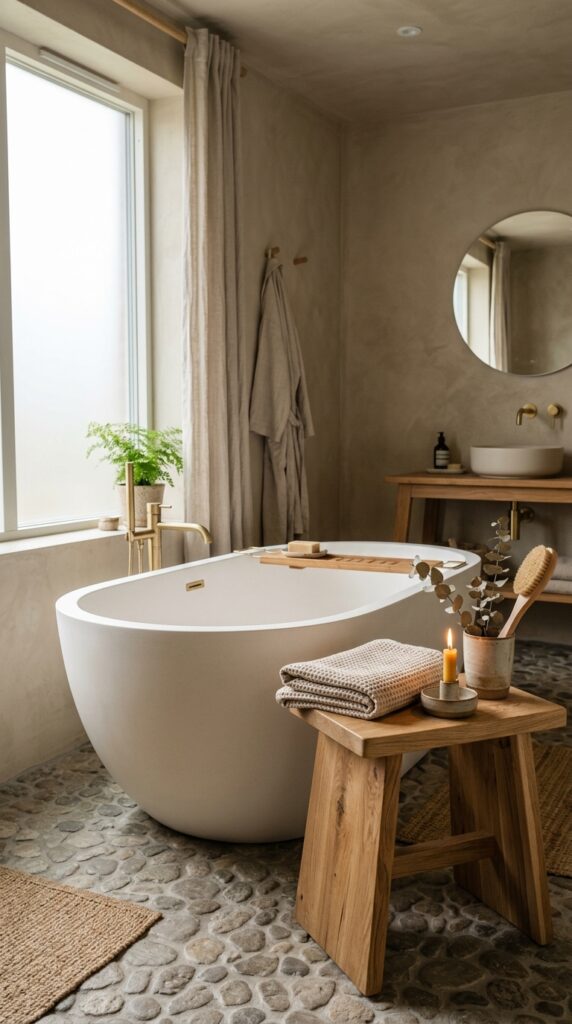
9. Add a Wooden Stool Beside the Tub
A simple wooden stool adds both function and warmth. It can hold a folded towel, a candle, a book, or a cup of tea while introducing another layer of natural texture. The clean lines keep it from feeling decorative in an unnecessary way.
Choose solid teak, oak, or cedar with a matte finish that can handle moisture. Leave most of the surface clear so it remains useful rather than becoming another storage spot. What I personally love about this detail is that it makes the bathroom feel more like a small spa retreat. Wooden stools typically cost between $50 and $150.
10. Let Empty Space Become Part of the Design
The final and perhaps most important Japandi idea is learning to appreciate empty space. Not every wall needs art, not every shelf needs decor, and not every corner needs a plant. Leaving room for the eye to rest creates the calm, uncluttered feeling that makes this style so appealing.
Edit your bathroom regularly and remove anything that doesn’t serve a purpose or bring you joy. In my experience, this step has the biggest impact because it changes how the room feels every day. The best part is that it costs absolutely nothing.
Conclusion
Creating a peaceful bathroom doesn’t require expensive renovations or complicated design plans. These Top Japandi Bathroom Design Ideas for a Serene Space show that simple materials, soft colors, and thoughtful organization can completely change how your bathroom feels. Natural wood, stone, linen, greenery, and warm lighting work together to create a space that feels calm from the moment you walk in.
Start with one or two updates that fit your budget, such as clearing the countertops, adding linen towels, or introducing a floating wood shelf. Small changes often make the biggest difference because they improve both the appearance and the daily experience of using the room.
As your bathroom evolves, focus on keeping only the elements that feel useful and comforting. That’s the heart of Japandi design: creating a space that supports a slower, more peaceful routine without unnecessary clutter or decoration.
Which of these Top Japandi Bathroom Design Ideas for a Serene Space would you try first? I’d love to hear how you’re bringing this calming style into your home.
FAQs
What is a Japandi bathroom?
A Japandi bathroom combines Japanese minimalism with Scandinavian warmth. It uses natural materials, soft neutral colors, simple furniture, and uncluttered layouts to create a calm and functional space.
What colors work best in a Japandi bathroom?
Warm white, beige, sand, taupe, mushroom, and soft gray are the most common choices. These colors create a peaceful atmosphere while allowing wood and stone textures to stand out.
Can I create a Japandi bathroom on a budget?
Yes. Start with affordable updates like linen towels, woven baskets, a wooden tray, and decluttering your countertops. You can gradually add larger pieces such as a floating vanity or stone accents over time.
What materials should I use for a Japandi bathroom?
Natural wood, stone, linen, cotton, ceramic, and woven fibers are all excellent choices. These materials add warmth and texture while maintaining the clean simplicity of the style.
How do I keep a Japandi bathroom from feeling too plain?
Use texture rather than extra decoration. Wood grain, stone surfaces, woven baskets, linen fabrics, and a few carefully chosen plants add depth and warmth without making the room feel busy.