Wabi-Sabi Bathroom: 27 Ideas to Embrace Imperfection
Introduction
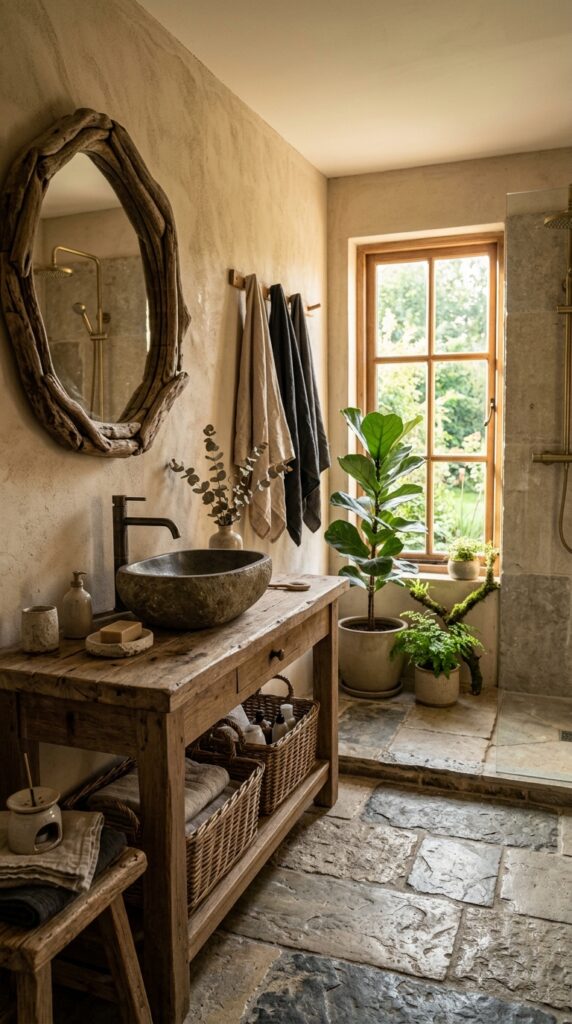
Bathrooms often end up feeling too polished, too busy, or filled with trends that quickly lose their appeal. If you’ve been searching for a style that feels calm, welcoming, and connected to nature, a Wabi-Sabi bathroom might be exactly what you need. Rooted in the Japanese philosophy of appreciating simplicity and natural imperfections, Wabi-Sabi encourages you to see beauty in weathered wood, handmade pottery, textured stone, and spaces that feel lived in rather than overly decorated.
The best part is that creating this look doesn’t require an expensive renovation. Small changes like choosing natural materials, reducing clutter, and embracing organic textures can completely change how your bathroom feels. Instead of chasing flawless finishes, you’ll create a space that feels peaceful every single day.
In this guide, you’ll discover 27 Wabi-Sabi bathroom ideas to embrace imperfection. From earthy color palettes to handmade accessories and timeless materials, each idea will help you create a bathroom that feels warm, balanced, and easy to enjoy. These ideas also pair beautifully with modern home decor trends while keeping comfort and simplicity at the center of every design choice.
1. Start with an Earthy Neutral Color Palette
A soft palette of warm white, clay, beige, taupe, sand, and stone gray creates the calm foundation that every Wabi-Sabi bathroom needs. These quiet colors make the room feel open while allowing natural textures to become the focus instead of bold decorations. Morning light reflects gently across the walls, creating a peaceful atmosphere that instantly slows the pace of your day.
Choose matte paint finishes rather than glossy ones, and combine several earthy tones instead of relying on a single color. In my experience, the biggest mistake here is adding bright accent colors that interrupt the relaxed mood. A fresh coat of paint usually costs between $40 and $150.
2. Choose a Solid Wood Vanity
Natural wood immediately brings warmth into a bathroom filled with tile and stone. Visible grain patterns, small knots, and slightly uneven finishes celebrate the beauty of real materials instead of hiding them. The result feels relaxed and timeless rather than overly refined.
Look for oak, walnut, reclaimed wood, or teak with a matte protective finish. Pair the vanity with a simple stone countertop for balance. What I personally love about natural wood is that it becomes more beautiful as it ages. Expect to spend $350 to $1,200 depending on size and material.
3. Wabi-Sabi Bathroom with Handmade Ceramic Decor
Handmade pottery adds personality that factory produced accessories simply cannot match. Slightly uneven edges, soft matte finishes, and subtle variations in glaze create quiet character throughout the room. Every piece feels unique while supporting the relaxed atmosphere.
Use handmade soap dishes, toothbrush holders, vases, and storage jars in muted earthy colors. A lot of people skip this step, but replacing matching plastic accessories with handcrafted ceramics makes an immediate difference. Handmade ceramic pieces generally cost $15 to $80 each.
4. Let Stone Become the Centerpiece
Natural stone brings texture that never feels forced. Whether it’s a vessel sink, countertop, or feature wall, stone creates quiet movement through subtle color variations and organic patterns. Every surface feels connected to nature.
Choose travertine, limestone, river stone, or honed marble with matte finishes. I always recommend avoiding highly polished surfaces because softer finishes suit Wabi-Sabi much better. Stone sinks generally range from $180 to $600.
5. Add Open Wooden Shelves
Floating wood shelves create practical storage while keeping the room visually light. Rolled towels, ceramic containers, candles, and small plants become part of the decor without feeling cluttered.
Choose thick natural wood shelves with visible grain and avoid overcrowding them. Leave empty space between decorative objects so each piece can stand on its own. Wooden shelving usually costs $40 to $150.
6. Wabi-Sabi Bathroom with Limewash Walls
Limewash walls bring gentle movement and depth that standard paint cannot match. The soft, cloud-like texture catches natural light differently throughout the day, making the bathroom feel calm and lived in. Instead of perfectly smooth walls, you get subtle variations that celebrate handcrafted finishes and create a quiet, organic backdrop for the rest of the room.
Choose warm white, mushroom, sand, or light clay shades to maintain the relaxed atmosphere. Pair limewash with natural wood, stone, and linen to keep the design balanced. In my experience, the biggest mistake here is adding glossy fixtures that compete with the soft wall texture. Limewash paint generally costs between $60 and $180, depending on the size of the room and the finish you choose.
7. Decorate with Linen Towels
Soft linen towels bring warmth without relying on bold colors or decorative patterns. Their natural wrinkles and woven texture fit beautifully within a Wabi-Sabi bathroom because they feel authentic rather than overly polished. Hanging linen towels on wooden hooks also adds a relaxed, everyday charm.
Choose muted shades like oatmeal, ivory, stone gray, or soft sage. Fold some neatly while allowing others to hang naturally for a more comfortable look. What I personally love about linen is that it becomes softer with every wash while maintaining its natural texture. Quality linen towels typically cost between $25 and $80 each.
8. Bring Nature Indoors with Simple Greenery
Plants soften hard bathroom surfaces and help the room feel connected to the outdoors. A trailing pothos, a fern near the window, or eucalyptus stems in a ceramic vase introduce gentle color without overwhelming the design. The greenery creates a refreshing atmosphere while keeping the room simple.
Choose plants that thrive in humidity and indirect sunlight. Place them where they receive enough light but don’t clutter your countertops. A lot of people add too many decorative items, but a few healthy plants often create a stronger impact than shelves full of accessories. Small indoor plants generally cost between $10 and $40.
9. Wabi-Sabi Bathroom with Matte Black Fixtures
Matte black fixtures create gentle contrast without feeling harsh. Against warm wood, textured walls, and natural stone, black faucets and shower hardware provide definition while maintaining the simple character of the room. The finish feels modern while still respecting the quiet nature of Wabi-Sabi design.
Use matte black consistently throughout the bathroom instead of mixing several metal finishes. Pair it with earthy colors and natural materials for a balanced appearance. I always recommend choosing quality finishes because inexpensive coatings tend to wear unevenly over time. New bathroom fixtures generally range from $120 to $500.
10. Choose an Organic Shaped Mirror
An irregular mirror brings gentle movement into a room filled with straight lines. The soft curves echo shapes found in nature, making the bathroom feel more relaxed and inviting. Rather than acting as a dramatic statement piece, the mirror quietly complements the surrounding materials.
Choose a frameless mirror or one with a slim wooden frame. Position it above a floating vanity where it reflects natural light from a nearby window. In my experience, oversized ornate frames distract from the peaceful mood, while simple organic shapes keep the room balanced. Organic mirrors usually cost between $100 and $350.
11. Display Everyday Items in Handmade Trays
One of the simplest ways to bring Wabi-Sabi style into your bathroom is by treating everyday essentials as part of the design. A handmade wooden or ceramic tray holding a soap dispenser, a small candle, and a folded washcloth creates a calm focal point without adding clutter. The slightly uneven edges and natural materials make the arrangement feel relaxed instead of overly styled.
Choose trays made from reclaimed wood, handmade clay, or natural stone. Keep only the items you use every day on display and store everything else inside drawers. What I personally love about this idea is that it makes your daily routine feel more intentional without requiring expensive updates. Handmade trays generally cost between $20 and $60, making this an easy budget friendly improvement.
12. Wabi-Sabi Bathroom with Textured Stone Flooring
Natural stone flooring adds quiet character underfoot while creating a strong connection to nature. Subtle variations in color, texture, and shape make every step feel different, giving the bathroom a sense of authenticity that polished porcelain tiles often lack. The room instantly feels grounded and timeless.
Choose honed limestone, slate, travertine, or textured porcelain that closely resembles natural stone if you’re working with a smaller budget. A lot of people choose glossy flooring because it looks brighter, but matte finishes feel warmer and are usually safer in wet areas. Depending on the material, expect to spend $6 to $20 per square foot.
13. Keep the Countertops Intentionally Minimal
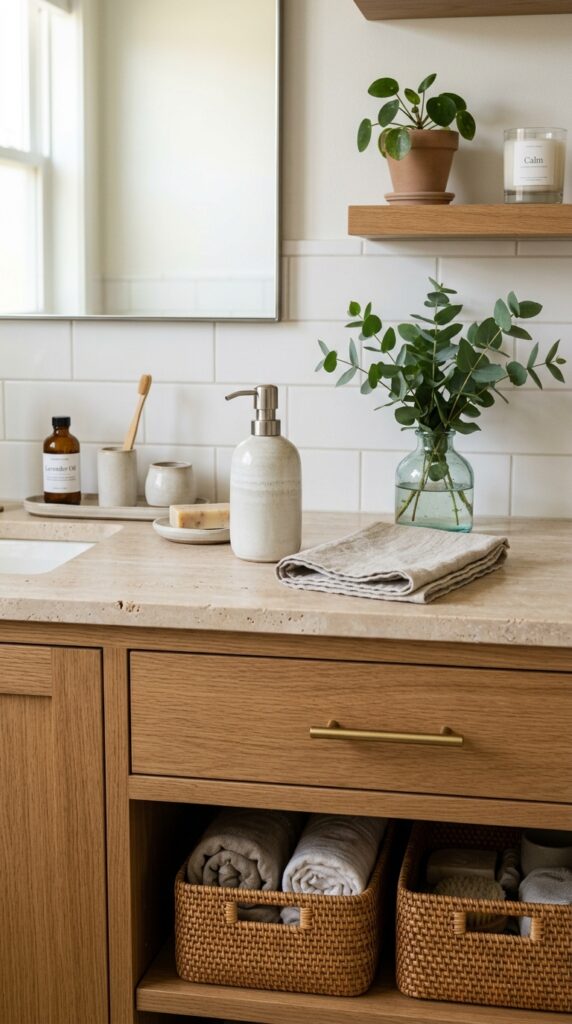
A Wabi-Sabi bathroom isn’t empty, but every object has a purpose. A clean countertop with one ceramic soap dispenser, a folded hand towel, and a small branch of greenery feels much more relaxing than a surface crowded with products. The open space allows the natural materials to stand out.
Store skincare products, toiletries, and cleaning supplies inside drawers or woven baskets to maintain a simple appearance. In my experience, the biggest mistake is leaving too many bottles on display because they quickly create visual clutter. Organizing trays and baskets generally cost between $15 and $50, making this one of the easiest updates you can make.
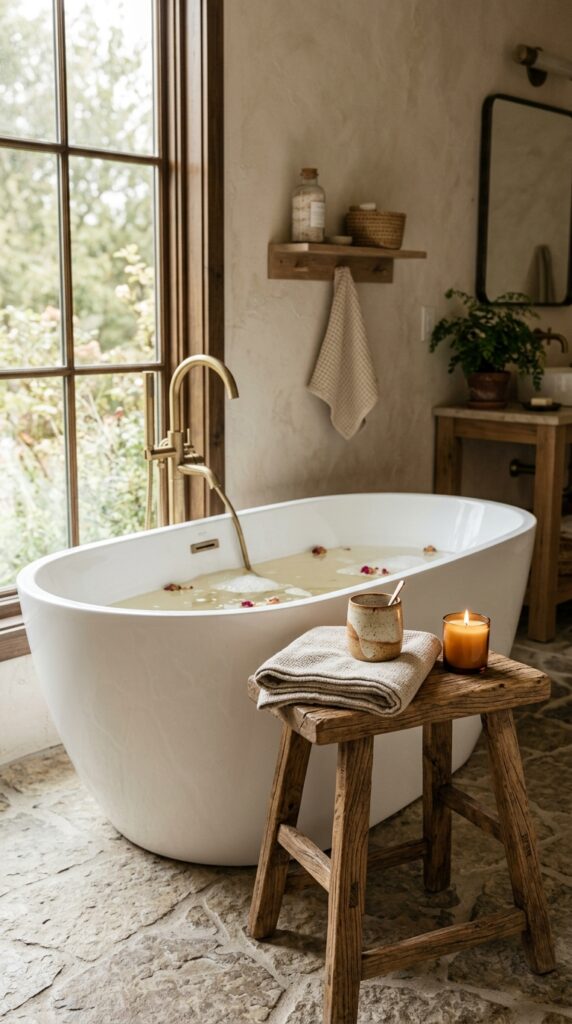
14. Add a Wooden Stool Beside the Bathtub
A simple wooden stool brings both beauty and function to a Wabi-Sabi bathroom. It can hold a towel, a candle, a favorite book, or a ceramic cup while adding another layer of natural texture. The slightly worn finish makes the space feel welcoming instead of overly polished.
Choose solid teak, cedar, or reclaimed wood that can handle moisture. Leave the stool mostly clear so it remains useful rather than becoming another display shelf. I always recommend selecting untreated or lightly finished wood because natural aging adds to its character over time. Wooden stools typically cost between $50 and $150.
15. Use Woven Baskets Instead of Plastic Storage
Storage can still look beautiful when you choose natural materials. Woven baskets bring warmth, texture, and practical organization while hiding extra towels, toiletries, and everyday essentials. Their handcrafted appearance fits naturally into a Wabi-Sabi bathroom and softens hard surfaces like tile and stone.
Choose baskets made from seagrass, rattan, or water hyacinth in natural tones. Place larger baskets beneath the vanity and smaller ones on open shelves. What I personally love about woven storage is that it keeps the room organized without looking overly structured. Quality baskets generally range from $15 to $70 depending on their size and material.
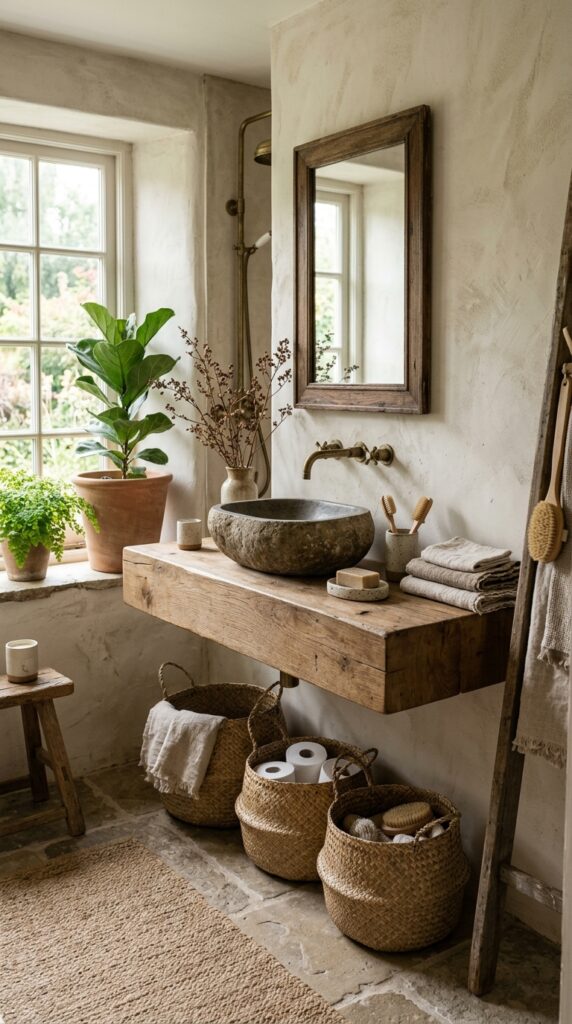
16. Wabi-Sabi Bathroom with Soft Layered Lighting
Lighting shapes the mood of a bathroom just as much as the finishes you choose. A Wabi-Sabi bathroom feels most inviting when the light is warm, gentle, and layered instead of bright and clinical. Soft wall sconces, a small pendant, and natural daylight work together to create quiet shadows that highlight wood grain, textured plaster, and handmade ceramics.
Choose warm white LED bulbs around 2700K to 3000K for a comfortable glow. Add dimmer switches if possible so you can adjust the brightness throughout the day. In my experience, one harsh ceiling light flattens the room and hides the beauty of natural materials. A layered lighting upgrade usually costs between $120 and $450, depending on the fixtures you select.
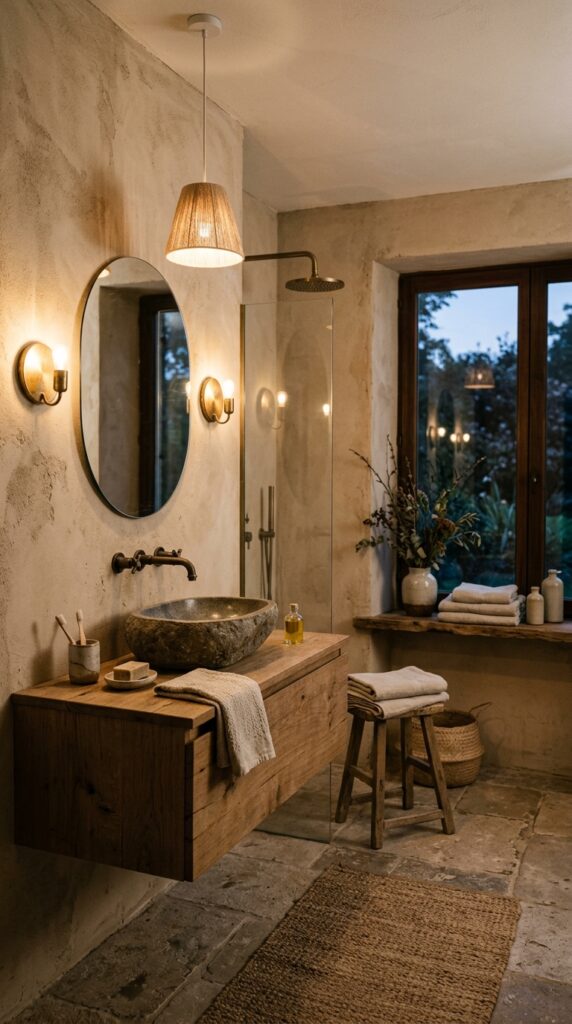
17. Leave Empty Space to Let the Room Breathe
One of the most overlooked ideas in Wabi-Sabi design is allowing empty space to exist. Not every shelf, countertop, or wall needs decoration. Open areas give your eyes a place to rest and make the materials you do choose feel more meaningful. The room becomes quieter and easier to enjoy.
Edit your accessories every few months and remove anything that no longer serves a purpose. A lot of people think adding more decor creates warmth, but thoughtful restraint often has a much bigger impact. This idea costs nothing, yet it can completely change how your bathroom feels.
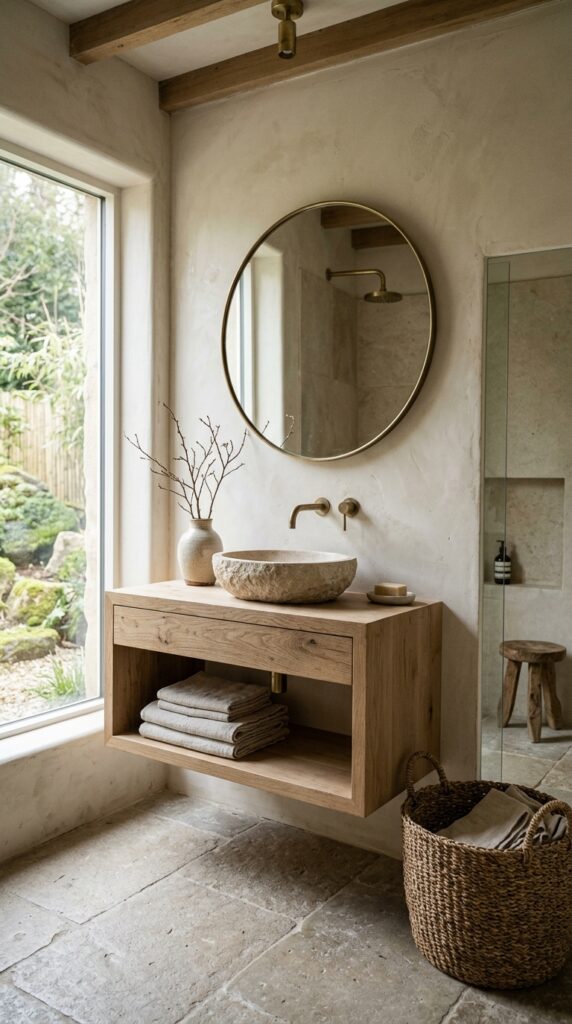
18. Display Handmade Wall Art
Simple artwork inspired by nature adds personality without overwhelming the room. Handmade prints, abstract ink paintings, or textured fiber art create quiet interest while complementing the natural materials throughout the bathroom. The artwork should feel calm rather than acting as the main attraction.
Choose one larger piece instead of several small frames. Wooden frames in oak or walnut pair beautifully with earthy color palettes. What I personally love about handmade art is that small imperfections make each piece feel more personal. Quality artwork generally ranges from $40 to $200.
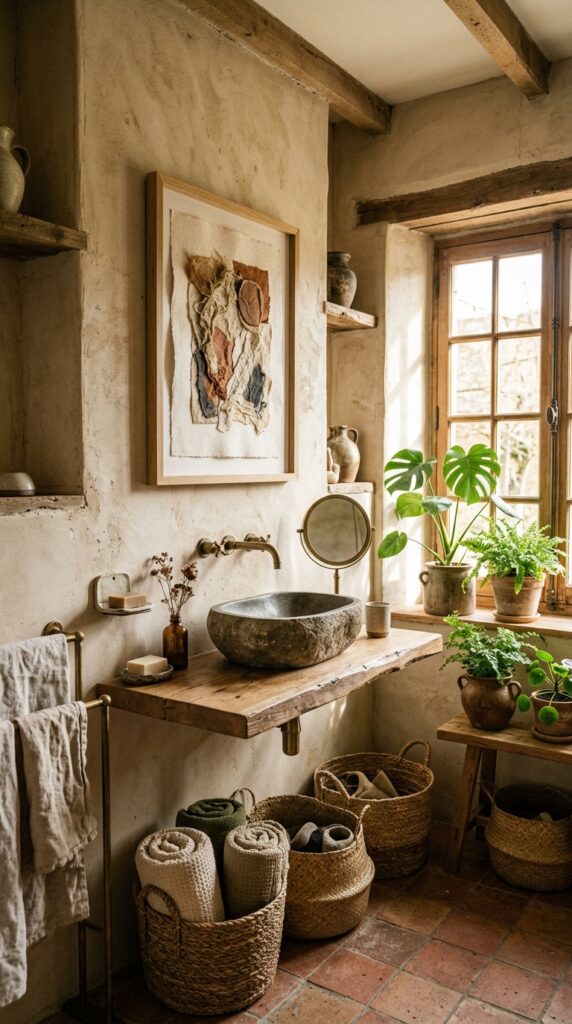
19. Wabi-Sabi Bathroom with a Freestanding Stone Bathtub
A freestanding bathtub carved from stone becomes the quiet centerpiece of the room. Its organic shape, subtle texture, and natural color create a calming atmosphere that encourages slow evenings and relaxing routines. The weight and presence of stone give the bathroom a grounded feeling that never goes out of style.
If natural stone isn’t within your budget, choose a matte composite bathtub with a similar appearance. Keep the surrounding decor simple so the bathtub remains the focus. I always recommend leaving extra space around freestanding tubs whenever possible because it helps the room feel open. Stone style tubs typically range from $900 to $3,500.
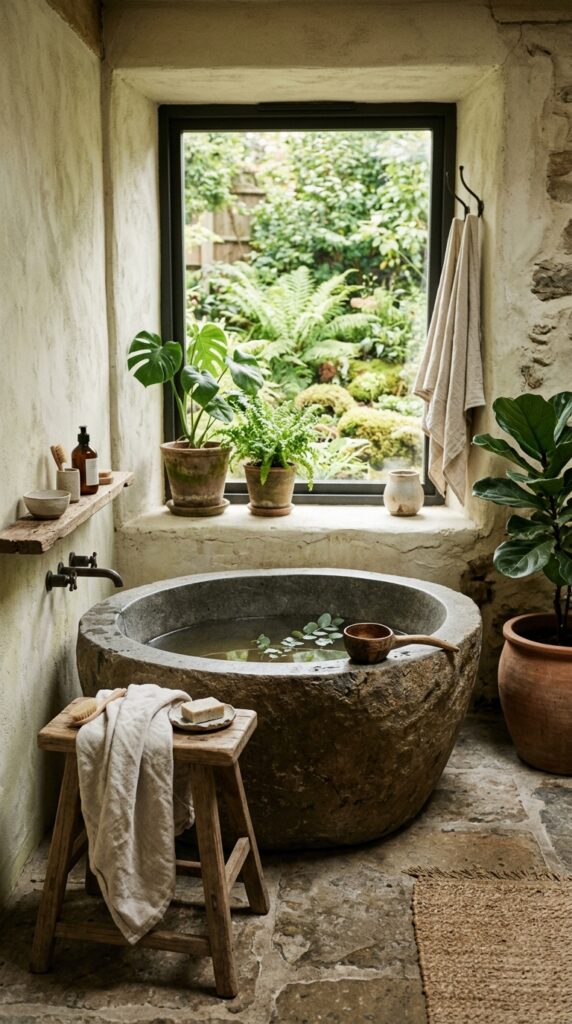
20. Introduce the Gentle Scent of Nature
A Wabi-Sabi bathroom appeals to more than just the eye. Natural scents like cedar, hinoki, sandalwood, eucalyptus, or lavender create a relaxing environment that feels connected to the outdoors. The subtle fragrance helps turn everyday routines into calming moments.
Use essential oil diffusers, soy candles, or dried eucalyptus bundles instead of heavily scented artificial products. In my experience, overly strong fragrances distract from the peaceful atmosphere rather than enhancing it. Natural candles and diffusers generally cost between $15 and $60.
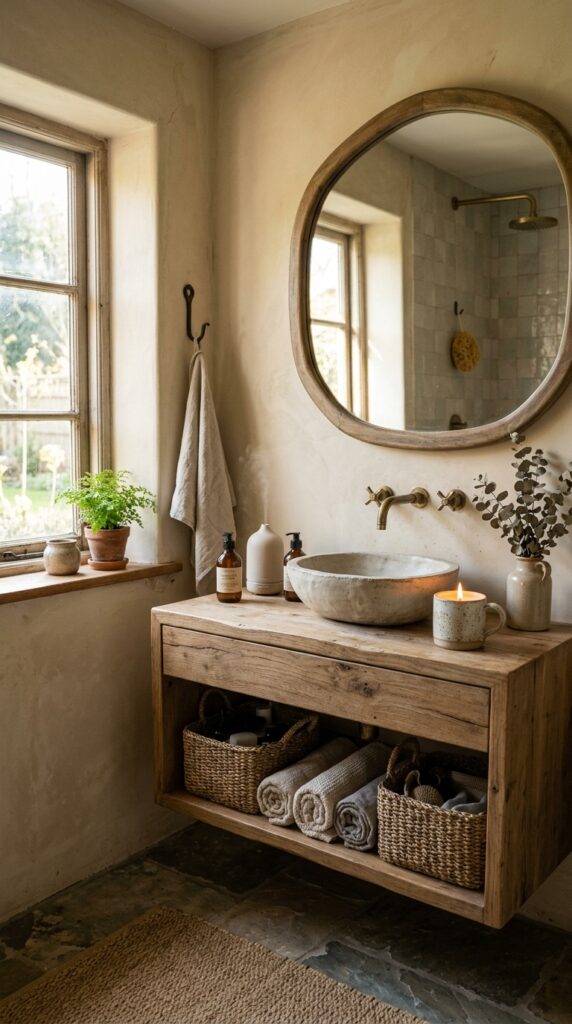
21. Add a Reclaimed Wood Accent Wall
A reclaimed wood accent wall brings warmth and history into a Wabi-Sabi bathroom. Every board tells its own story through natural knots, faded grain, and subtle color changes. Instead of looking worn out, these imperfections create depth and character that new materials often lack. Combined with soft lighting and stone finishes, the wall becomes a quiet focal point that feels grounded and welcoming.
Choose reclaimed wood that has been properly sealed for humid environments. Install it behind the vanity or on a feature wall away from direct water exposure. In my experience, covering every wall with wood can make a bathroom feel heavy, so limiting it to one area keeps the room balanced. Depending on the material, reclaimed wood accents generally cost between $150 and $600.
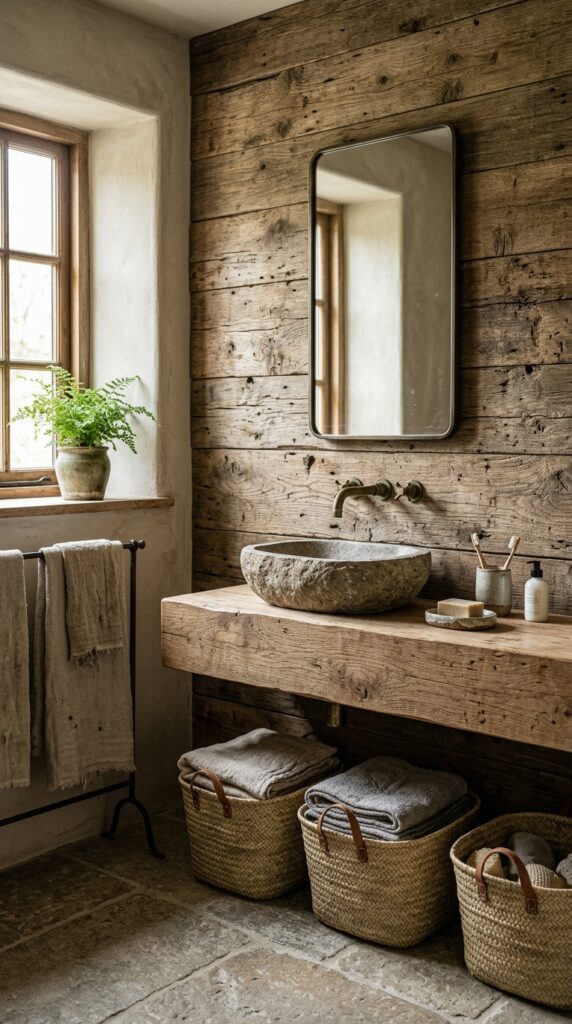
22. Wabi-Sabi Bathroom with Soft Linen Curtains
Replacing heavy blinds with simple linen curtains instantly softens a bathroom. Natural linen gently filters sunlight, filling the room with a warm glow while maintaining privacy. The relaxed folds and slightly textured fabric add movement without introducing unnecessary decoration.
Choose unlined linen in shades like ivory, oatmeal, or light flax. Allow the curtains to hang naturally rather than keeping them tightly pressed. What I personally love about linen is that its gentle wrinkles add to the charm instead of taking away from it. Linen curtains generally range from $40 to $120 per panel.
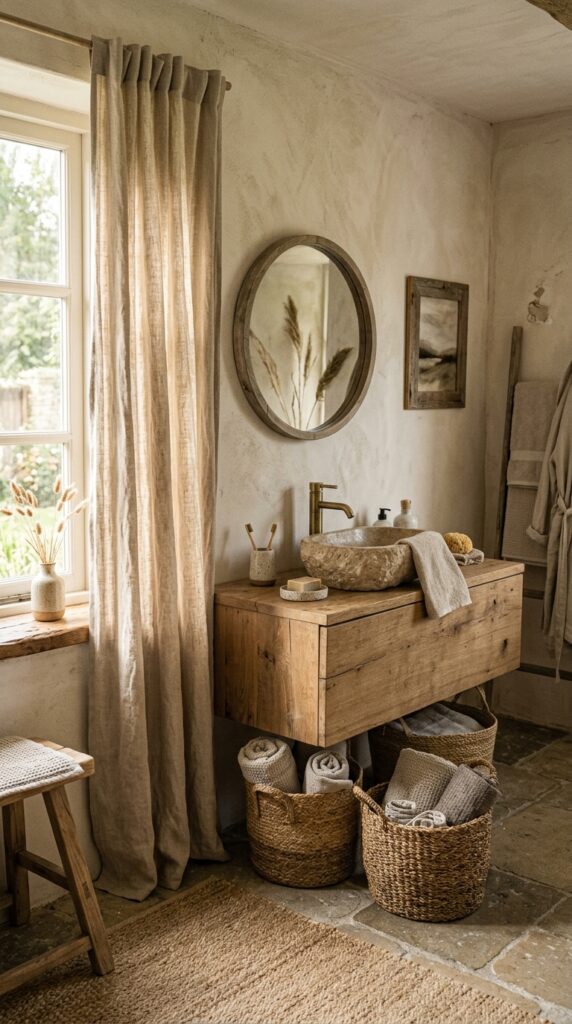
23. Embrace Patina Instead of Chasing Newness
One of the core ideas behind Wabi-Sabi is appreciating materials that age gracefully. A slightly weathered wooden stool, naturally darkened brass, or a stone countertop that develops subtle character over time adds authenticity to your bathroom. These signs of use tell a story instead of needing to be hidden.
Choose durable natural materials that improve with age rather than replacing everything at the first sign of wear. A lot of people think every surface should stay untouched forever, but gentle aging often adds more beauty than constant replacement. This approach can actually save money while creating a more meaningful space.
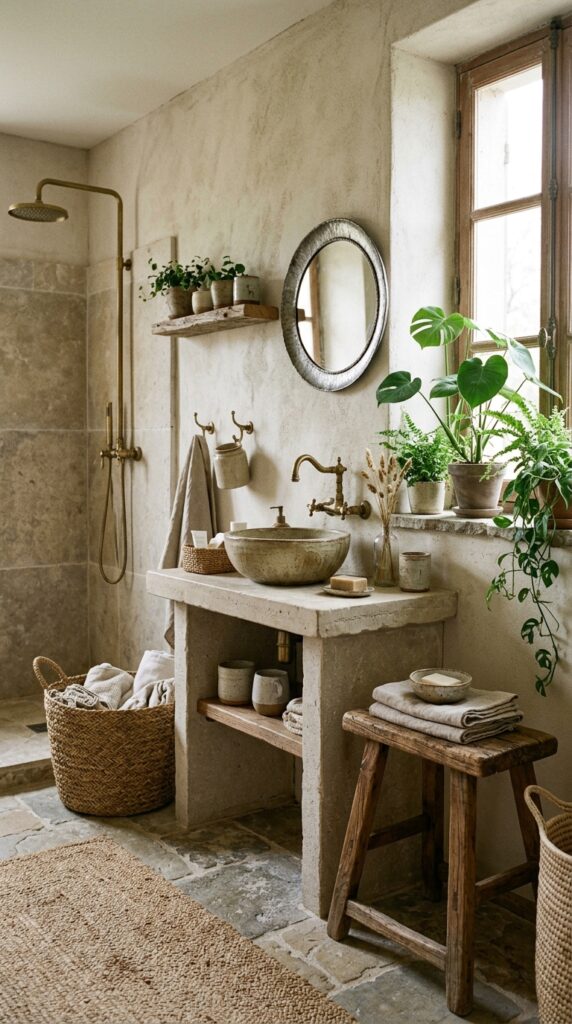
24. Style with Handmade Soap and Natural Bath Accessories
Small daily rituals feel more enjoyable when surrounded by beautiful natural materials. Handmade olive oil soap, wooden bath brushes, pumice stones, and ceramic containers create an everyday luxury without making the bathroom feel crowded. Their organic textures fit naturally within a Wabi-Sabi design.
Arrange these essentials on a small stone or wooden tray and avoid displaying unnecessary products. I always recommend choosing reusable accessories instead of disposable plastic packaging because they age much more gracefully. A collection of natural bath accessories usually costs between $20 and $80.
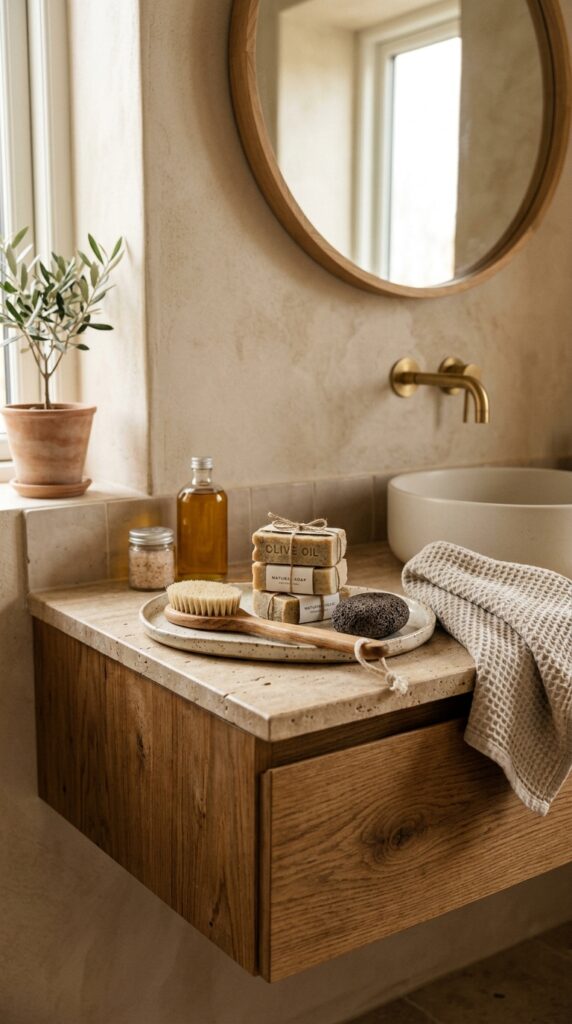
25. Wabi-Sabi Bathroom with a Low Wooden Bench
A low wooden bench creates a peaceful spa inspired feeling while adding practical seating. It can hold folded towels, a basket of bath essentials, or simply provide a quiet place to pause during your daily routine. The clean lines and natural wood help balance the stone and plaster surfaces throughout the room.
Choose solid oak, teak, or reclaimed wood with a matte finish. Leave part of the bench empty so it doesn’t become another storage surface. In my experience, this small piece of furniture makes larger bathrooms feel warmer without adding visual clutter. Wooden benches generally cost between $80 and $250.
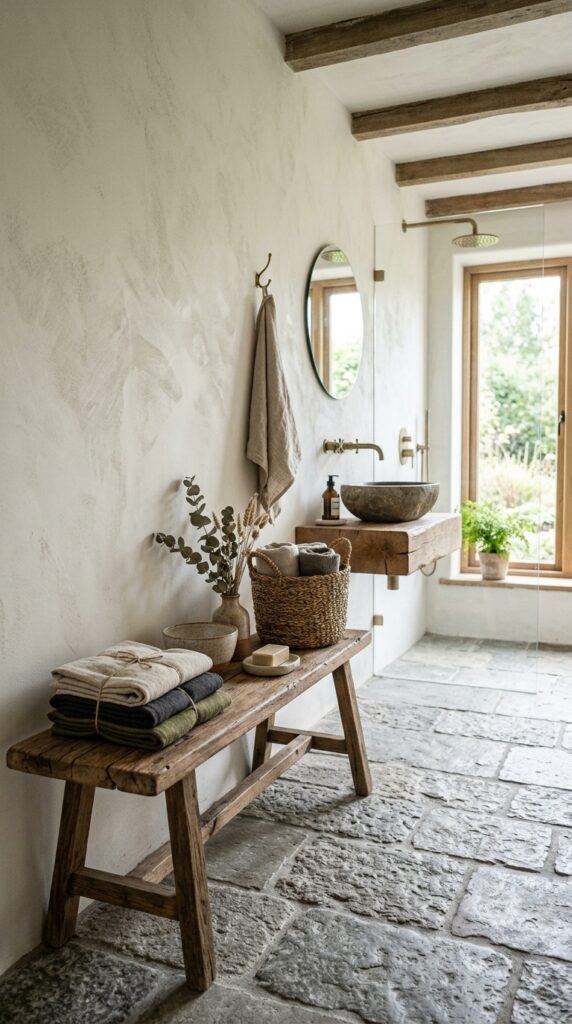
26. Keep Decorations Meaningful and Minimal
Instead of filling every shelf with decorative objects, choose a few pieces that genuinely bring you joy. A handcrafted vase, a small stone sculpture, or a favorite ceramic bowl often creates a stronger impression than dozens of accessories. The room feels more personal because every object has a reason for being there.
Edit your decor regularly and remove anything that no longer fits the calm atmosphere. What I personally love about this approach is that cleaning becomes easier while the room always feels fresh. Most meaningful decorative pieces can be found for $15 to $100, depending on the material and craftsmanship.
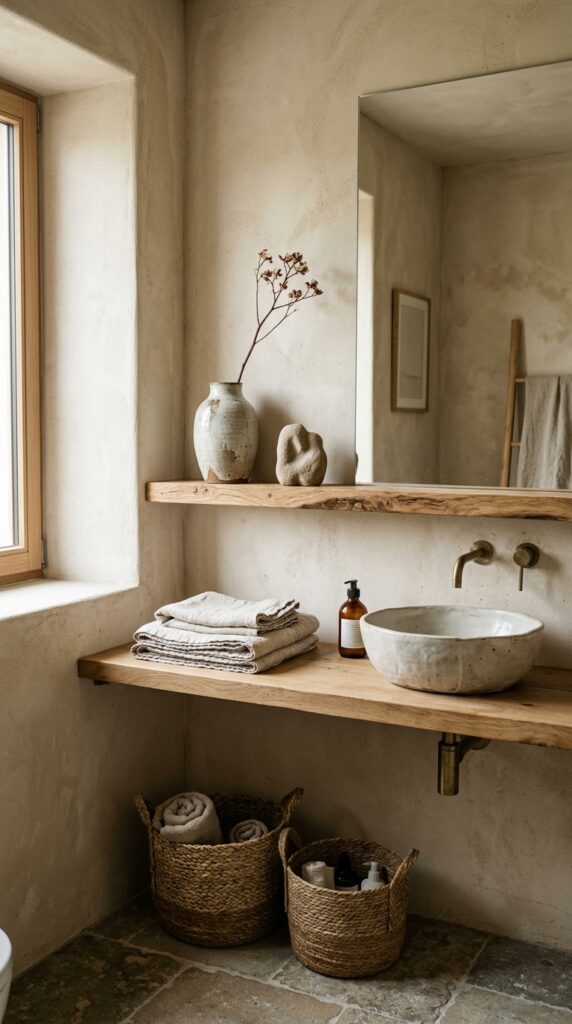
27. Create a Bathroom That Ages Gracefully
The most beautiful Wabi-Sabi bathroom isn’t the newest one. It’s the one that becomes richer over time as natural materials develop character and everyday routines leave gentle reminders of a life well lived. Soft wood gains depth, linen becomes more comfortable, and stone develops subtle variation that makes the room uniquely yours.
Focus on choosing timeless materials instead of chasing short lived trends. Invest where quality matters and allow the room to evolve naturally over the years. A lot of people think they need to replace everything to refresh a bathroom, but Wabi-Sabi reminds us that lasting beauty often comes from caring for what we already have.
Conclusion
A Wabi-Sabi bathroom is more than a decorating style. It’s a reminder that your home doesn’t need flawless finishes or expensive trends to feel beautiful. Natural materials, handmade pieces, soft textures, and thoughtful simplicity create a bathroom that feels peaceful every time you step inside.
You don’t have to renovate the entire room to embrace this approach. Start with one or two changes, such as replacing plastic accessories with handmade ceramics, adding linen towels, introducing natural wood, or clearing unnecessary clutter from your countertops. Small updates often have the greatest impact because they change how the space feels every day.
As your bathroom evolves, let it tell its own story through materials that age gracefully instead of trying to keep everything looking brand new. That’s the quiet beauty at the heart of Wabi-Sabi design.
Which of these 27 Wabi-Sabi bathroom ideas to embrace imperfection would you try first? I’d love to hear how you’re bringing this timeless style into your home.
FAQs
What is a Wabi-Sabi bathroom?
A Wabi-Sabi bathroom is inspired by the Japanese philosophy of finding beauty in simplicity and natural imperfections. It focuses on organic materials, muted colors, handcrafted pieces, and uncluttered spaces that feel calm and lived in.
What colors work best in a Wabi-Sabi bathroom?
Warm white, beige, sand, taupe, clay, mushroom, stone gray, and soft earthy greens all work beautifully. These colors create a peaceful backdrop while allowing natural textures to stand out.
Can I create a Wabi-Sabi bathroom on a budget?
Yes. Start with affordable changes like linen towels, woven baskets, handmade ceramics, greenery, and decluttering your countertops. You can gradually add larger elements like wood furniture or stone accessories over time.
What materials should I use for a Wabi-Sabi bathroom?
Natural wood, stone, linen, clay, ceramic, limewash, and woven fibers are excellent choices. These materials age gracefully and add warmth without making the room feel busy.
How do I avoid making a Wabi-Sabi bathroom look unfinished?
Focus on quality natural materials rather than empty spaces alone. Keep the room clean, organized, and intentional while allowing gentle imperfections in texture and craftsmanship to become part of the design.