How to Choose the Bathroom Mirror for Your Space
Introduction
Choosing a bathroom mirror sounds simple until you start shopping. Suddenly, you’re faced with dozens of shapes, sizes, frame styles, and extra features, and it’s hard to know which one will actually work in your space. A mirror that looks beautiful in a showroom or Pinterest photo may feel too large, too small, or out of place once it’s hanging above your vanity.
Learning how to choose the bathroom mirror for your space starts with understanding how your bathroom is used every day. The right mirror should make your morning routine easier while also complementing your vanity, lighting, wall color, and overall style. Whether you’re refreshing a small guest bathroom or updating a spacious primary suite, thoughtful planning helps you avoid costly mistakes.
In this guide, you’ll find practical tips that make choosing a bathroom mirror much less overwhelming. From sizing and placement to frame materials and lighting, each section is designed to help you make a confident decision that looks beautiful and works well for years to come.
1. Start by Measuring Your Vanity
Before falling in love with a mirror design, take careful measurements of your vanity. A mirror that’s too wide can overwhelm the room, while one that’s too narrow often makes the space feel unfinished. When the proportions are balanced, the entire bathroom feels cleaner, brighter, and more comfortable. Even in a small bathroom, the right size creates a sense of openness by reflecting natural and artificial light evenly throughout the room.
A good guideline is to choose a mirror that’s a few inches narrower than your vanity. Leave enough wall space on both sides to create visual balance. If you have wall sconces beside the mirror, include them in your measurements before purchasing. In my experience, the biggest mistake here is guessing instead of measuring. A measuring tape can save you from an expensive return. Most quality bathroom mirrors range from $60 to $300, depending on size and materials.
2. Choose the Right Mirror Shape
The shape of your mirror has a surprisingly big influence on the mood of your bathroom. A round mirror softens clean lines and creates a welcoming feel, while rectangular mirrors offer a more classic appearance with generous reflection space. Oval mirrors add gentle curves without taking away from modern or traditional interiors. Each shape changes how the room feels before you even notice the frame.
Think about the style of your vanity and sink before choosing a shape. A floating vanity often pairs beautifully with a round mirror, while double vanities usually benefit from two matching round mirrors or two vertical rectangles. What I personally love about round mirrors is how they instantly soften bathrooms filled with straight edges. Decorative mirrors generally cost between $80 and $350, depending on size and construction.
3. Match the Mirror to Your Bathroom Style
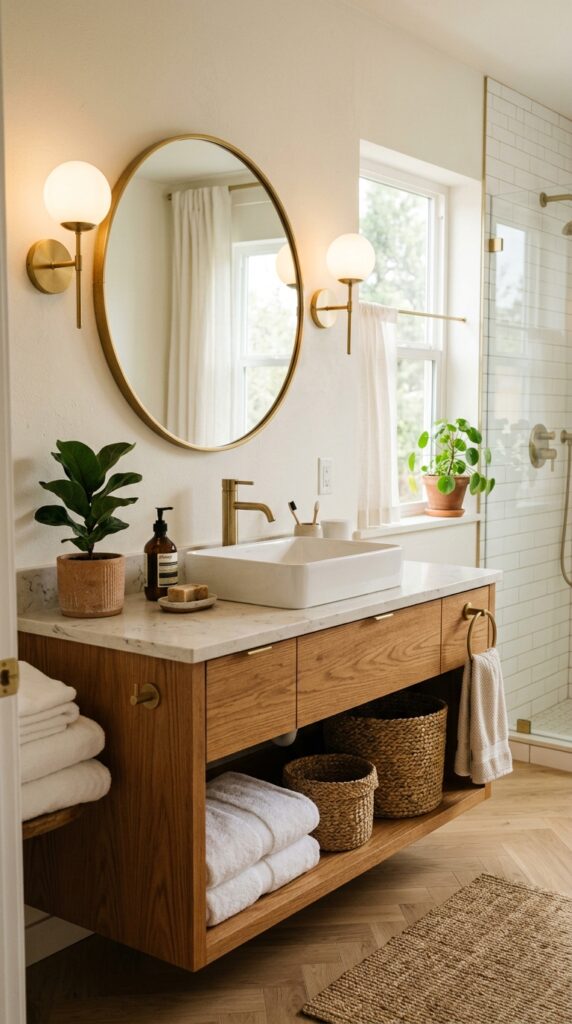
Your mirror should feel like part of the room instead of an afterthought. A natural wood frame creates warmth in a farmhouse or Scandinavian bathroom, while slim black metal works beautifully in modern spaces. Brushed brass adds a touch of elegance, and simple frameless mirrors suit clean contemporary designs. When the materials work together, the room feels balanced and inviting.
Look at your cabinet hardware, faucets, and lighting before choosing a frame finish. Matching finishes doesn’t mean everything has to be identical, but the materials should complement one another. A lot of people skip this step, but it makes all the difference in creating a cohesive look. Framed mirrors typically cost between $100 and $400, depending on the material and craftsmanship.
4. Decide Between Framed and Frameless Mirrors
A framed mirror becomes a decorative feature, while a frameless mirror creates a cleaner, more understated appearance. Both options can look beautiful, but the right choice depends on your bathroom’s overall style. Framed mirrors often add texture and warmth, especially when paired with natural wood or matte metal finishes. Frameless mirrors, on the other hand, reflect more light and make compact bathrooms feel larger.
If your bathroom already includes patterned tile or bold wallpaper, a simple frameless mirror helps keep the room balanced. If the walls are plain, a decorative frame adds personality without requiring additional decor. I always recommend thinking about the entire room instead of choosing the mirror on its own. Frameless mirrors generally start around $50, while decorative framed options can range from $120 to $500.
5. Think About Your Bathroom Lighting
Lighting and mirrors work together. Even the most beautiful mirror won’t look its best if the lighting creates harsh shadows or leaves your face unevenly lit. Warm, balanced light reflects naturally from the mirror, making everyday tasks like shaving, applying makeup, or skincare much easier. It also helps your bathroom feel brighter and more welcoming throughout the day.
If possible, place wall sconces on both sides of the mirror instead of relying only on an overhead light. This reduces shadows and creates more even illumination. If side lighting isn’t an option, choose a fixture that spreads light evenly across the mirror. In my experience, the biggest mistake here is installing a beautiful mirror without planning the lighting first. Quality bathroom light fixtures generally cost between $50 and $250.
6. Consider an LED Bathroom Mirror
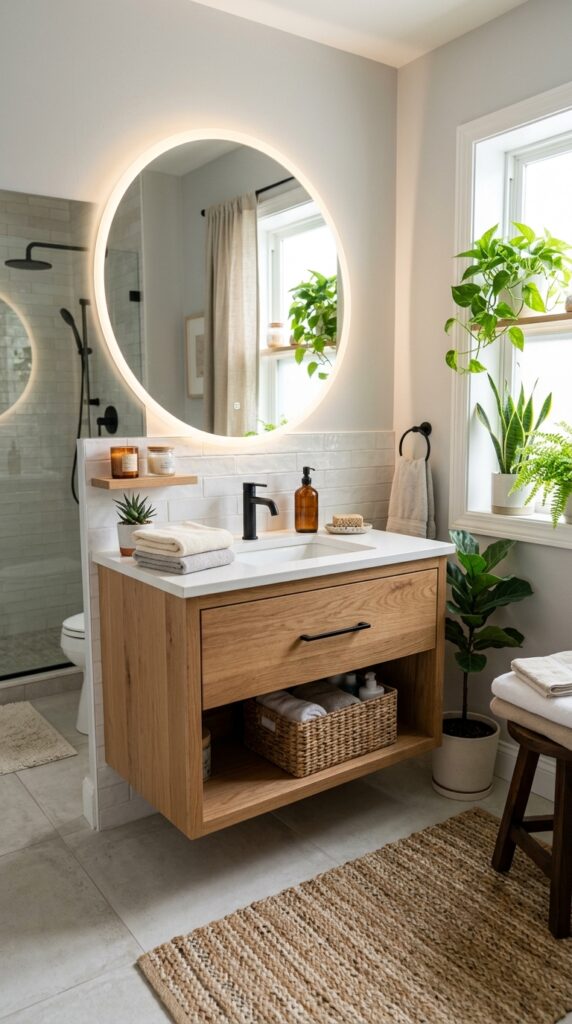
LED mirrors offer both style and convenience. The built-in lighting creates a soft, even glow around the mirror, making your daily routine easier while giving the bathroom a clean, modern appearance. The gentle light also adds depth to the room and can make a smaller bathroom feel more spacious without adding bulky light fixtures.
Look for an LED mirror with adjustable brightness and a warm white color temperature for a comfortable look. Some models even include touch controls and dimming features. What I personally love about LED mirrors is how they provide functional lighting without making the room feel overly bright. Expect to spend between $150 and $600, depending on the size and features.
7. Choose a Frame That Lasts in Humid Spaces
Bathrooms deal with daily moisture, so the frame material matters just as much as the design. A high-quality wood frame with a protective finish adds warmth, while aluminum, stainless steel, and powder-coated metal resist humidity exceptionally well. Choosing durable materials helps your mirror continue looking beautiful for years.
Read product descriptions carefully to confirm the mirror is designed for bathroom use. Avoid untreated wood or materials that may warp with constant moisture exposure. A lot of people focus only on appearance, but durability should always come first in humid rooms. Depending on the material, bathroom mirrors generally range from $100 to $450.
8. Think About Storage with a Mirror Cabinet
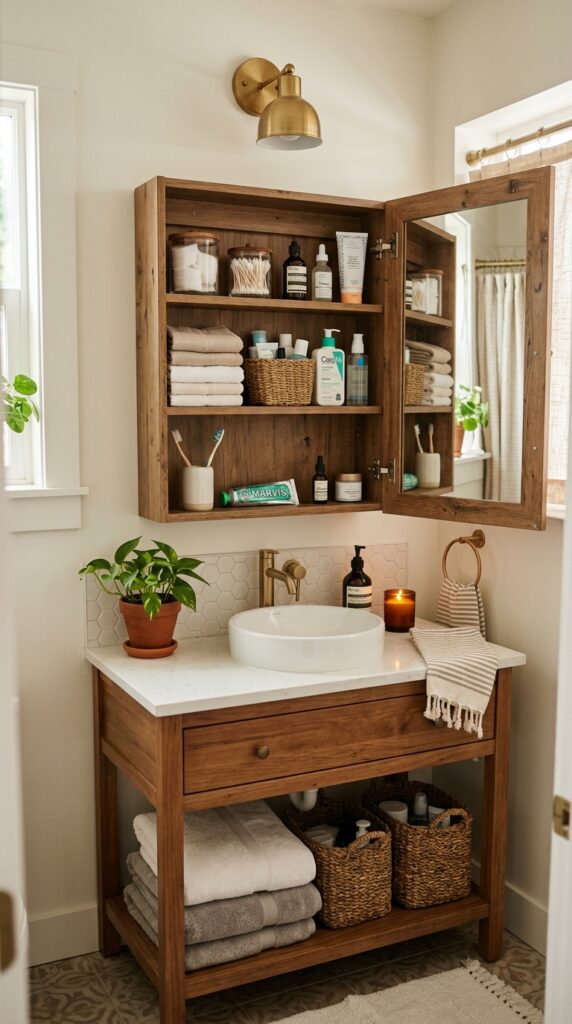
If your bathroom always feels cluttered, a mirrored cabinet can solve two problems at once. From the outside, it looks like a stylish mirror. Inside, it provides hidden storage for toiletries, skincare products, medications, and everyday essentials. Clean countertops instantly make the bathroom feel calmer and more organized.
Choose a cabinet that’s deep enough for your daily items without sticking too far into the room. Adjustable shelves give you more flexibility as your storage needs change. I always recommend this when someone wants a change without starting over because it improves both function and appearance. Mirror cabinets usually cost between $120 and $500.
9. Select the Right Height for Everyday Comfort
Even a beautiful mirror won’t feel right if it’s mounted too high or too low. The center of the mirror should generally sit at eye level for the people who use the bathroom most often. When the placement feels natural, everyday routines become more comfortable, and the room looks professionally finished.
Leave a few inches between the vanity backsplash and the bottom edge of the mirror to create breathing room. If several family members use the bathroom, aim for a height that works comfortably for everyone. A lot of people rush this step during installation, but careful placement has a huge impact on the final result. Installation supplies usually cost between $10 and $40, while professional installation may range from $100 to $250.
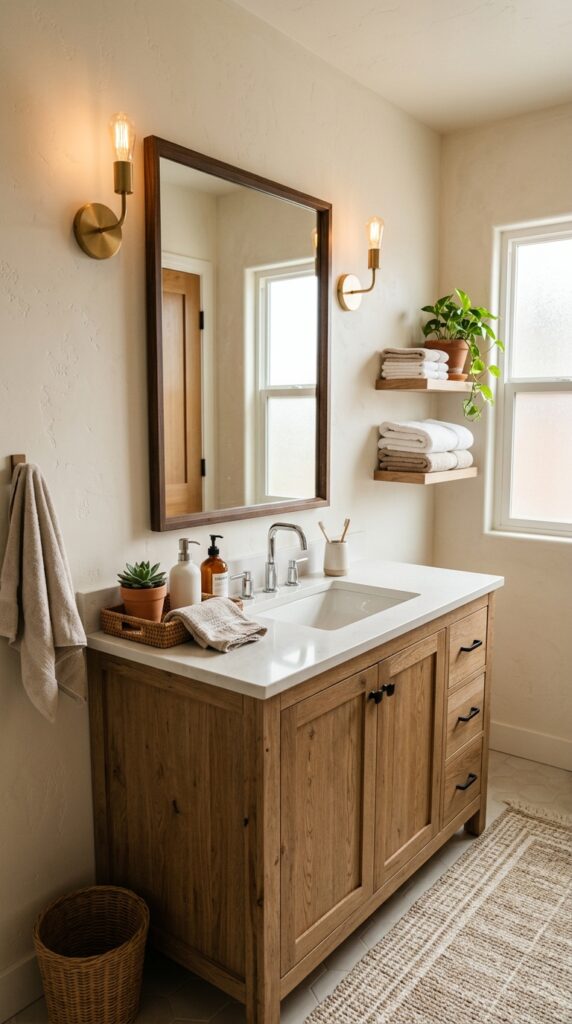
10. Use Two Mirrors for a Double Vanity
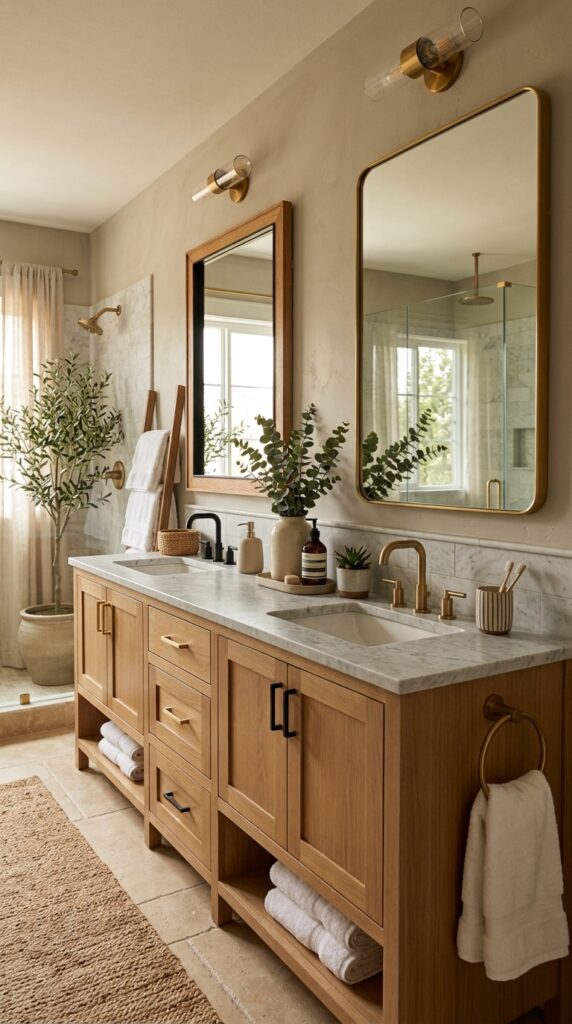
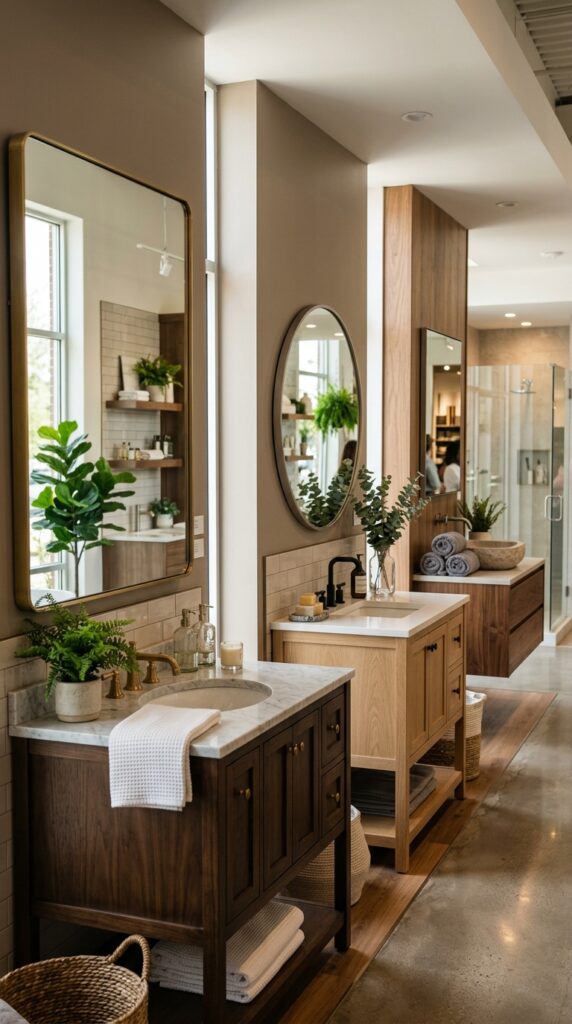
A double vanity often looks more balanced with two separate mirrors instead of one oversized mirror. Matching mirrors create symmetry while giving each sink its own defined space. The repeated shapes add structure, and the extra wall space between them leaves room for attractive sconces or decorative accents. The result feels open, organized, and thoughtfully designed without looking crowded.
Choose mirrors that are the same size and hang them at identical heights for a polished finish. Round mirrors soften the look of a long vanity, while rectangular designs create a more classic appearance. What I personally love about this arrangement is that each person has their own mirror without competing for space. Quality double vanity mirrors typically cost between $150 and $700 for the pair.
11. Add Character with Decorative Mirror Frames
A decorative frame can become one of the standout features in your bathroom. Whether it’s warm oak, reclaimed wood, matte black metal, or brushed gold, the frame adds texture and personality while tying together your vanity, lighting, and hardware. Even a simple mirror feels more inviting when the frame complements the rest of the room.
Choose a frame finish that works with your faucet and cabinet hardware instead of matching every element exactly. Mixing natural wood with matte black fixtures or brass accents often creates a welcoming balance. In my experience, the biggest mistake here is selecting a frame that’s too ornate for a small bathroom. Simpler designs usually age better. Decorative framed mirrors generally range from $100 to $450.
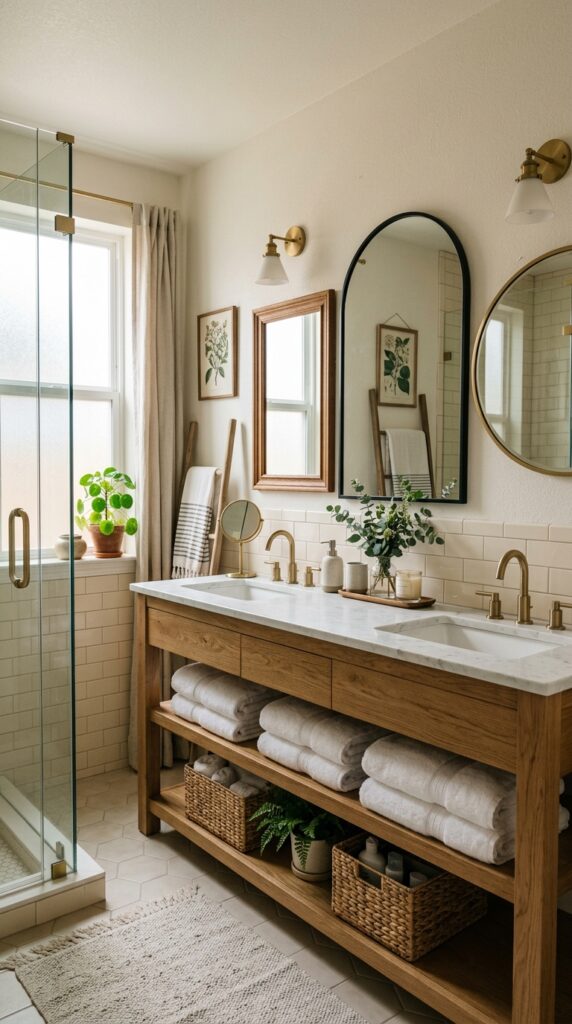
12. Don’t Overlook Anti Fog Features
There’s nothing more frustrating than stepping out of a hot shower only to find your mirror completely covered in steam. Anti fog mirrors solve this everyday problem by keeping the glass clear, making your morning routine faster and more convenient. They’re especially useful in busy family bathrooms where multiple people need to get ready one after another.
Many modern LED mirrors include built-in anti fog technology, but standalone anti fog mirrors are also widely available. If you’re remodeling your bathroom, this feature is worth considering from the beginning. A lot of people skip it to save money, but it’s one of those upgrades you appreciate every single day. Anti fog mirrors usually cost between $180 and $700, depending on the size and added features.
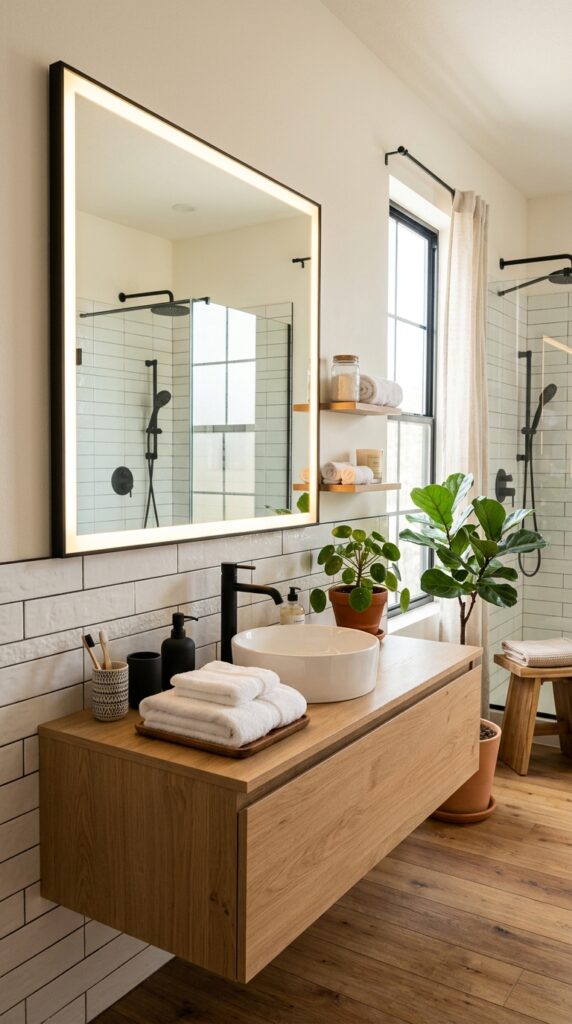
13. Balance Style with Your Budget
A beautiful bathroom doesn’t have to come with a luxury price tag. There are excellent mirrors available at nearly every budget, from simple frameless designs to statement pieces with built-in lighting. The key is focusing on quality construction and the right size before spending extra money on decorative features you may not actually need.
Start by deciding which features matter most to you. If storage is your priority, invest in a mirrored cabinet. If lighting is lacking, consider an LED mirror. I always recommend spending a little more on durability rather than decorative details alone because a well-made mirror will last for years. You can find attractive options from $60 to $500, with premium designs costing more.
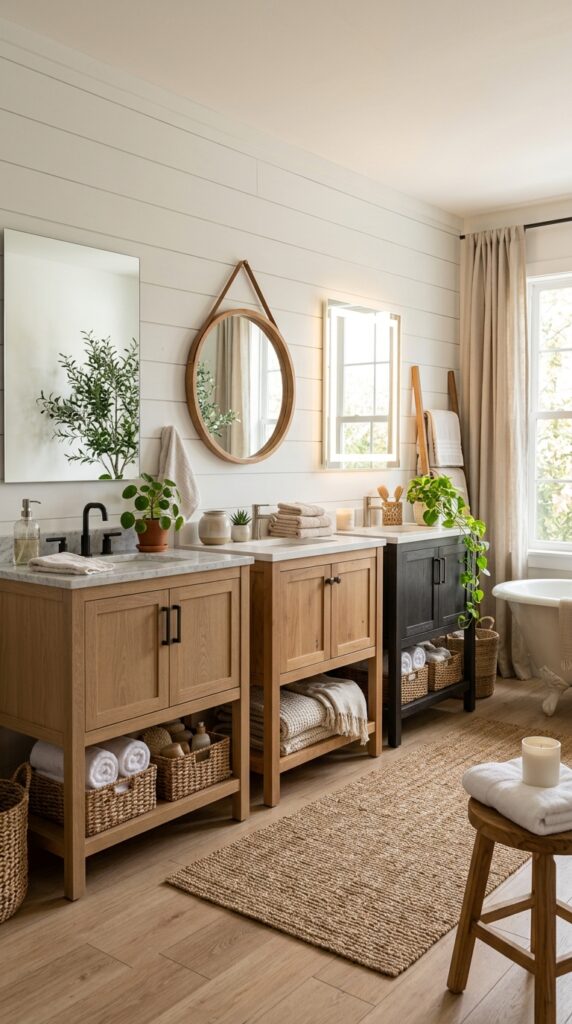
14. Check the Reflection Before You Buy
Not all mirrors offer the same reflection quality. Lower-quality glass can create slight distortion, making your reflection appear uneven. A high-quality mirror provides a crisp, natural image that makes daily grooming easier while also reflecting more light throughout the room.
If possible, look at the mirror in person before purchasing or read customer reviews carefully when shopping online. Check that the edges are smooth, the backing is well sealed, and the reflection looks clear from different angles. What I personally love about investing in better glass is that you notice the difference every single day. Quality mirrors typically start around $100 and increase depending on the materials and craftsmanship.
15. Create a Bathroom That Feels Like You
The best bathroom mirror isn’t simply the trendiest one. It’s the one that fits your routine, your style, and the size of your space. Whether you prefer modern simplicity, rustic warmth, or timeless elegance, the right mirror quietly brings the entire room together while making everyday tasks more enjoyable.
Take your time before making a final decision. Measure carefully, think about lighting, and choose materials that work well in a humid environment. Remember that your mirror is something you’ll use every day, so comfort and function matter just as much as appearance. A thoughtful choice today can continue improving your bathroom for many years.
Conclusion
Learning how to choose the bathroom mirror for your space doesn’t have to feel overwhelming. Once you understand the basics of sizing, placement, lighting, frame materials, and everyday function, the decision becomes much easier. A well-chosen mirror can brighten the room, make your daily routine more comfortable, and bring your entire bathroom design together.
You don’t need a complete renovation or an unlimited budget to create a bathroom that feels stylish and inviting. Even replacing an outdated mirror with one that better suits your vanity and lighting can make a noticeable difference. Start with the essentials by measuring your space, considering how you use the room, and choosing features that genuinely fit your lifestyle.
The goal is to create a bathroom that feels comfortable every time you walk in. Small, thoughtful upgrades often have the biggest impact.
Which of these tips would you use first when choosing your next bathroom mirror? I’d love to hear your plans in the comments.
FAQs
What size bathroom mirror should I choose?
A bathroom mirror is usually a few inches narrower than the vanity beneath it. This creates balanced proportions while leaving a small amount of wall space on each side. Always measure your vanity before shopping.
Are LED bathroom mirrors worth buying?
Yes. LED mirrors provide even lighting, improve visibility during daily routines, and often include useful features such as dimmers and anti fog technology. They’re especially helpful in bathrooms with limited natural light.
Should I choose a framed or frameless bathroom mirror?
Framed mirrors add warmth and decorative style, while frameless mirrors create a cleaner, more modern appearance. Your choice should complement your vanity, hardware, and overall bathroom design.
How high should a bathroom mirror be mounted?
The mirror should generally be centered at eye level while leaving a few inches of space above the backsplash. The exact height depends on the vanity and the people who use the bathroom most often.
What is the best frame material for a bathroom mirror?
Moisture-resistant materials such as aluminum, stainless steel, powder-coated metal, and properly sealed wood perform well in bathrooms. They resist humidity while maintaining their appearance over time.