20 Beautiful Garden Ideas to Create a Peaceful Outdoor Space
Introduction
If you’ve ever stepped into your backyard and felt like something was missing, you’re not alone. Maybe you’ve saved dozens of beautiful garden photos on Pinterest, dreaming of a peaceful outdoor retreat, but when you look outside, all you see is an empty patio, patchy grass, or a few plants that never quite came together. It can feel overwhelming to know where to begin, especially if you don’t have a huge budget or years of gardening experience.
The good news is that creating a relaxing garden doesn’t mean tearing everything out and starting over. In my experience, the most inviting outdoor spaces are built one thoughtful change at a time. A comfortable chair, a winding path, a few flowering plants, or the sound of water can completely change how your yard feels.
In this guide, you’ll find 20 beautiful garden ideas to create a peaceful outdoor space that are practical, affordable, and easy to adapt to gardens of all sizes. Whether you have a tiny courtyard, a suburban backyard, or a spacious lawn, there’s something here you can actually recreate.
Let’s step outside and start building a garden you’ll want to spend every spare minute in.
1. Build a Cozy Seating Corner Beneath a Tree
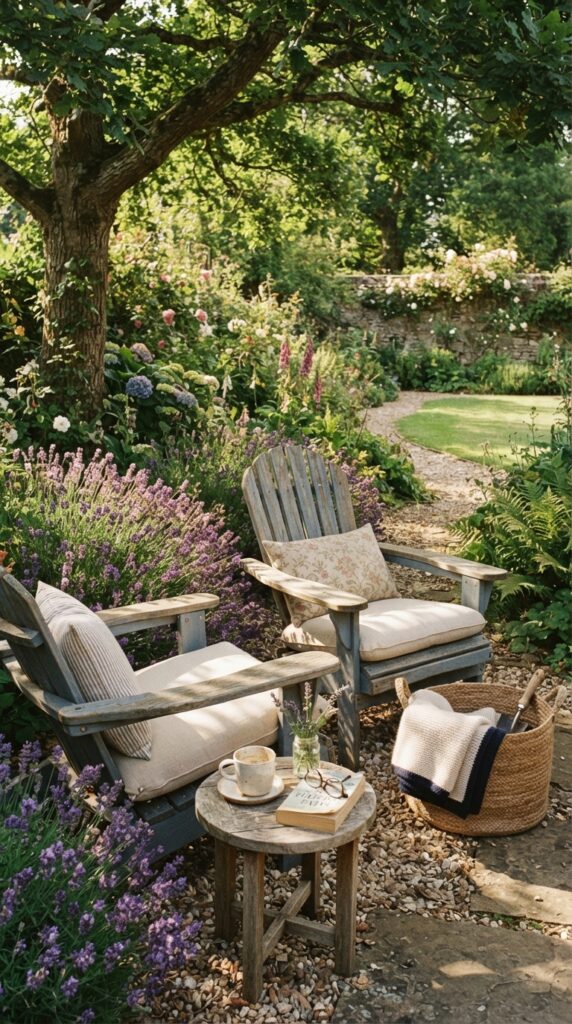
A quiet seating area instantly makes your garden feel welcoming. Picture a pair of wooden Adirondack chairs tucked beneath a leafy tree, soft outdoor cushions in warm ivory and sage green, and sunlight filtering through the branches. It becomes the kind of spot where morning coffee tastes better, books are harder to put down, and evenings stretch a little longer.
Choose the shadiest part of your garden and anchor it with two comfortable chairs or a weather-resistant bench. Add a small side table, an outdoor rug, and a planter filled with lavender or rosemary nearby. I always suggest leaving at least three feet of walking space around the furniture so the area never feels cramped. You can recreate this look for around $150–$500, while thrifted furniture with fresh paint keeps costs much lower.
2. Create a Winding Stone Garden Path
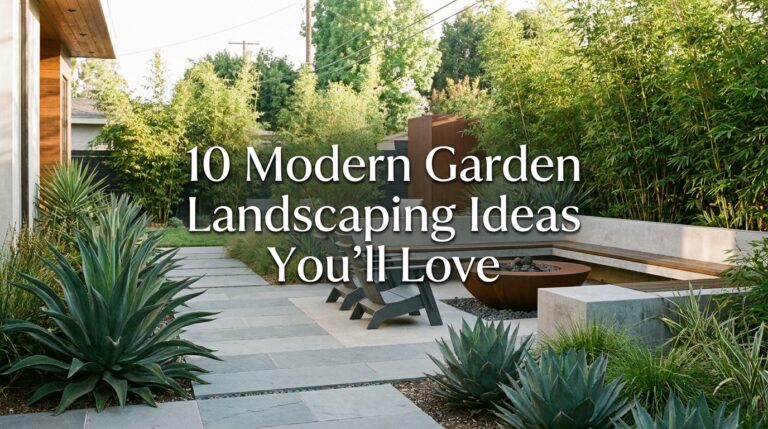
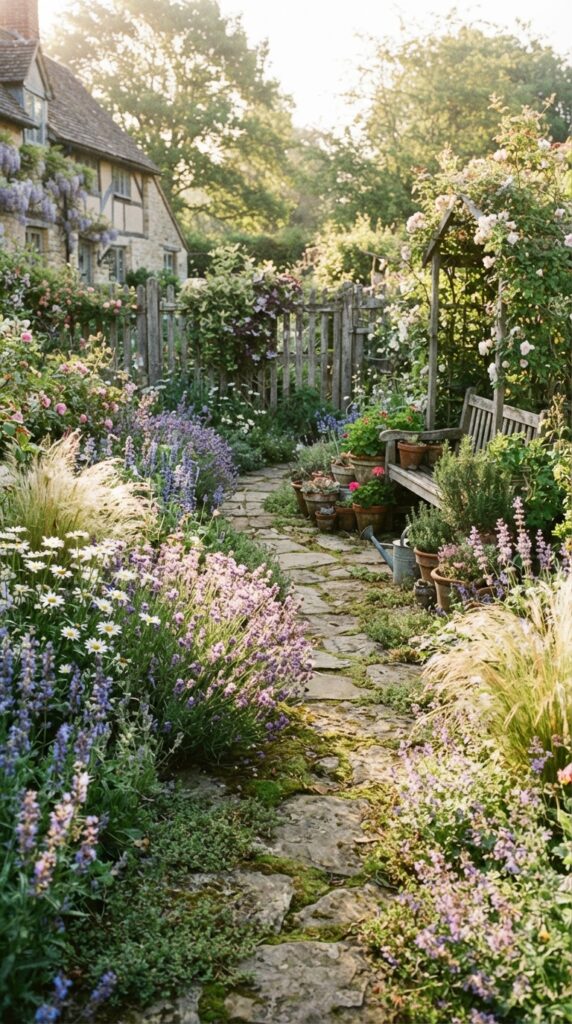
Straight walkways get you from one place to another, but a gently curving stone path invites you to slow down. The soft bends encourage you to notice blooming flowers, buzzing bees, and changing textures throughout the garden. What I love about this is how it naturally makes even a modest yard feel larger.
Use irregular flagstones, stepping stones, or gravel bordered by bricks. Leave small gaps between stones and plant creeping thyme or Irish moss so greenery softens the edges over time. One mistake I see often is placing stepping stones too far apart, making the path awkward to walk. Most DIY paths cost between $100 and $700, depending on the materials you choose.
3. Add Lavender Borders for Color and Fragrance
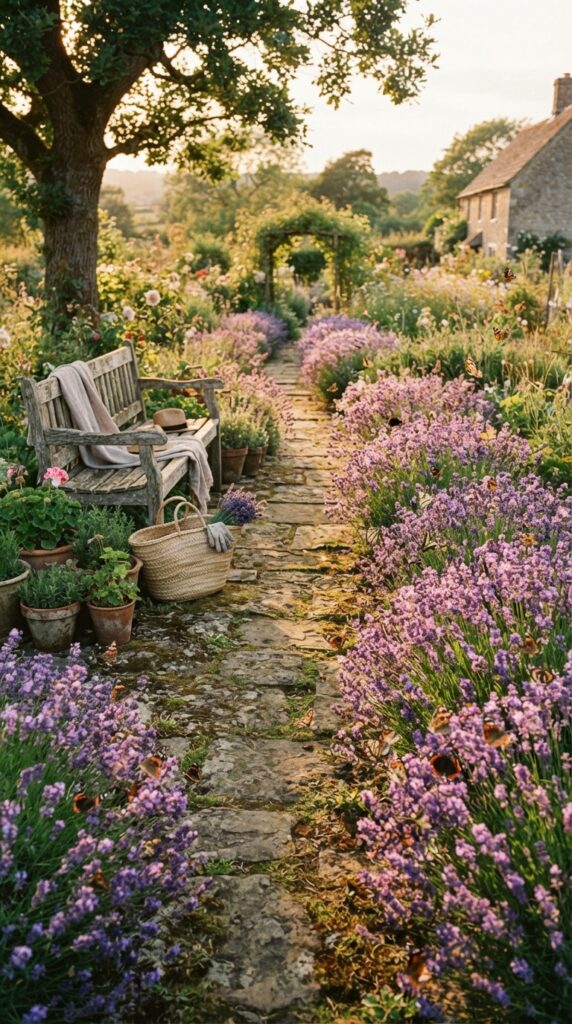
There’s something calming about walking past rows of lavender as the breeze carries its scent through the garden. The silvery green leaves and soft purple blooms bring gentle color without overwhelming the space. You’ll also notice more butterflies and bees visiting, making your garden feel alive.
Plant lavender along pathways, around patios, or beside raised beds where it receives at least six hours of sunlight each day. Space plants about two feet apart so air flows freely around them, which helps prevent disease. A lot of people skip pruning after flowering, but trimming plants back keeps them fuller year after year. Expect to spend around $10–$25 per plant, or propagate cuttings to save money.
4. Hang String Lights for Warm Evening Glow
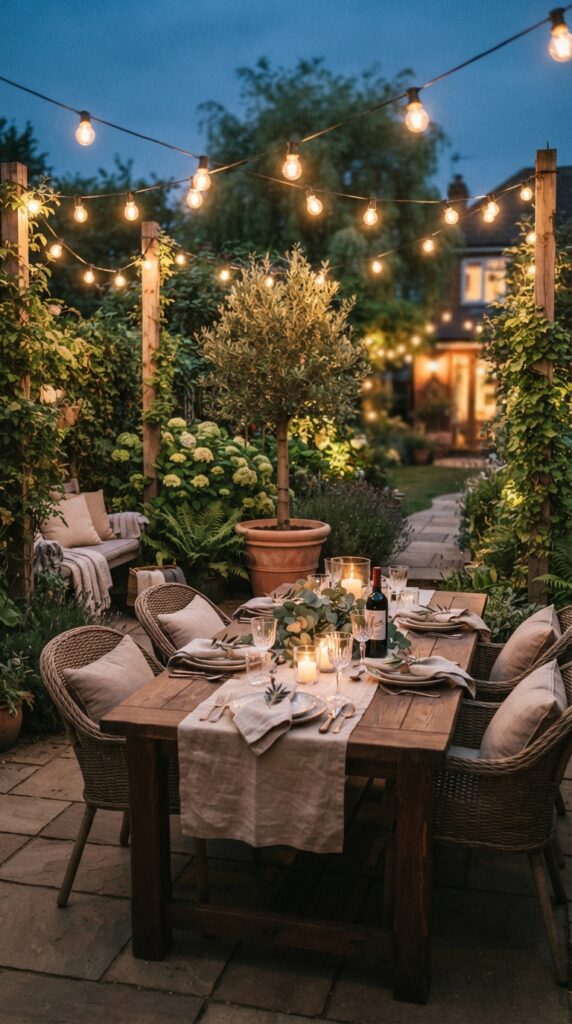
The garden changes completely after sunset when soft lights begin to glow overhead. Warm string lights create a relaxed atmosphere that makes outdoor dinners, quiet conversations, and late-night reading feel extra special. It isn’t about making the garden brighter. It’s about making it feel inviting.
Choose warm white LED outdoor lights and drape them between trees, fence posts, pergolas, or shepherd’s hooks. Keep the lights slightly loose instead of pulled tight because the gentle curve looks more natural. In my experience, cool white bulbs often feel harsh outdoors, so warm tones are almost always the better choice. Most setups cost $30–$120.
5. Plant a Mix of Flowers That Bloom Across the Seasons
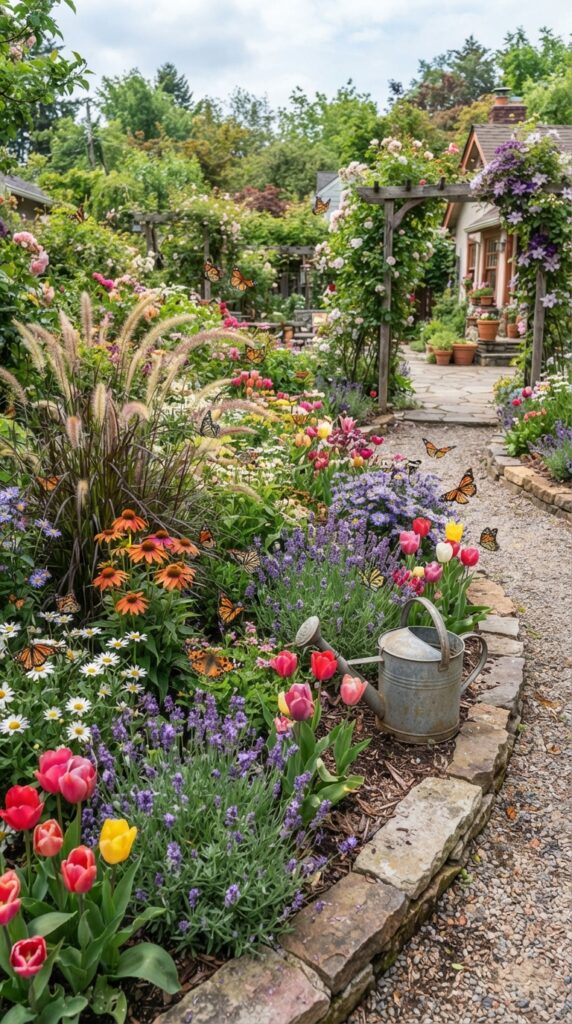
One of the biggest disappointments is planting everything at once only to have the garden look empty a few weeks later. A layered planting plan keeps fresh color appearing from early spring until late autumn, so there’s always something catching your eye.
Combine spring tulips, summer coneflowers, lavender, black-eyed Susans, autumn asters, and evergreen shrubs for year-round interest. Group plants in clusters of three or five instead of scattering them individually because the display looks fuller and more natural. A budget of $150–$600 can gradually build beautiful perennial borders that return each year.
6. Install a Small Water Fountain for Relaxing Sound
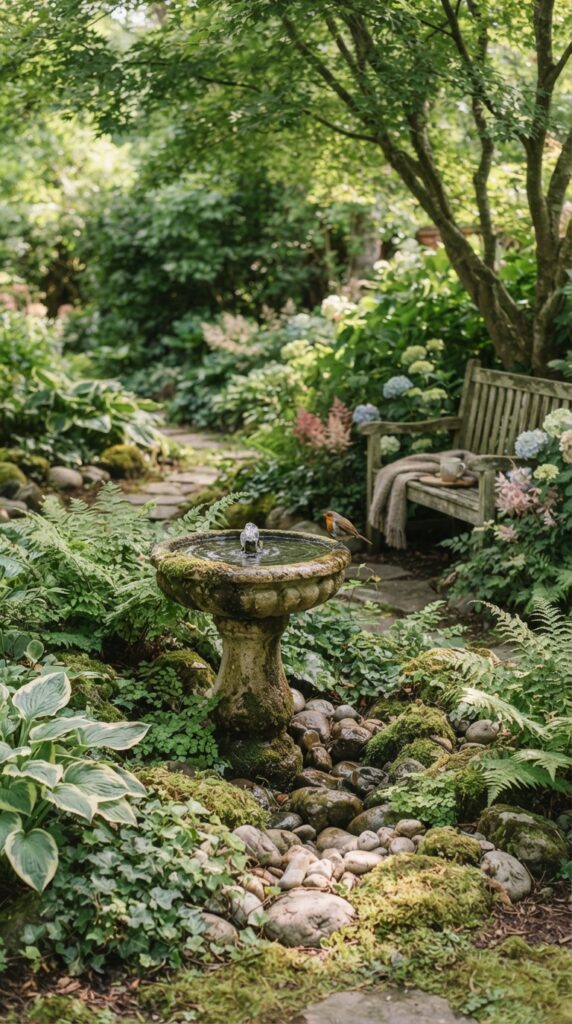
The gentle sound of moving water has a way of drowning out traffic and helping your mind slow down. Even a compact fountain can become the centerpiece of a peaceful garden, creating movement while attracting birds that stop by for a drink.
Look for a self-contained solar fountain if you don’t want to deal with electrical wiring. Surround it with smooth river rocks, hostas, ferns, or shade-loving plants to create a natural setting. I always recommend placing the fountain where you can see and hear it from your favorite chair. Depending on the style, expect to spend $80–$500.
7. Grow Climbing Roses on a Wooden Arbor
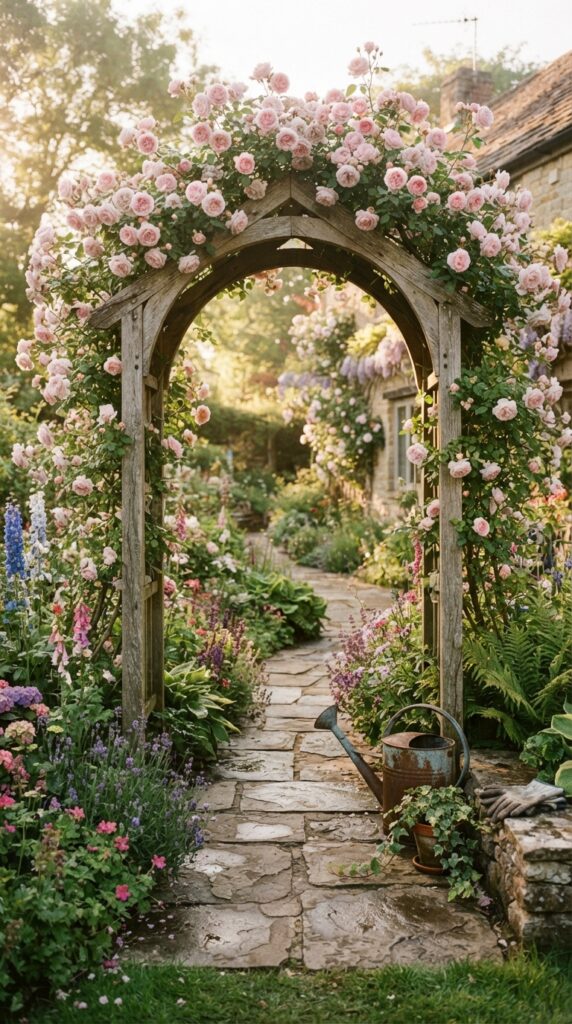
Walking beneath blooming roses feels like stepping into a storybook garden. Soft pink, cream, or white blossoms climbing over a weathered wooden arbor create height while framing the entrance to your garden beautifully. During peak bloom, the fragrance makes the space feel even more inviting.
Install a sturdy cedar or pressure-treated wooden arbor where climbing roses receive at least six hours of sun. Tie new stems loosely with soft garden ties instead of wrapping them tightly around the frame. One mistake people make is letting vines grow straight upward. Training stems horizontally encourages many more flowers. A complete setup usually costs between $200 and $700, while secondhand arbors offer a budget-friendly alternative.
8. Surround Your Patio with Raised Wooden Garden Beds
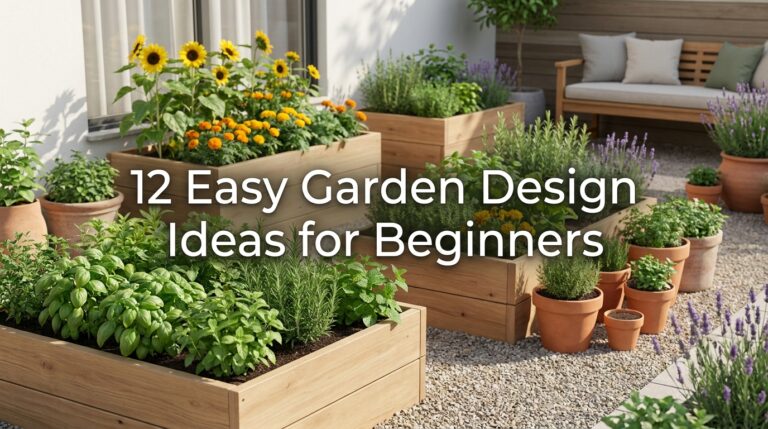
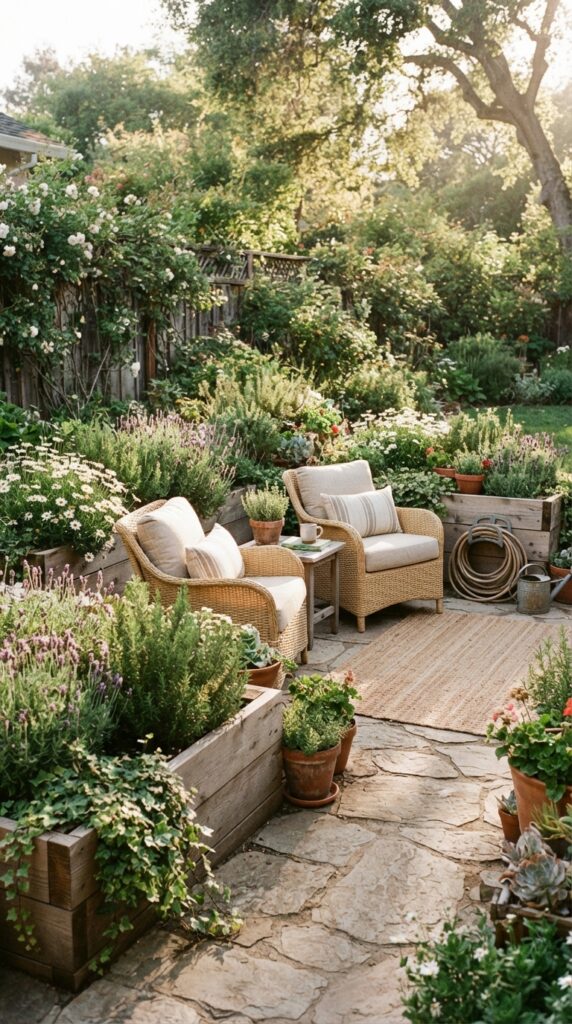
Raised garden beds make any patio feel wrapped in greenery instead of sitting in the middle of an open yard. Imagine warm cedar planters overflowing with herbs, flowering perennials, and trailing greenery that soften hard surfaces. The mix of textures and heights makes the whole space feel more welcoming without taking up much room.
Build raised beds about 16 to 24 inches high using cedar or pressure-treated lumber so they’re comfortable to plant and maintain. Fill them with quality soil, then layer taller plants toward the back, medium-sized flowers in the middle, and trailing plants along the edges. I always suggest leaving at least three feet between beds and walkways so you can move around comfortably. A simple DIY setup usually costs $120–$500, while reclaimed wood can cut that price nearly in half.
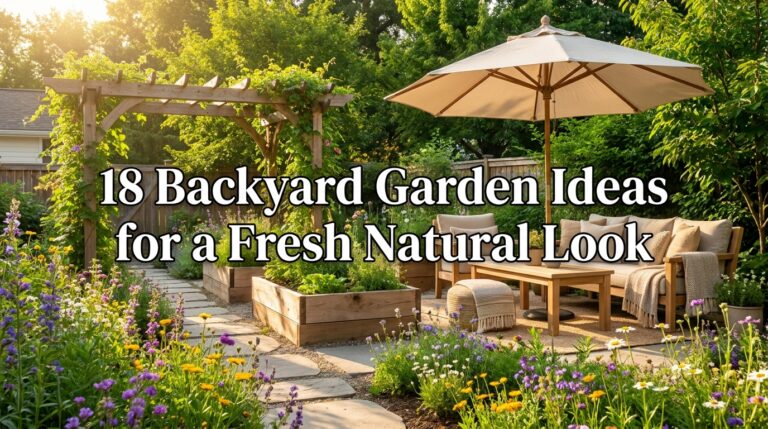
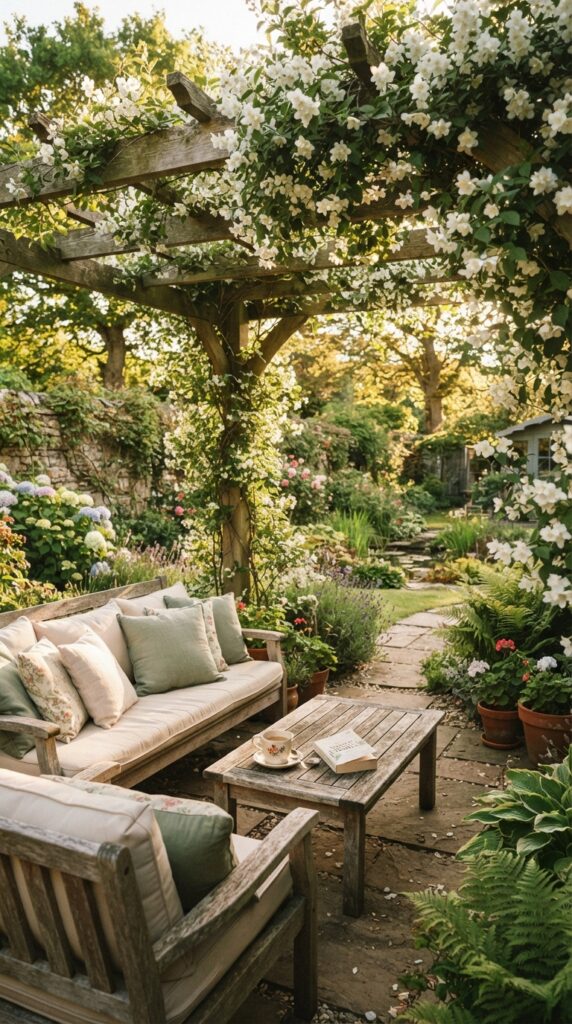
9. Add a Wooden Pergola Covered in Green Vines
A pergola gives your garden structure without making it feel closed in. As climbing vines weave across the beams, patches of sunlight filter through the leaves, creating shifting patterns on the ground throughout the day. What I love about this is how the space feels cool and inviting even during warmer months.
Choose a pergola that’s at least 8 feet tall so it feels open and airy. Plant climbing jasmine, wisteria, grapevines, or clematis at each corner and guide the stems as they grow. Don’t rush to cover every beam in the first year because healthy vines need time to establish themselves. Expect to spend $500–$2,500 depending on whether you build it yourself or hire a contractor.
10. Design a Peaceful Rock Garden with Natural Texture
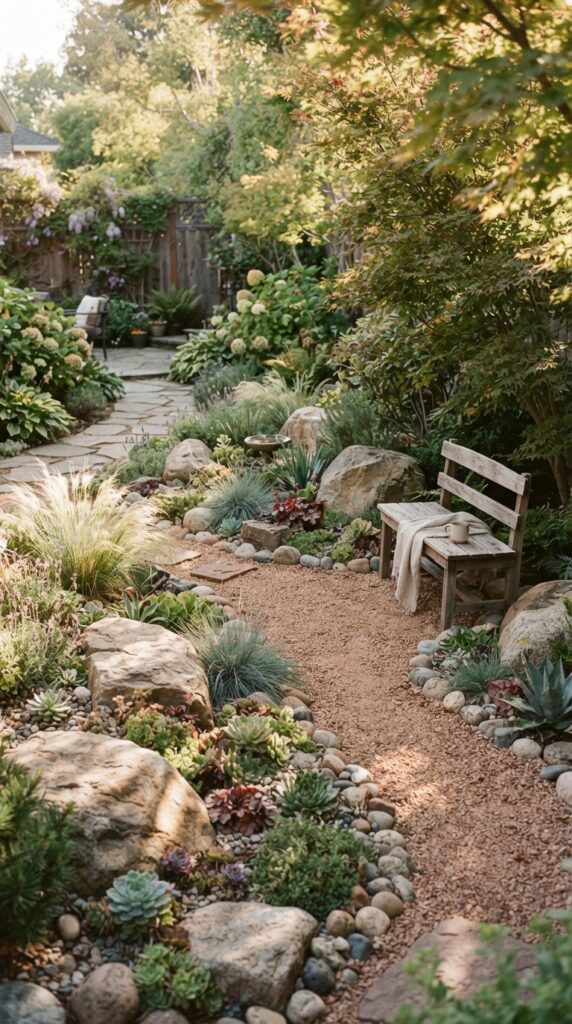
Not every beautiful garden needs endless flowers. A thoughtfully arranged rock garden brings quiet beauty through shape, texture, and subtle color changes that stay attractive throughout the year. It’s especially useful if you live somewhere with hot summers or limited rainfall.
Mix large boulders with smaller river rocks, gravel, ornamental grasses, succulents, and drought-tolerant plants. Arrange the largest rocks first because they create the natural foundation for everything else. In my experience, the biggest mistake is lining rocks up in perfect rows. Nature rarely works that way, so stagger them instead. Depending on size, a rock garden can cost anywhere from $150 to $800.
11. Fill Containers with Layers of Seasonal Flowers
Large planters instantly brighten patios, porches, and garden paths without requiring permanent planting beds. The combination of colorful blooms spilling over textured pots adds personality and makes your outdoor space feel cared for from the moment someone arrives.
Use the classic thriller, filler, and spiller method. Place one tall focal plant in the center, surround it with medium flowers, then let trailing ivy, calibrachoa, or sweet potato vine cascade over the edges. A lot of people forget to fertilize container plants every few weeks, but regular feeding keeps blooms coming all season long. You can create beautiful arrangements for around $30–$100 per container.
12. Build a Garden Bench with Blooming Borders
Every peaceful garden deserves a place where you can pause for a few minutes. A wooden bench surrounded by flowers creates a destination instead of just another piece of furniture. It’s the kind of corner that invites you to sit quietly and notice birdsong, fresh blooms, and changing seasons.
Place the bench where it catches either morning or evening light instead of harsh afternoon sun. Surround it with hydrangeas, salvia, echinacea, or ornamental grasses that gently sway in the breeze. I always recommend keeping at least two feet of planting space around the bench so maintenance stays easy. Depending on materials, this project usually costs $150–$600.
13. Let Ornamental Grasses Add Gentle Movement
Flowers often steal the spotlight, but ornamental grasses quietly bring a garden to life. Even the lightest breeze makes them sway, adding motion that helps the whole landscape feel softer and more relaxed. Their feathery seed heads also look beautiful through autumn and winter.
Plant varieties like fountain grass, feather reed grass, or blue fescue in groups rather than single plants. Mix them with flowering perennials so different textures balance one another throughout the year. One mistake I see often is trimming grasses too early in winter. Leave them standing until late winter so they continue adding interest. Most grasses cost between $15 and $40 each.
14. Create a Quiet Reading Nook in the Garden
Sometimes the best part of a garden isn’t the plants. It’s having a peaceful place to enjoy them. A tucked-away reading nook gives you a reason to spend more time outside, even if it’s just twenty quiet minutes before the day gets busy.
Choose a secluded corner surrounded by shrubs or climbing plants for a sense of privacy. Add a comfortable outdoor chair, a small weatherproof table, and a soft cushion in muted sage or warm ivory. I always suggest keeping a lightweight throw nearby because evenings cool down faster than people expect. You can put together a cozy reading nook for $100–$400 using budget-friendly patio furniture and thrifted accessories.
15. Line Your Walkways with Solar Lanterns
A garden feels completely different once the sun goes down. Soft pools of warm light along a pathway make evening walks safer while giving the whole space a calm, welcoming glow. Instead of harsh floodlights, you get gentle lighting that highlights plants, stones, and garden borders without stealing the show.
Choose solar-powered lanterns with a warm white glow and place them about 6 to 8 feet apart along paths or flower beds. Stagger them slightly instead of lining them up with perfect spacing because the result looks more natural. In my experience, one of the biggest mistakes is buying cool white lights, which can make a cozy garden feel more like a parking lot. Most quality solar lanterns cost $30–$120 for a set, and they don’t add to your electricity bill.
16. Plant a Butterfly and Bee-Friendly Flower Garden
A peaceful garden isn’t just about what you see. It’s about what you hear and experience. Butterflies floating from bloom to bloom and bees quietly working among flowers bring movement and life that no decoration can replace.
Fill sunny beds with pollinator favorites like coneflowers, black-eyed Susans, salvia, lavender, bee balm, and cosmos. Plant large clusters of each variety instead of scattering individual flowers so pollinators can easily find them. A lot of people avoid bees, but healthy gardens depend on them. Skip chemical pesticides whenever possible to protect these helpful visitors. Depending on the size of your garden, expect to spend $80–$350.
17. Add a Fire Pit for Relaxing Evenings Outdoors
There’s something comforting about gathering around a small fire as the evening gets cooler. The flickering flames naturally draw people together, making conversations last longer and quiet moments feel even more relaxing. It turns your garden into a space you’ll actually use well beyond summer.
Choose a fire pit that’s safely placed on gravel, stone, or concrete with plenty of open space around it. Arrange four to six comfortable chairs in a circle and soften the area with outdoor cushions and cozy blankets. I always recommend keeping seating about 3 to 4 feet from the fire for comfort and safety. Portable fire pits start around $100, while built-in stone versions can range from $800 to $2,500.
18. Grow Herbs Close to Your Outdoor Seating Area
Fresh herbs don’t just belong in the kitchen. Their fragrance adds another layer to your garden, especially when a light breeze brushes past rosemary, mint, thyme, or basil. Every time you walk by, you’ll catch those fresh scents, making the whole space feel more relaxing.
Use raised planters, window boxes, or large pots near your patio or outdoor dining area. Group herbs with similar watering needs together and harvest them often to encourage fresh growth. One mistake people make is planting mint directly into the garden, where it quickly spreads everywhere. Keep mint in its own container instead. A beautiful herb garden can be started for $40–$150.
19. Use Natural Stone Edging Around Flower Beds
Neatly edged flower beds make the entire garden look cared for without feeling overly formal. Stone edging creates a clean border between grass and planting beds while adding texture that blends naturally with flowers, shrubs, and pathways.
Choose natural stone, fieldstone, or river rock that complements the colors already in your garden. Set the stones slightly into the soil so they stay secure and don’t shift over time. What I love about this is that even older flower beds instantly look more polished with very little effort. Depending on the material, expect to spend $100–$500 for an average-sized border.
20. Keep the Garden Simple with Plenty of Open Space
One of the easiest mistakes to make is filling every empty corner with plants, furniture, and decorations. A peaceful garden needs room to breathe. Open lawn, uncluttered paths, and thoughtful planting allow every feature to stand out instead of competing for attention.
Start by choosing one or two focal points, such as a seating area or fountain, and build around them. Leave open grass or gravel spaces between planting beds so your eyes have places to rest. In my experience, gardens often become more relaxing after removing a few things instead of adding more. The cost depends entirely on your existing space, and sometimes the best improvement is completely free.
Conclusion
Creating a beautiful outdoor retreat doesn’t have to happen all at once. In fact, the most inviting gardens usually grow little by little. You might start with a comfortable bench, then add a few flowering plants, a winding stone path, or warm lighting for evenings outside. Before long, those small updates come together to create a space that feels peaceful every time you step outside.
I always tell people not to compare their garden to the perfectly polished photos online. Real gardens change with the seasons, and that’s part of what makes them special. A few thriving plants, a cozy place to sit, and thoughtful details often have a bigger impact than expensive landscaping.
I hope these 20 beautiful garden ideas to create a peaceful outdoor space have given you inspiration that’s actually practical and realistic. Pick one or two ideas that fit your yard and your budget, then build from there. You’ll be surprised how much a few simple changes can make your outdoor space feel like your favorite place at home.
Which of these beautiful garden ideas are you excited to try first? Let me know in the comments—I genuinely can’t wait to hear what you’re planning for your own outdoor space!
Frequently Asked Questions
What is the easiest way to make a garden feel more peaceful?
Start by adding one comfortable seating area and surrounding it with greenery. Soft lighting, fragrant plants like lavender, and simple pathways also help create a calm atmosphere without requiring a complete makeover. Small changes often have the biggest impact because they encourage you to spend more time outdoors.
How can I create a beautiful garden on a budget?
Focus on projects you can build over time. Buy perennial plants that return every year, divide existing plants, use reclaimed wood for raised beds, and shop secondhand for outdoor furniture. DIY projects and gradual updates usually cost much less than renovating the whole yard at once.
Which plants are best for a relaxing outdoor garden?
Lavender, hydrangeas, ornamental grasses, salvia, hostas, rosemary, jasmine, and climbing roses are all excellent choices. They provide beautiful textures, gentle movement, seasonal color, and in many cases, wonderful fragrance. Mixing evergreen plants with flowering varieties also keeps your garden attractive throughout the year.
How do I make a small garden look bigger?
Curved pathways, layered planting, vertical features like trellises or pergolas, and repeating colors all help create the illusion of more space. Avoid overcrowding every corner with furniture or decorations. Leaving some open areas makes a small garden feel much more spacious.
What outdoor lighting works best in a peaceful garden?
Warm white solar lanterns, string lights, and low pathway lighting create a soft glow without overwhelming the space. Avoid bright, cool-toned floodlights whenever possible. The goal is to highlight the garden gently so it feels relaxing instead of overly bright.