12 Easy Garden Design Ideas for Beginners
If you’ve been staring at your yard and wondering where to begin, you’re definitely not alone. A lot of people want a beautiful outdoor space but feel overwhelmed by all the landscaping ideas they see online. It can seem like every garden requires expensive materials, years of experience, or endless weekend projects. The good news is that it doesn’t have to be that way. These easy garden design ideas for beginners are all about creating a space that feels welcoming without making the process stressful.
Whether you have a tiny backyard, a narrow side yard, or a larger outdoor area waiting for attention, you can build a garden one step at a time. Small changes often have the biggest impact, especially when you choose ideas that are simple to maintain and fit your budget. In this guide, you’ll find practical tips, affordable inspiration, and beginner-friendly projects that help your garden look more organized, colorful, and inviting. Start with one idea, enjoy the process, and let your outdoor space grow naturally over time.
1. Start with Simple Garden Borders
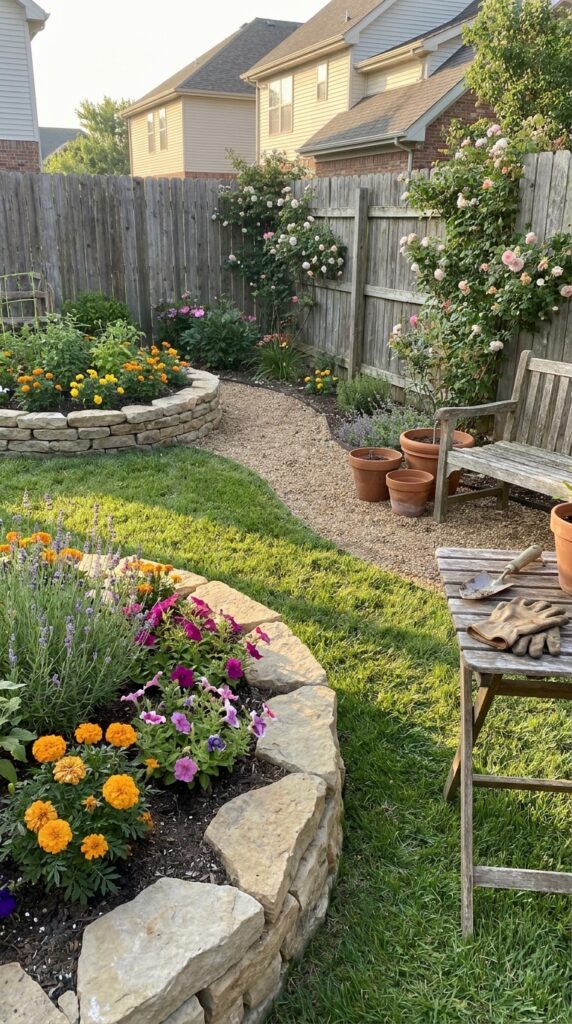
One of the easiest ways to make a garden feel neat is by creating defined borders around flower beds and pathways. Even if you only have a few plants, clean edges instantly make the space look cared for. Natural stone, brick edging, or weathered wood creates a relaxed look that blends beautifully with green grass and blooming flowers. The contrast between tidy borders and soft plants gives the whole garden a welcoming feel.
To recreate this look, outline your planting beds before buying flowers. Flexible plastic edging costs around $15 to $40, while natural stone edging usually ranges from $40 to $120 depending on the size. Keep the border shape simple instead of adding lots of curves. In my experience, the biggest mistake here is making the beds too narrow. Give your plants enough room to grow so the border still looks clean after a few months.
2. Easy Garden Design Ideas for Beginners Using Raised Beds
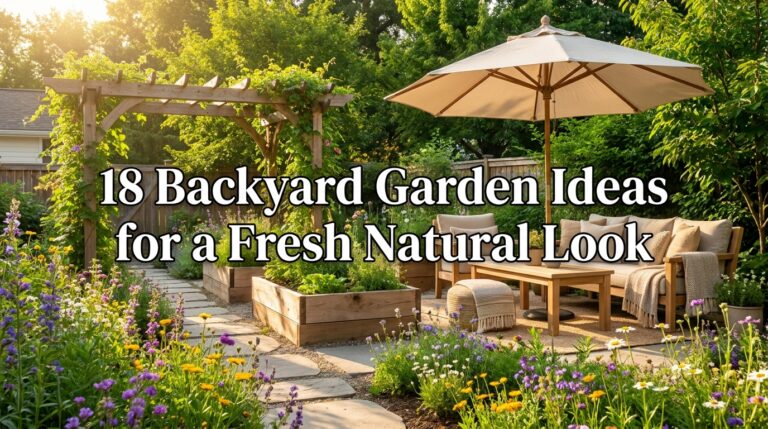
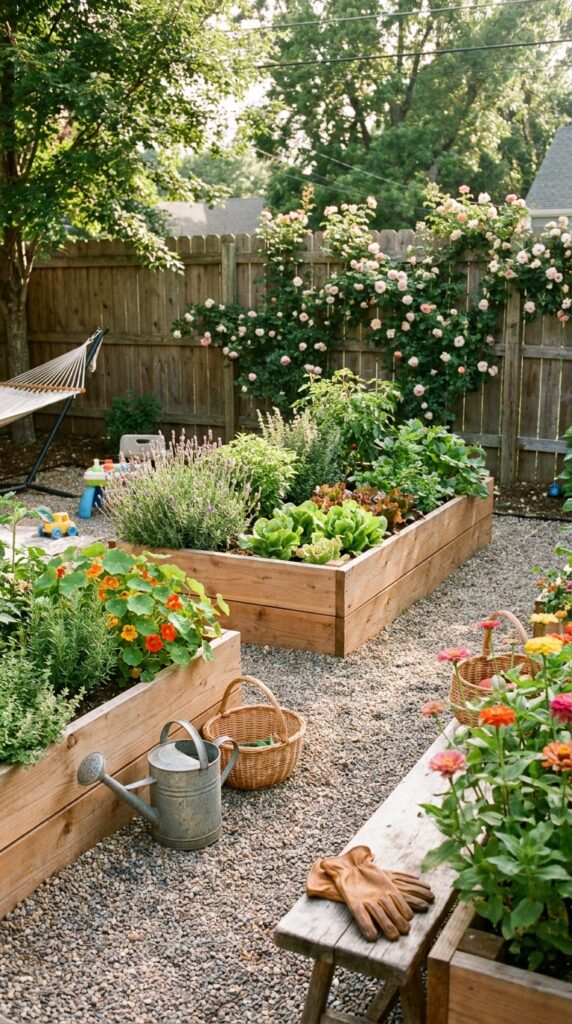
Raised garden beds instantly add structure while making gardening much easier to manage. They create organized sections that help your yard feel less chaotic, and the slightly elevated soil makes planting and weeding more comfortable. Filled with herbs, vegetables, or colorful flowers, raised beds bring texture and layers that make even a small yard look thoughtfully arranged.
You can build simple wooden raised beds using cedar or purchase ready-made kits. Expect to spend about $50 to $150 depending on the size. Place them where they receive at least six hours of sunlight each day. I always recommend this when someone wants a change without starting over because raised beds can grow with your gardening skills. One mistake to avoid is filling them with poor-quality soil. Investing in nutrient-rich garden soil will reward you with healthier plants.
3. Mix Colorful Flowers with Evergreen Plants
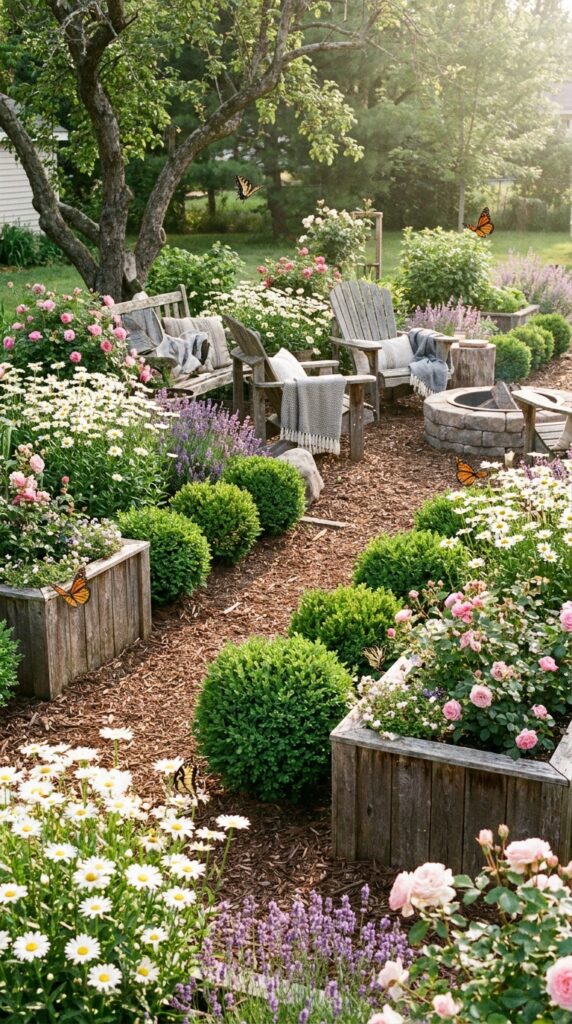
A balanced garden stays attractive even when flowers aren’t blooming. Bright seasonal flowers paired with evergreen shrubs create interest throughout the year. Imagine soft lavender beside rich green boxwoods or cheerful daisies surrounded by deep green foliage. The layers of color make the space feel lively without becoming overwhelming.
Choose two or three flower colors instead of planting every shade available. This creates a calmer look that photographs beautifully for Pinterest. Small evergreen shrubs usually cost $20 to $60, while flowering plants often range between $5 and $20 each. A lot of people skip this step, but planning your colors before shopping makes all the difference. Your garden will feel much more cohesive instead of looking random.
4. Create a Cozy Gravel Seating Corner
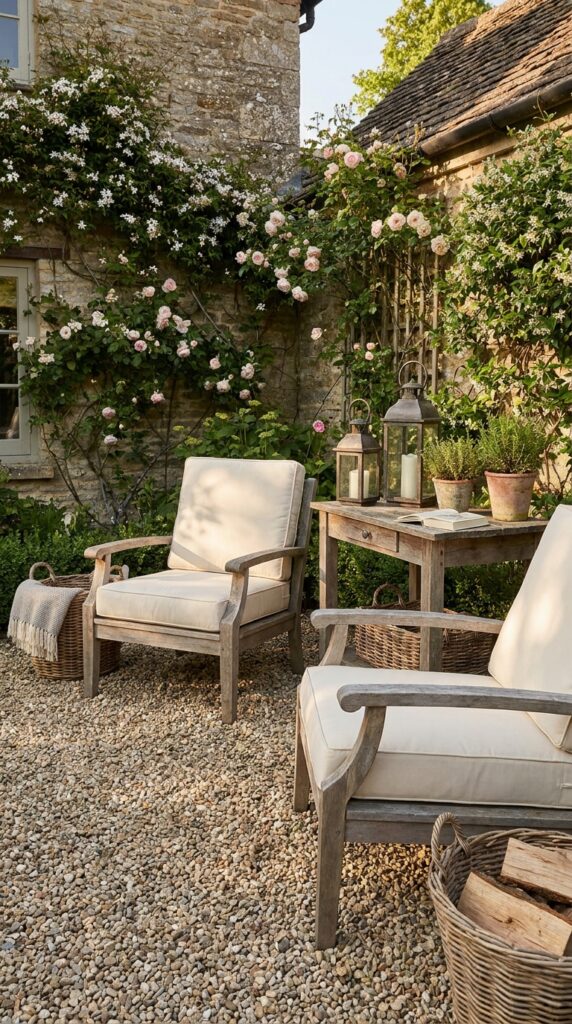
Every garden feels more inviting when there’s a comfortable place to sit and enjoy it. A small gravel seating area with two wooden chairs, soft outdoor cushions, and a simple coffee table creates a peaceful retreat without requiring a large patio. The crunch of gravel underfoot and the surrounding greenery make the space feel relaxed and lived in.
Choose pea gravel for a softer appearance and add landscape fabric underneath to reduce weeds. A simple seating area can cost anywhere from $80 to $300, depending on the furniture you choose. What I personally love about this is that you don’t need a huge yard. Even a quiet corner can become your favorite spot for morning coffee. Avoid placing chairs directly on uneven soil because they can wobble over time.
5. Easy Garden Design Ideas for Beginners with Mulch Pathways
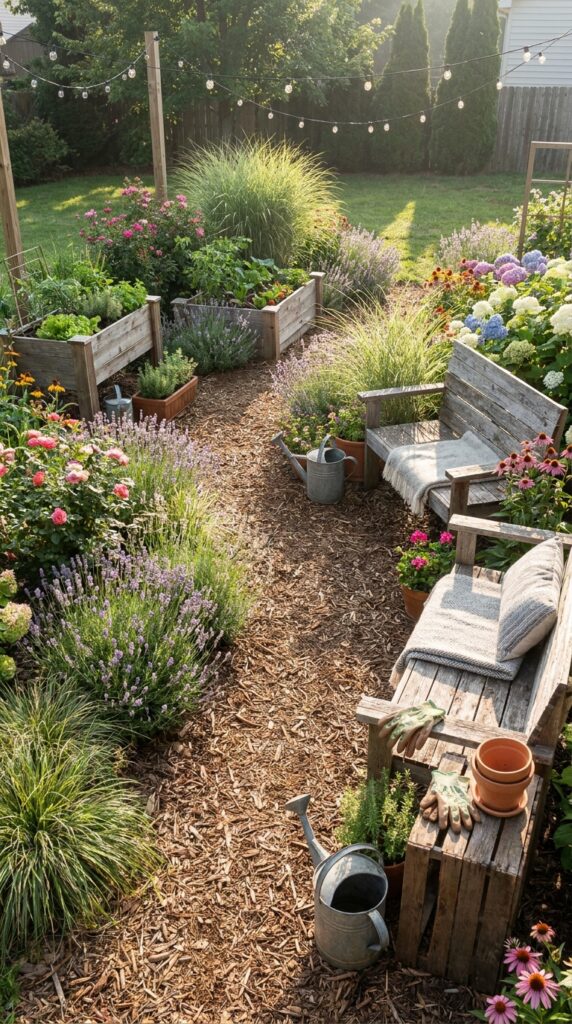
A simple mulch pathway can completely change the way your garden feels. Instead of walking across uneven grass or bare soil, you’ll have a clear route that naturally guides your eyes through the space. Dark brown or black mulch looks especially beautiful against fresh green plants, while natural wood mulch gives the garden a softer, cottage-inspired look. As plants begin to grow along the edges, the path feels cozy and established without looking overly planned.
Start by marking the path with a garden hose or rope before digging. Remove the grass, lay landscape fabric, and spread about two to three inches of mulch. Materials usually cost between $30 and $100, depending on the size of the path. One mistake beginners often make is creating a path that’s too narrow. Aim for at least three feet wide so it’s comfortable to walk through while carrying watering cans or garden tools.
6. Add Large Pots for Flexible Color
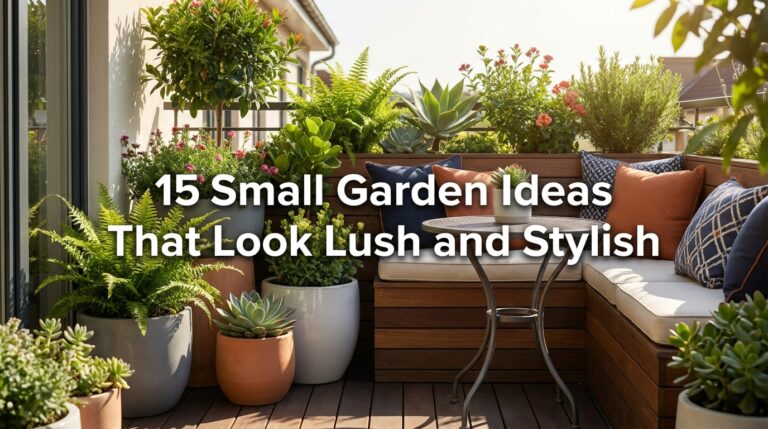
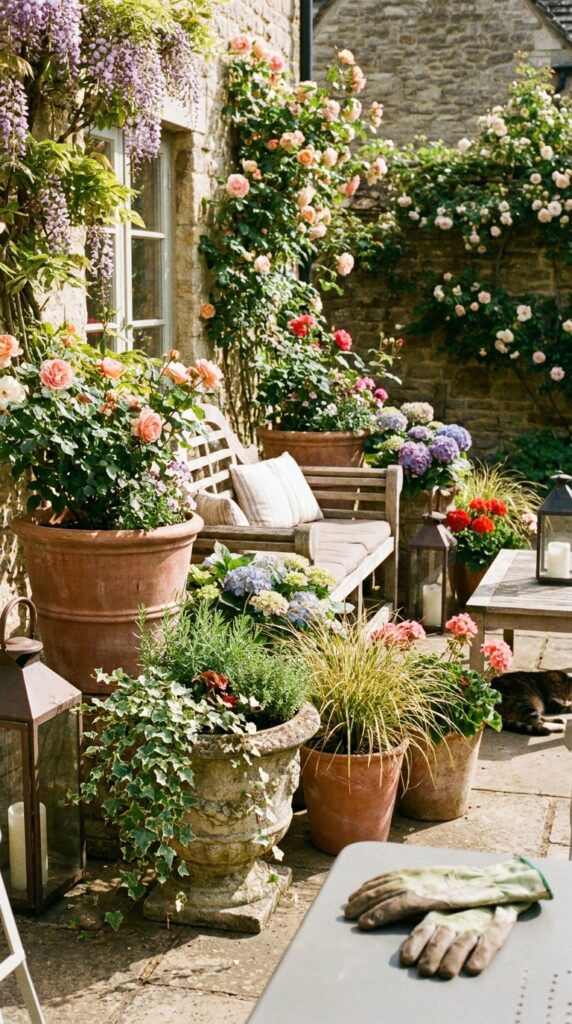
If you’re unsure where to plant flowers permanently, large containers are a great place to start. They let you experiment with different layouts and seasonal colors without digging into the ground. Terracotta pots bring warmth and charm, while matte black or stone-look planters create a more modern style. Grouping pots in different heights adds depth and makes even a small patio or garden entrance feel full of life.
Choose containers with drainage holes and fill them with quality potting mix. You can plant colorful annuals, herbs, or even dwarf shrubs depending on your space. Expect to spend around $15 to $60 per planter. I always recommend mixing one tall plant, one medium plant, and one trailing plant in each pot for a fuller look. Avoid using containers that are too small because they dry out much faster during warm weather.
7. Use Low-Maintenance Plants to Build Confidence
One of the smartest easy garden design ideas for beginners is choosing plants that don’t need constant attention. Hardy varieties like lavender, hostas, salvia, sedum, and ornamental grasses continue looking beautiful with minimal care. Their rich textures and calming colors create a relaxed garden that feels established without requiring daily maintenance.
Before buying plants, check your sunlight conditions so each variety has the best chance to thrive. Most beginner-friendly perennials cost between $8 and $30 each, making them an affordable investment since they return year after year. In my experience, the biggest mistake here is buying plants simply because they’re pretty at the garden center. Always read the care tag first so you’re bringing home plants that match your yard rather than creating extra work later.
8. Include Solar Lights Along Garden Paths
Lighting brings a garden to life after sunset and makes evening walks feel warm and inviting. Small solar stake lights tucked beside pathways or flower beds create a gentle glow without increasing your electricity bill. As the sun goes down, the soft lighting highlights plants, garden borders, and seating areas while adding a peaceful atmosphere that’s easy to enjoy.
Solar lights are simple to install because there’s no wiring involved. Most quality sets cost between $25 and $80, depending on brightness and design. Space them evenly instead of placing them too close together. What I personally love about this idea is that it makes the garden feel finished even if you’ve only completed a few landscaping projects. A common mistake is hiding the lights behind large plants where they can’t collect enough sunlight during the day.
9. Build a Simple Garden Around One Focal Point
A garden feels much more inviting when your eyes have somewhere to land. Instead of filling every corner with different plants and decorations, choose one feature to become the center of attention. It could be a small birdbath, a decorative planter, a wooden arbor, or even a flowering tree. Once that focal point is in place, everything else naturally falls into balance. The space feels calm, organized, and welcoming rather than crowded.
Place your focal point where it’s visible from your patio, deck, or the main window overlooking the yard. Surround it with plants of different heights to create gentle layers instead of blocking the view. Decorative birdbaths and garden ornaments typically cost $30 to $150, while a young ornamental tree may range from $50 to $200. A lot of people skip this step, but it makes all the difference because it gives the entire garden a clear sense of purpose.
10. Add Vertical Interest with a Trellis
Not every beautiful garden needs more ground space. Sometimes the easiest way to create visual interest is by growing upward. A wooden or metal trellis covered with climbing roses, jasmine, clematis, or sweet peas adds height, texture, and seasonal color without taking up much room. As the vines mature, they soften fences and walls, making the whole garden feel lush and established.
Position your trellis where plants will receive enough sunlight, and secure it firmly before planting. Basic trellises usually cost $20 to $80, while larger decorative styles can range from $80 to $200. I always recommend giving climbing plants enough room to spread naturally instead of forcing them into tight spaces. Be patient during the first growing season because many climbers spend their early months building strong roots before producing lots of blooms.
11. Create Layers with Plants of Different Heights
One reason professional-looking gardens feel so balanced is that they use layers instead of placing every plant at the same height. Taller shrubs and ornamental grasses belong near the back, medium-sized flowering plants work well in the middle, and shorter flowers or ground covers soften the front edge. This creates depth, movement, and a fuller appearance throughout the growing season.
Before planting, place your pots on the ground and step back to see how everything looks together. Rearranging them first is much easier than moving plants later. Most perennial flowers cost between $8 and $25, making this an affordable way to improve the overall layout. In my experience, the biggest mistake here is planting tall varieties at the front, where they block everything behind them. Giving each layer room to shine creates a much more natural result.
12. Finish with Comfortable Outdoor Decor
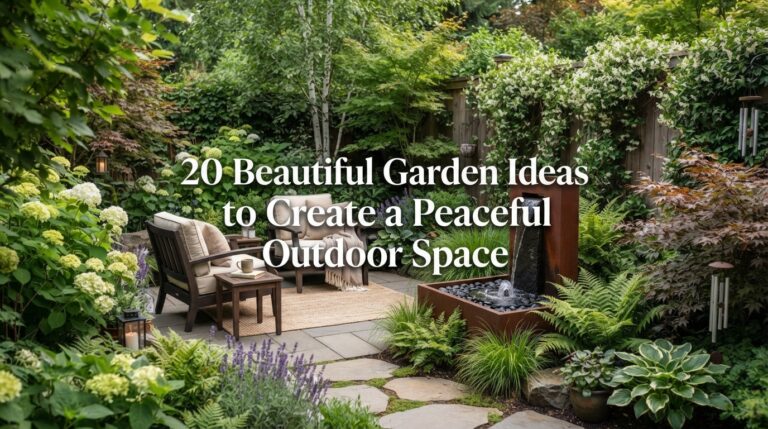
Once your plants are growing, a few carefully chosen accessories help the garden feel like an extension of your home. A weather-resistant outdoor rug, a pair of comfortable chairs, soft cushions, lanterns, and a few potted plants can turn an unused corner into a relaxing place to unwind. Natural wood, woven textures, linen-look fabrics, and earthy colors work beautifully together without overwhelming the garden itself.
You don’t need to buy everything at once. Start with one seating area and add small details over time. A simple outdoor setup can cost anywhere from $100 to $400, depending on your furniture choices. What I personally love about this approach is that it grows with your garden. Avoid filling every space with decorations because plants should always remain the main attraction.
Conclusion
Creating a beautiful outdoor space doesn’t have to mean hiring a landscaper or spending thousands of dollars. The best gardens often grow little by little, with each project adding more personality and comfort over time. These easy garden design ideas for beginners are meant to help you build confidence while creating a yard that feels welcoming, organized, and enjoyable throughout the seasons.
You don’t have to tackle every project in one weekend. Start with one or two ideas that fit your space and budget, whether that’s adding raised beds, defining your garden borders, or creating a cozy place to sit with a cup of coffee. As your plants mature and your confidence grows, you’ll naturally discover what works best for your home.
Remember, gardens aren’t meant to be finished overnight. They change, grow, and become more beautiful with each season. That’s part of the fun.
Which of these easy garden design ideas for beginners would you try first? I’d love to hear what you’re planning in the comments below.
FAQ
How do I start a garden if I’ve never gardened before?
Start small instead of trying to redesign your entire yard at once. Pick one flower bed, a few containers, or a raised garden bed and focus on learning how to care for those plants. Choosing low-maintenance varieties will make the process much more enjoyable.
What are the easiest plants for beginner gardeners?
Lavender, hostas, salvia, sedum, marigolds, coneflowers, and ornamental grasses are excellent beginner choices. They require relatively little maintenance and provide beautiful color and texture throughout much of the year. Always choose plants that match your local climate and sunlight conditions.
How much does it cost to create a simple garden?
A beginner-friendly garden can cost anywhere from $100 to $500, depending on the size of your space and the materials you choose. Starting with mulch, a few plants, and simple edging is a budget-friendly approach. You can always add more features as your garden grows.
How can I make a small garden look bigger?
Use curved pathways, layered planting, vertical trellises, and a consistent color palette to create depth. Avoid overcrowding the space with too many decorations. A clear focal point also helps make a small garden feel more open and thoughtfully arranged.
How often should beginners maintain their garden?
Most beginner gardens only need a little attention each week. Water plants as needed, remove weeds regularly, trim dead flowers, and refresh mulch once or twice a year. Spending just 20 to 30 minutes each week helps keep your garden healthy and looking its best.