What Types of Bathroom Shelving Are Best for Small Spaces?
Introduction
A small bathroom can quickly start to feel crowded when towels, toiletries, skincare products, and everyday essentials compete for the same limited counter space. Even after decluttering, it may seem like there’s simply nowhere to put the things you actually use. The good news is that the right shelving can make a noticeable difference without requiring a full renovation or a larger room.
If you’ve been wondering what types of bathroom shelving are best for small spaces, you’re not alone. Choosing shelves that fit your layout, storage needs, and decorating style can help you make the most of every inch while keeping the room neat and welcoming. The right shelving also adds personality through natural wood, clean lines, woven baskets, and carefully displayed accessories.
In this guide, you’ll discover the most practical shelving options for compact bathrooms, along with simple styling tips, budget-friendly ideas, and common mistakes to avoid. Whether your bathroom is modern, farmhouse, traditional, or minimalist, these shelving solutions can help create a more organized and comfortable space without overwhelming the room.
1. Floating Shelves Make the Most of Empty Walls
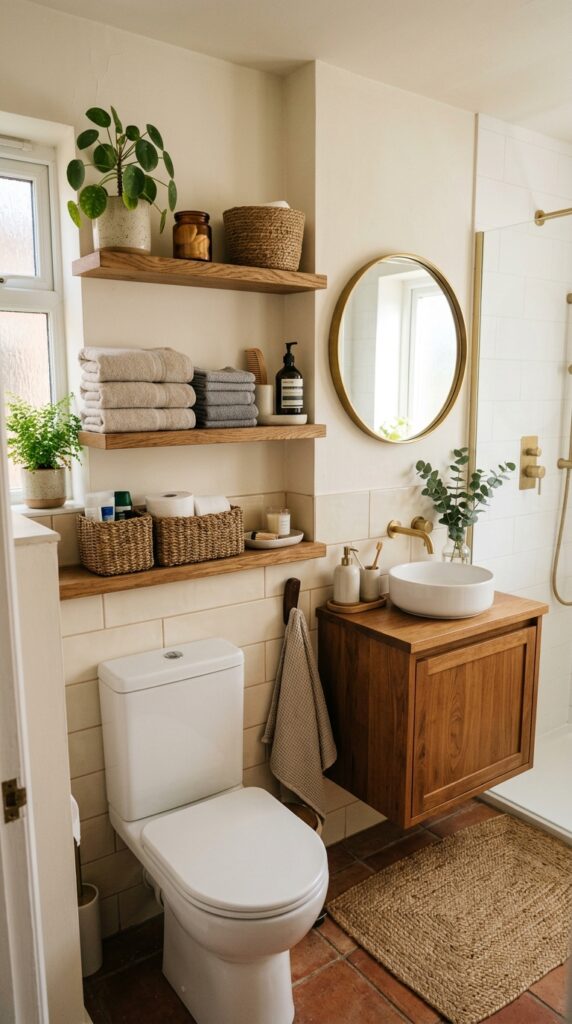
Floating shelves are one of the smartest ways to add storage without taking up valuable floor space. Mounted above the toilet, beside the vanity, or on an unused wall, they create room for neatly folded towels, woven baskets, candles, small plants, and everyday toiletries. Natural wood shelves paired with white walls and soft lighting create a warm, welcoming look that feels open instead of crowded.
Choose shelves that are sturdy enough to hold bathroom essentials while keeping the depth between six and ten inches so they don’t stick too far into the room. I always recommend styling each shelf with a mix of decorative and practical items instead of filling every inch with products. In my experience, the biggest mistake here is overcrowding the shelves, which makes a small bathroom feel even smaller. Floating shelves generally cost between $25 and $120.
2. Corner Shelves Turn Unused Space Into Storage
Bathroom corners often go unused, yet they provide valuable storage opportunities. Corner shelves tuck neatly into empty spaces while keeping walkways clear. Whether installed inside the shower or beside the vanity, they offer a convenient place for soaps, skincare, decorative accents, or rolled towels without making the room feel crowded.
Choose moisture-resistant materials such as tempered glass, sealed wood, or powder-coated metal for long-lasting performance. Installing two or three shelves vertically provides more storage while maintaining an airy appearance. What I personally love about corner shelving is that it makes use of space most people overlook. Quality corner shelves usually range from $20 to $100.
3. Over-the-Toilet Shelving Adds Vertical Storage
The wall above the toilet is one of the most underused areas in many bathrooms. Adding shelving here creates extra storage without affecting the layout of the room. Open shelves filled with folded towels, woven baskets, decorative jars, and small plants add both function and warmth while keeping daily essentials within easy reach.
Choose shelves that match your vanity or wall color for a cohesive appearance. Leave enough open space between shelves so the display feels balanced rather than crowded. A lot of people skip this area entirely, but it can become one of the hardest-working storage spots in the bathroom. Over-the-toilet shelving units typically cost between $40 and $180.
4. Recessed Wall Shelves Save Space Beautifully
Recessed shelves sit inside the wall rather than extending into the room, making them one of the most efficient storage options for compact bathrooms. These built-in niches create clean lines while providing space for toiletries, decorative accessories, or extra towels. The finished look feels organized, modern, and surprisingly spacious.
If you’re renovating, consider adding recessed shelves near the vanity or inside the shower. Tile the interior to match your walls for a seamless appearance, or use a contrasting finish for added character. A lot of people assume recessed shelving is only for luxury bathrooms, but it works just as well in modest spaces. Depending on the installation, recessed shelving projects usually cost between $150 and $600.
5. Ladder Shelves Bring Storage Without Heavy Cabinets
A slim ladder shelf is a great choice if you want extra storage without making a small bathroom feel boxed in. The open design keeps the room looking light while providing several levels for folded towels, woven baskets, decorative jars, and small plants. Natural wood finishes add warmth, while black metal frames suit a more modern look.
Choose a narrow ladder shelf that leans securely against the wall without blocking doors or walkways. Store heavier items on the lower shelves to improve stability and keep everyday essentials within easy reach. What I personally love about ladder shelves is that they add storage while still feeling decorative. Most quality ladder shelves cost between $60 and $180.
6. Glass Shelves Help Small Bathrooms Feel Larger
Glass shelves almost disappear visually, making them an excellent option when you want storage without adding visual weight. Their clean lines reflect light around the room, helping compact bathrooms feel brighter and more open. They pair beautifully with chrome, brushed nickel, or matte black fixtures for a timeless appearance.
Use tempered glass designed specifically for bathrooms and avoid placing overly heavy items on each shelf. A few rolled towels, attractive soap dispensers, and a small plant create a balanced display without clutter. In my experience, the biggest mistake here is overcrowding transparent shelves, which takes away from their airy look. Glass shelving typically ranges from $30 to $150.
7. Wire Shelving Works Well in Utility Bathrooms
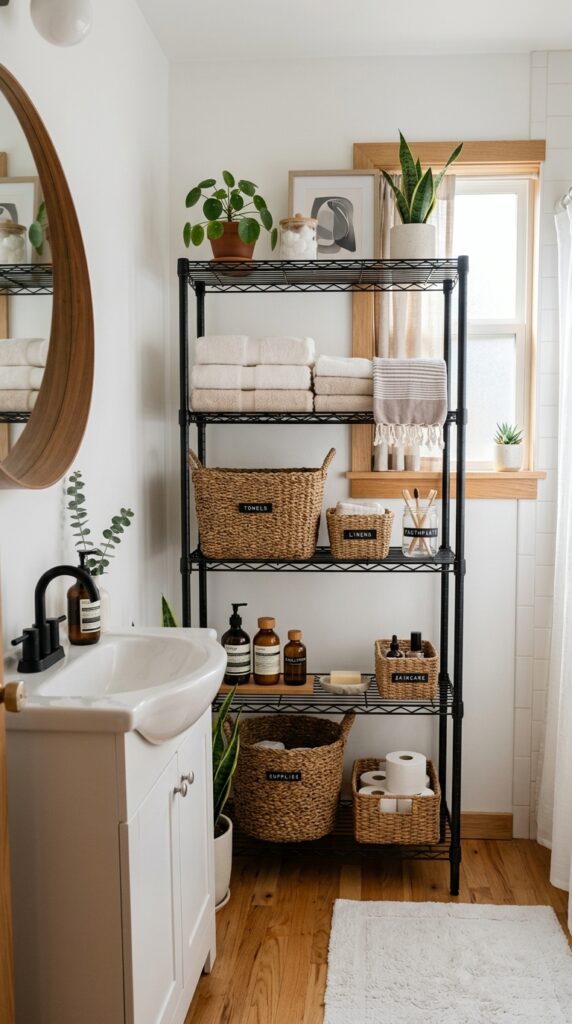
Wire shelving may not be the first thing that comes to mind, but it’s incredibly practical for bathrooms that need extra storage. The open design allows air to circulate, helping towels dry faster while keeping cleaning supplies and toiletries organized. White or black wire shelving also creates a clean, organized appearance without overwhelming the room.
Choose coated wire shelves that resist rust in humid environments. Pair them with woven baskets or fabric bins to hide smaller items and create a softer look. I always recommend mixing storage baskets with open shelving because it keeps everyday essentials easy to find while reducing visual clutter. Wire shelving systems generally cost between $40 and $120.
8. Built-In Shower Niches Keep Essentials Organized
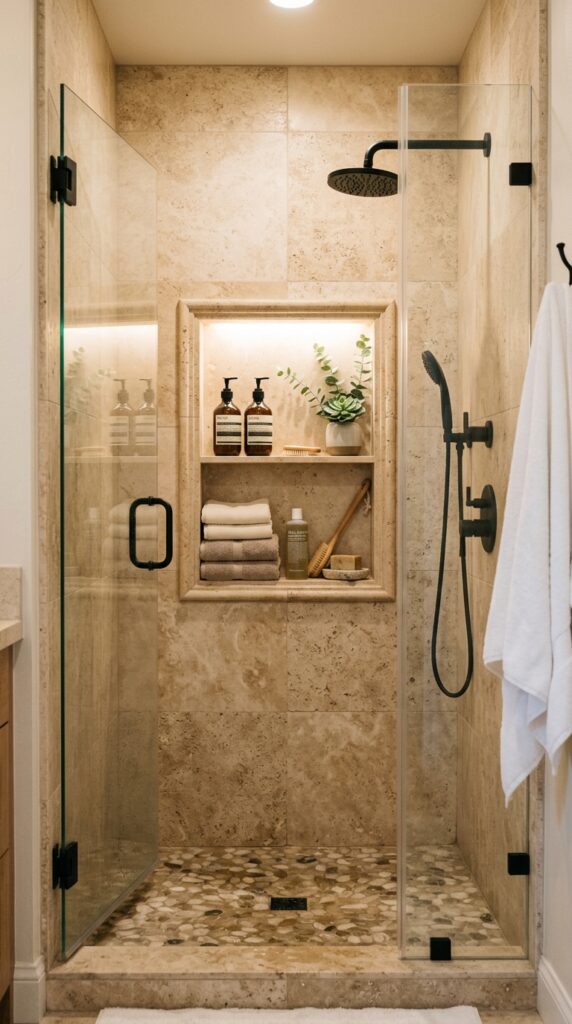
If you’re remodeling your bathroom, adding a built-in shower niche is one of the smartest storage upgrades you can make. Instead of cluttering the shower floor with bottles, the recessed shelf provides a clean place for shampoo, conditioner, body wash, and soaps. The finished result feels tidy while giving the shower a custom appearance.
Install the niche at a comfortable height and choose tile that either matches the shower walls or provides subtle contrast. A lot of people make the niche too small, only to find it doesn’t hold everyday products. Planning for taller bottles from the beginning saves frustration later. Depending on materials and installation, shower niches usually cost between $200 and $700.
9. Under-Sink Shelves Double Your Storage Space
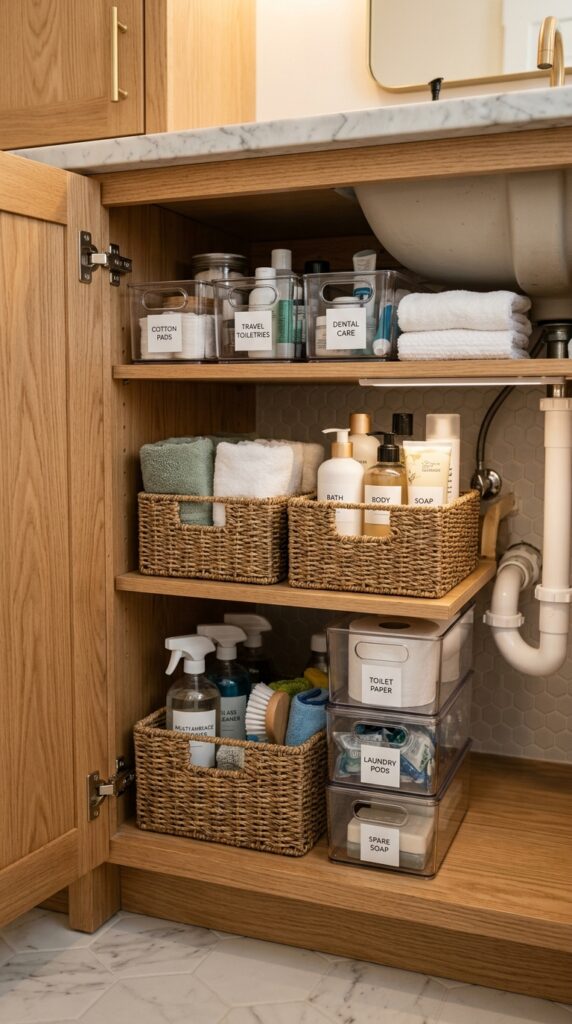
The cabinet beneath your bathroom sink often has far more storage potential than people realize. Adding stackable shelves instantly creates multiple levels for cleaning supplies, extra toiletries, toilet paper, and everyday essentials. Instead of digging through one crowded cabinet, everything becomes easier to see and reach.
Choose adjustable shelving that works around your plumbing, and use clear bins or labeled baskets to group similar items together. A lot of people simply pile products under the sink, but adding even one extra shelf makes the cabinet much more functional. Under-sink organizers generally cost between $20 and $80, making them one of the most affordable bathroom upgrades.
10. Rolling Storage Carts Fit Into Tight Spaces
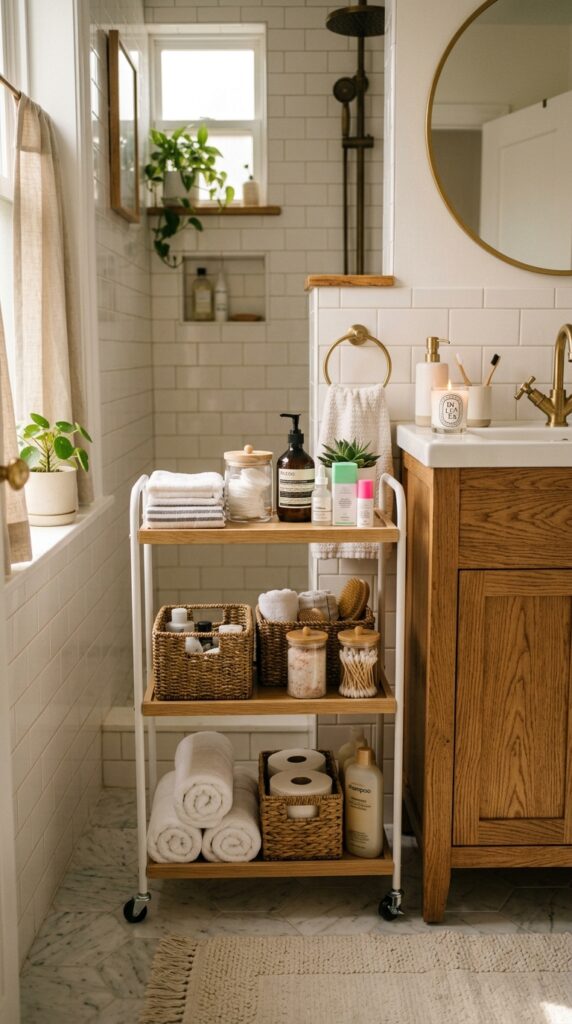
A slim rolling storage cart can slide into spaces that would otherwise go unused, such as the gap between the vanity and the wall or beside the toilet. It gives you several shelves for toiletries, extra toilet paper, hair tools, and cleaning products while keeping everything easy to access. The open design also helps a small bathroom feel less crowded than a bulky cabinet.
Choose a narrow cart with smooth-rolling wheels and moisture-resistant shelves. Keep frequently used items on the top level and store backup supplies on the lower shelves. What I personally love about rolling carts is that you can move them wherever you need extra storage. Most compact bathroom carts cost between $25 and $100.
11. Hanging Wall Shelves Add Storage Without Taking Floor Space
Hanging wall shelves combine practical storage with decorative style. They work beautifully above a towel bar, beside a mirror, or on an empty wall where cabinets would feel too heavy. Displaying neatly folded towels, ceramic containers, candles, and greenery creates a welcoming look while keeping essentials close at hand.
Choose sturdy wall anchors and shelves designed for humid environments. Mix open storage with a few decorative accents to avoid a cluttered appearance. In my experience, the biggest mistake here is filling every shelf with small items instead of leaving a little breathing room. Quality hanging shelves usually range from $30 to $150.
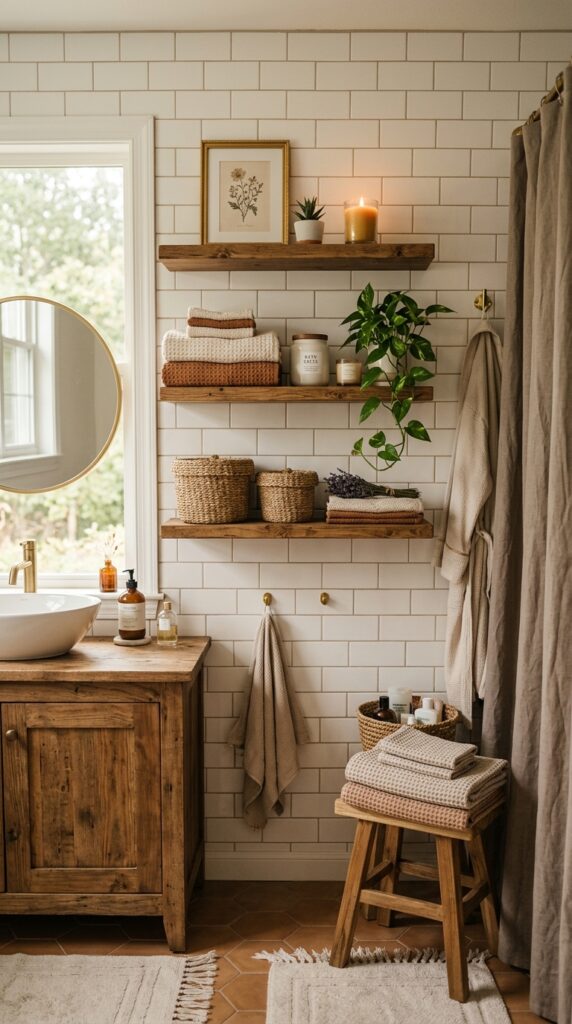
12. Style Your Shelves Like Part of the Decor
Bathroom shelves should do more than simply hold products. They can also make the room feel warmer and more inviting. Soft white towels, woven baskets, glass jars filled with cotton balls, a small trailing plant, and a lightly scented candle add texture without creating clutter. When everyday essentials are displayed neatly, the bathroom feels more relaxing.
Stick to a simple color palette using whites, warm wood tones, beige, or soft gray for a clean appearance. I always recommend grouping items in odd numbers because the arrangement tends to feel more natural. Leave a little empty space on each shelf so every piece has room to stand out. Decorative accessories for shelf styling generally cost between $10 and $60.
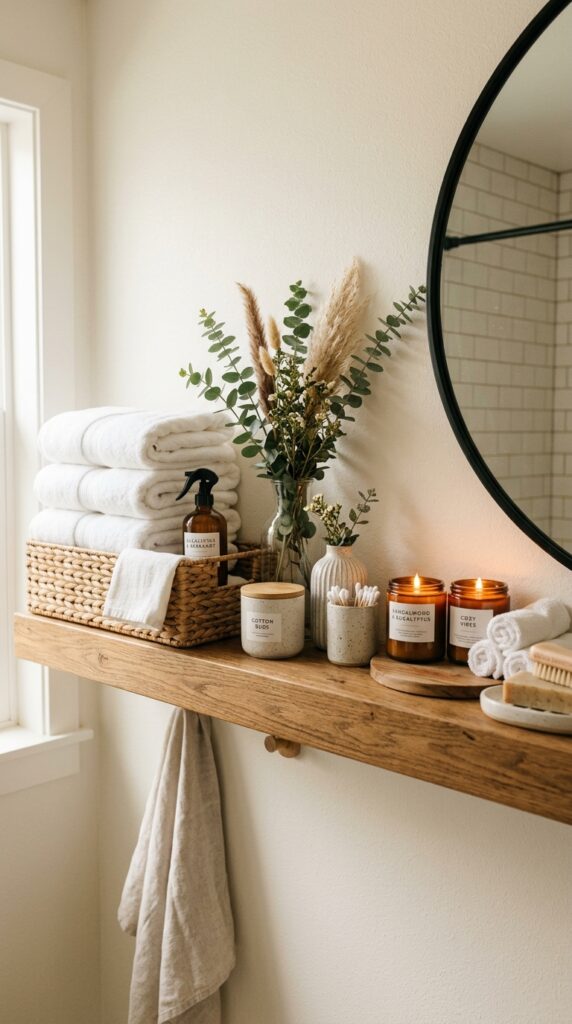
13. Avoid Common Small Bathroom Shelving Mistakes
Even the best shelving won’t improve your bathroom if it’s installed or styled poorly. Shelves that are too deep can make the room feel cramped, while overcrowded displays create visual clutter. Storage works best when it feels balanced, organized, and easy to maintain. A few carefully chosen shelves almost always outperform several oversized units.
Measure your walls carefully before purchasing anything, and think about how you’ll actually use each shelf. A lot of people buy shelving based only on appearance without considering storage needs or daily routines. I always recommend choosing quality over quantity because fewer, well-placed shelves often provide better results. Correcting shelving mistakes may cost anywhere from $20 to $100, depending on the adjustments needed.
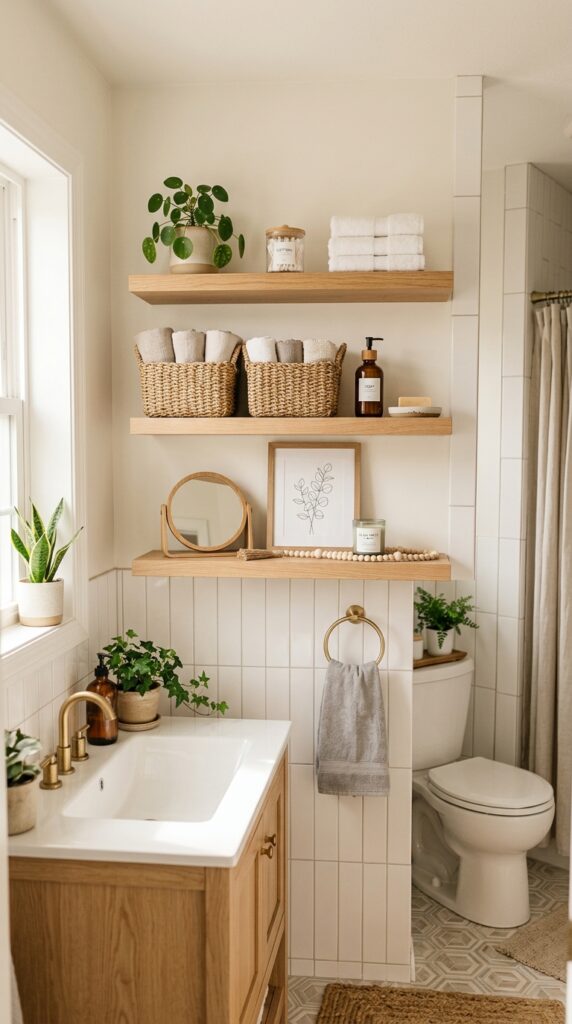
14. Match Your Shelving to Your Bathroom Style
The shelving you choose should complement the rest of your bathroom instead of competing with it. Natural wood shelves pair beautifully with farmhouse and Scandinavian interiors, while black metal shelves suit industrial and modern spaces. Glass shelves work well in contemporary bathrooms, and painted wood shelves blend seamlessly into traditional designs.
Look at your vanity, mirror frame, lighting, and hardware before selecting shelf materials and finishes. A lot of people overlook these details, but matching the overall style makes the bathroom feel more complete. Whether your budget is modest or more flexible, coordinating materials creates a polished look without requiring major renovations. Most shelving styles range from $30 to $200.
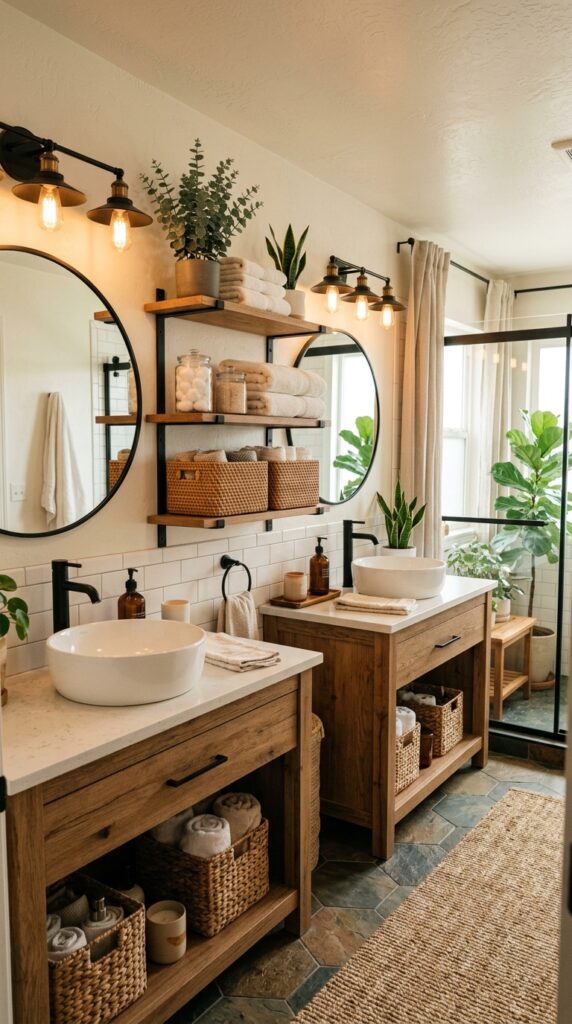
15. Choose Shelving That Fits Your Everyday Routine
The best bathroom shelving isn’t necessarily the largest or the most decorative. It’s the shelving that makes your daily routine easier while keeping the room comfortable and organized. When everything has its place, getting ready each morning feels less stressful, and the bathroom stays cleaner with much less effort.
Think about what you reach for every day and plan your shelves around those habits. Keep frequently used products at eye level, store extras in baskets, and leave enough open space so the room never feels crowded. What I personally love about thoughtful storage is that it improves both function and style at the same time. A few well-chosen shelves can completely change how a small bathroom feels.
Conclusion
If you’ve been wondering what types of bathroom shelving are best for small spaces, the answer depends on your layout, storage needs, and decorating style. Floating shelves, corner units, recessed niches, ladder shelves, and under-sink organizers each offer unique advantages, helping you use every inch of available space without making the room feel crowded.
You don’t need a large bathroom or an expensive renovation to enjoy a more organized home. Even one or two well-placed shelves can clear clutter, add warmth, and create room for the items you use every day. Start with the area that causes the most frustration, whether it’s the vanity, shower, or empty wall above the toilet.
As your storage needs change, you can always add more solutions over time. Thoughtful shelving isn’t just about organization. It also helps create a bathroom that feels calm, welcoming, and enjoyable to use every day.
Which shelving idea would you try first? I’d love to hear your plans in the comments.
FAQs
What type of shelving works best in a very small bathroom?
Floating shelves and corner shelves are among the best choices because they use wall space instead of valuable floor space. They provide storage while helping the room feel open and uncluttered.
Are wooden bathroom shelves a good idea?
Yes, as long as the wood is properly sealed to resist moisture. Cedar, oak, teak, and other treated woods perform well in humid bathrooms while adding natural warmth.
How many shelves should I install in a small bathroom?
Two to three well-placed shelves are often enough for most compact bathrooms. Installing too many shelves can make the room feel crowded, so focus on quality placement instead of quantity.
How can I style bathroom shelves without creating clutter?
Mix practical items like towels and storage baskets with a few decorative pieces such as candles, plants, or ceramic containers. Leave some empty space so the shelves feel balanced and easy to maintain.
What is the most affordable bathroom shelving option?
Floating shelves and under-sink organizers are usually the most budget-friendly choices. Many attractive options are available for under $50, making them an easy weekend upgrade.