
18 Feminine Home Habits That Create a Peaceful Space
A home can feel unsettled even when it looks reasonably tidy. Shoes gather near the door, laundry moves from one chair to another, and kitchen counters slowly fill with items that never seem to find a proper place. When every room holds unfinished tasks, it becomes harder to relax.
These 18 feminine home habits that create a peaceful space focus on small routines that make daily life feel softer and more manageable. They are not about keeping an empty house or cleaning for hours each day. The goal is to create simple systems that support rest, cooking, getting dressed, welcoming guests, and caring for your belongings.
You will find habits for bedroom resets, laundry, kitchen organization, gentle fragrance, warm lighting, storage, and meaningful decor. Each idea includes a practical way to begin, a common mistake to avoid, and a realistic cost where useful. Start with one or two habits connected to the area that causes the most stress. A peaceful home usually grows through steady care rather than one large makeover.
1. Begin Feminine Home Habits With a Morning Airing Routine
Opening the curtains and windows for a few minutes can make a room feel fresher before the day becomes busy. Natural light moves across bedding, wood furniture, and soft fabric, while fresh air helps remove the closed feeling that can build overnight. Even a compact bedroom feels more awake when the window area is clear.
Open curtains as soon as you get up and air the room for five to fifteen minutes when the weather allows. Pull bedding back during this time rather than making the bed immediately. In my experience, the biggest mistake is leaving windowsills crowded with bottles, papers, and decor, which makes the habit harder. Clear enough space to open the window easily. This routine costs nothing. Lightweight curtain ties may cost between $5 and $15 if they help keep fabric away from the opening.
2. Make the Bed in a Simple, Repeatable Way
A made bed gives the bedroom one large area of visual calm. Fresh cotton, a smooth duvet, and a folded throw create a soft background for the rest of the room. The bed does not need several decorative cushions to feel welcoming.
Choose a setup you can complete in two or three minutes. Smooth the fitted sheet, pull the duvet into place, arrange the sleeping pillows, and fold one throw across the lower third. What I personally love about this habit is that it creates an immediate result without requiring a full room clean. Avoid adding so many layers that making the bed becomes frustrating. A new throw or pillowcase set may cost between $20 and $60, but rearranging the bedding you already own is free.
3. Clear One Surface Before Breakfast
A clear kitchen counter, bedside table, or dining surface can change how the whole room feels. Clean wood, folded linen, and one useful tray often look warmer than a surface filled with small objects. Starting the day with one open area makes later tasks easier.
Choose the surface you see most often and spend three minutes returning items to their proper places. Throw away rubbish, move dishes to the sink, and place daily products together. A lot of people try to clear every room at once, then become overwhelmed. One finished surface is more useful than five partly organized ones. A small tray or basket may cost between $8 and $30. Repurposing a serving plate or shallow box keeps the cost low.
4. Put Things Away Near Where You Use Them
A peaceful home becomes easier to maintain when storage matches real behavior. Keys need a place near the door, skincare belongs close to the mirror, and folded blankets should sit near the sofa. When items are stored far from where they are used, they often remain on tables or chairs.
Notice where clutter naturally collects and place a hook, tray, drawer divider, or basket nearby. Keep the system broad enough that putting something away takes only a few seconds. In my experience, the biggest mistake is creating highly specific categories that no one remembers. A basket labeled “evening items” may work better than several tiny containers. Hooks, trays, and small bins generally cost between $10 and $40. Use containers already in your home before shopping.
5. Use Feminine Home Habits to Keep Laundry Moving
Laundry feels more overwhelming when clean, dirty, and partly worn clothes all share the same chair. A simple routine keeps fabric moving through the home without requiring an entire laundry day. Fresh cotton, folded knitwear, and an empty chair can make the bedroom feel noticeably calmer.
Place a laundry basket where you usually change clothes. Use one hook for items that can be worn again and return clean clothing to drawers as soon as it is folded. A lot of people skip the final step and live from a clean laundry basket for days. Put away one category at a time if the full load feels tiring. A divided laundry hamper may cost between $25 and $70, while a basic basket and wall hook can cost $15 to $40.
6. Wash Fabrics Before Buying New Decor
Curtains, cushion covers, throws, and bedding can make a room feel tired when they hold dust, odors, or wrinkles. Washing and airing them often creates a bigger change than adding another decorative object. Clean fabric also makes muted colors and woven textures look fresher.
Choose one fabric category each week rather than stripping every room at once. Follow care labels, dry items fully, and steam or smooth them before returning them to the room. What I personally love about this habit is that it creates affordable decor updates without shopping. Avoid washing delicate textiles without checking the material first. A fabric steamer may cost between $25 and $70, though many items can be refreshed with careful washing and air drying.
7. End Cooking With a Five Minute Kitchen Reset
A clean kitchen at night makes the next morning feel less demanding. Wiped counters, an empty sink, and a folded dish towel create a quiet finish after dinner. The room does not need to look unused. It simply needs to be ready for the next meal.
Load or wash the main dishes, wipe the work surface, and return frequently used ingredients to their shelves. Leave deep cleaning for another time. In my experience, the biggest mistake is sitting down “for a minute” before completing the smallest tasks, because returning later feels much harder. Set a five minute timer and stop when the basic reset is done. A sink caddy or dish rack may cost between $15 and $50.
8. Use Warm Lamps Instead of Harsh Overhead Light
Lighting changes the way every color and texture appears. Warm lamps create soft pools of light around the sofa, bedside table, or reading chair. Linen curtains, wood grain, books, and cushions feel more comforting when the room is not flooded with bright ceiling light.
Switch to smaller lamps during the evening and use warm LED bulbs. Place one light near each activity, such as reading, dressing, or relaxing. A common mistake is adding several tiny decorative lights that do not provide enough useful brightness. Choose lamps that support real tasks. Warm bulbs cost about $5 to $15, while a table or floor lamp may range from $25 to $100. Thrifted lamp bases can be refreshed with a new shade.
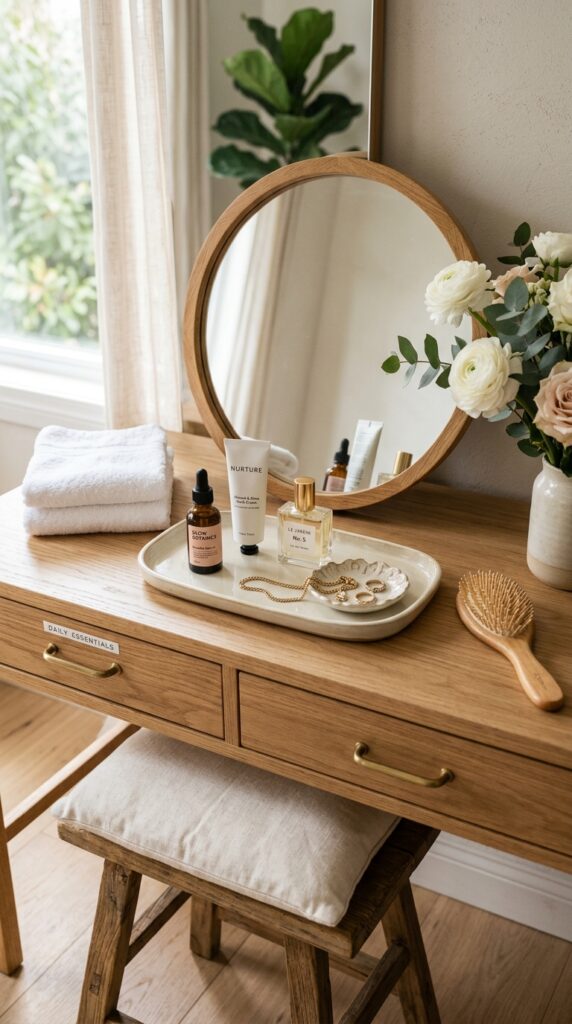
9. Keep Daily Beauty Products on One Tray
Beauty and grooming products can quickly cover a vanity or bathroom counter. A small tray creates a clear boundary for the items you use most often. Glass bottles, hand cream, a hairbrush, and a jewelry dish look calmer when grouped together.
Keep daily skincare and fragrance on the tray while storing backups inside drawers or baskets. Wipe the surface once a week and return anything that has wandered into the space. A lot of people display every product they own, which makes cleaning difficult and creates visual noise. Limit the tray to what fits comfortably. A ceramic, wood, or marble effect tray may cost between $10 and $40. A serving plate can work just as well.
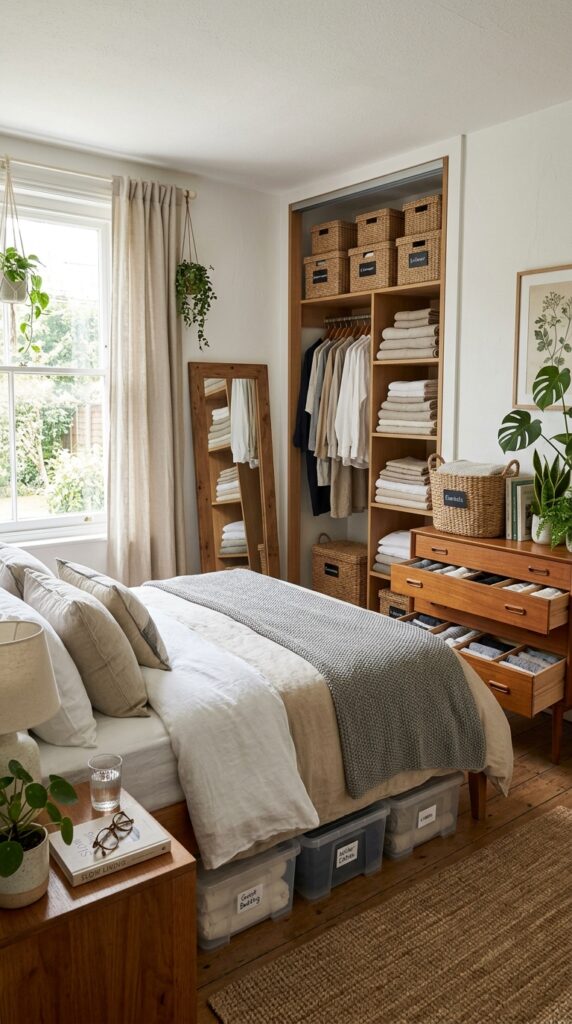
10. Build Peaceful Home Habits Around Closed Storage
Closed storage allows a room to remain useful without showing every practical item. Lidded baskets, drawers, cabinets, and underbed boxes can hold extra linens, cables, seasonal clothing, cleaning supplies, and beauty backups. Woven texture and natural materials keep storage from feeling cold.
Measure shelves and floor space before buying containers. Group similar items and label boxes that are not opened often. What I personally love about closed storage is that it reduces visual clutter while keeping necessities nearby. Avoid using baskets to hide things you no longer want. Declutter before organizing. Storage boxes and baskets usually cost between $15 and $60 each, while covered shoe boxes can provide a simple budget swap.
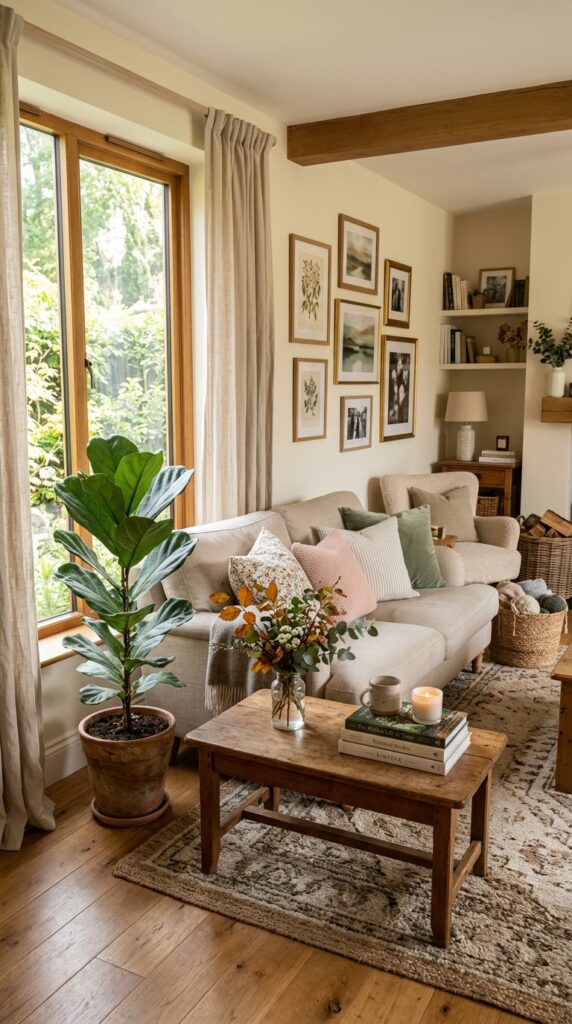
11. Bring in One Natural Element Per Room
Flowers, herbs, branches, shells, or a houseplant can soften a room and bring in gentle color. One natural element often creates more warmth than several small decorations. Green leaves look especially fresh beside cream fabric, natural wood, and muted wall colors.
Choose plants according to the actual light in the room. Use seasonal branches or garden clippings if plant care does not suit your routine. A lot of people buy greenery for dark corners where it cannot thrive. Place living plants where they receive suitable light and use dried stems elsewhere. A small plant may cost between $10 and $35, while garden greenery can be free.
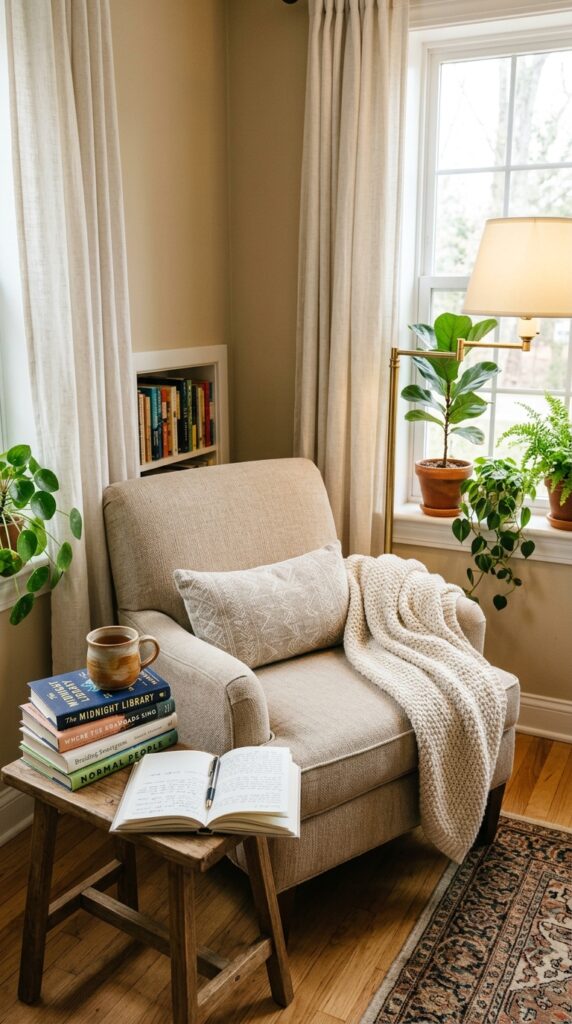
12. Create a Screen Free Corner
A screen free corner gives you a place to read, journal, drink tea, or sit quietly. A comfortable chair, one cushion, warm light, and a small table can create a useful pause within a busy home. This area does not need to be large or highly decorated.
Choose a chair near a window or lamp and remove chargers, work papers, and unused objects. Add a basket for books or a folded throw. In my experience, the biggest mistake is allowing the corner to become another clothing drop zone. Place a laundry basket nearby and reset the seat each evening. Rearranging furniture may cost nothing. A thrifted chair, cushion, or side table may cost between $30 and $150.
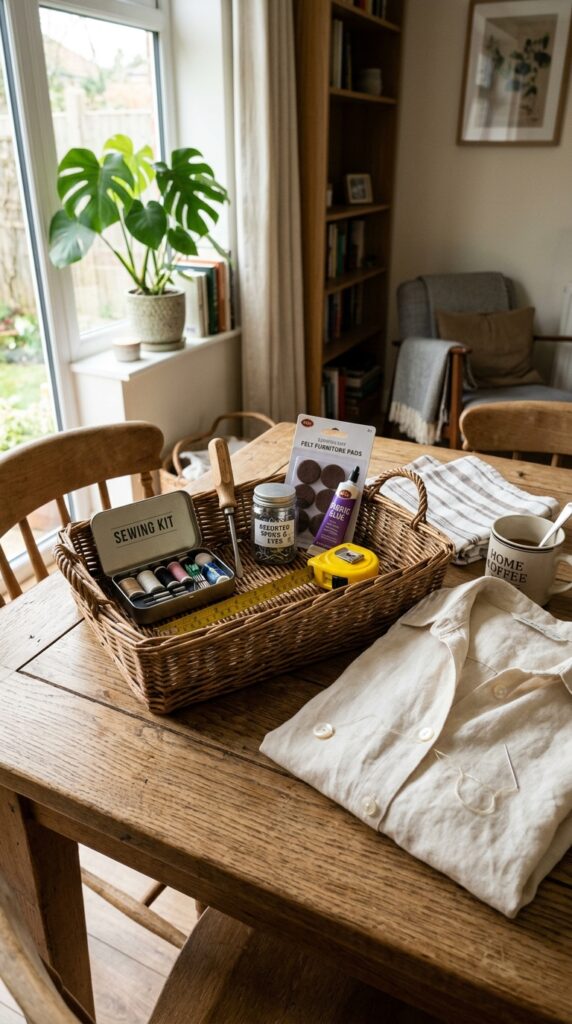
13. Keep a Small Home Repair Basket
Loose buttons, scratched furniture, missing hooks, and small broken items can make a home feel neglected. Keeping basic repair supplies together helps you fix problems before they become larger or disappear into a forgotten drawer.
Use a small basket or box for a sewing kit, fabric glue, spare hooks, a screwdriver, measuring tape, furniture touch up marker, and felt pads. Set aside fifteen minutes once a month to handle one or two repairs. A lot of people buy replacement items when a simple repair would work. Check what can be cleaned, tightened, sewn, or glued first. A basic repair basket may cost between $20 and $60, depending on the tools you already own.
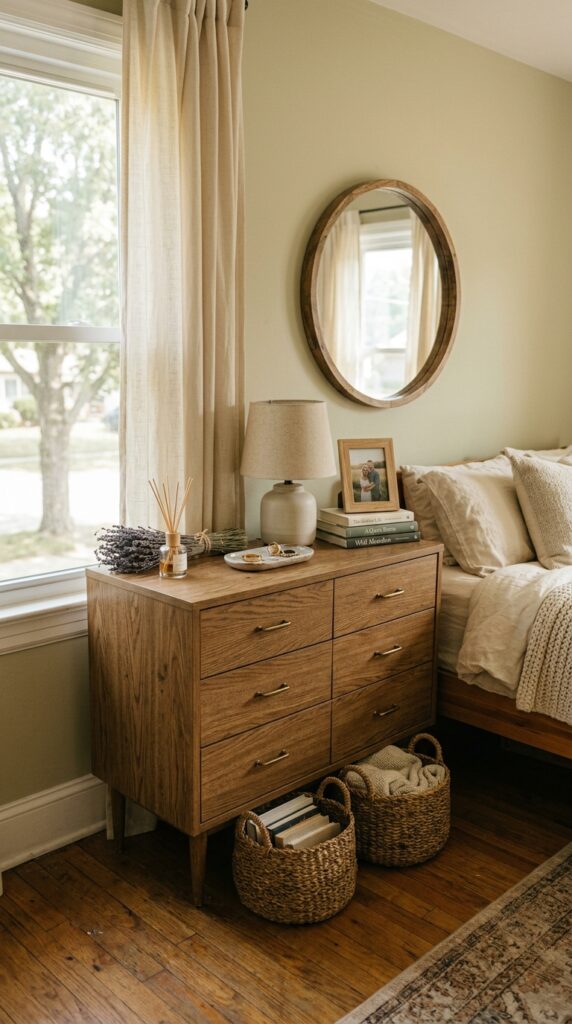
14. Choose One Gentle Home Fragrance
A subtle home fragrance can make a room feel familiar and cared for. Clean cotton, lavender, citrus, soft floral, or warm wood notes can support the mood without becoming overpowering. Fresh air and clean fabric should remain the base.
Choose one fragrance method for each area, such as a reed diffuser in the entryway or linen spray in the bedroom. Do not combine several strong scents in a small room. A common mistake is using fragrance to cover damp fabric, rubbish, or stale air. Find and clean the source first. A diffuser, candle, or linen spray may cost between $10 and $40. Dried herbs in a breathable fabric pouch provide a lower cost option.
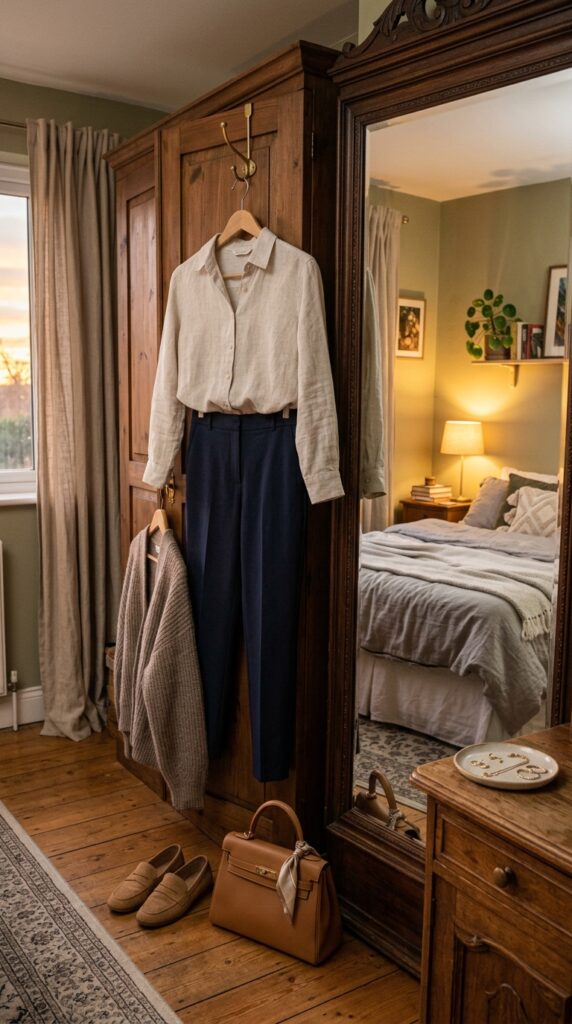
15. Prepare for Tomorrow Before Going to Bed
A peaceful morning often begins with a small evening habit. Laying out clothes, packing a bag, and placing keys near the door reduces searching and last minute decisions. A wearable outfit resting near a mirror can also make the bedroom feel organized.
Check the weather and your schedule before choosing clothing. Hang the main pieces together and place shoes or accessories nearby. What I personally love about this habit is that it takes less than ten minutes but affects the whole morning. Avoid planning an outfit that looks attractive but does not suit the weather or your activities. An over door hook may cost between $10 and $25, while using an existing hanger is free.
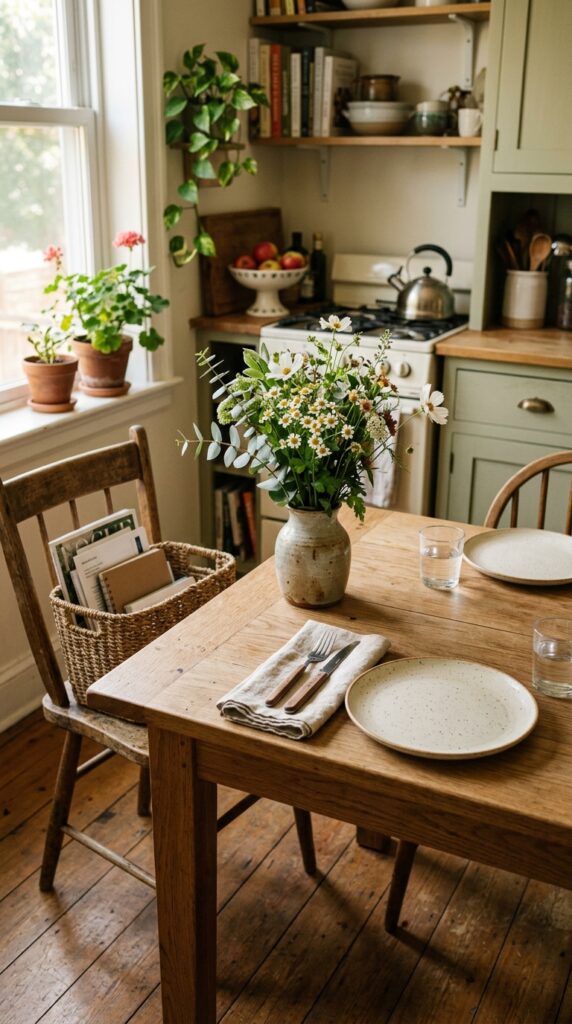
16. Let the Dining Table Return to Its Main Purpose
Dining tables often become storage for mail, shopping bags, folded laundry, and unfinished projects. Clearing enough space to sit and eat can make meals feel calmer and create a natural gathering point in the home.
Place a small basket nearby for papers that need attention and give projects a separate box. Keep the table styling simple with one vase, bowl, or candle tray. In my experience, the biggest mistake is decorating the full surface so heavily that there is still no room for meals. Leave most of the table open. A paper basket or document box may cost between $10 and $30, while a simple centerpiece can use items already at home.
17. Practice a Ten Minute Evening Reset
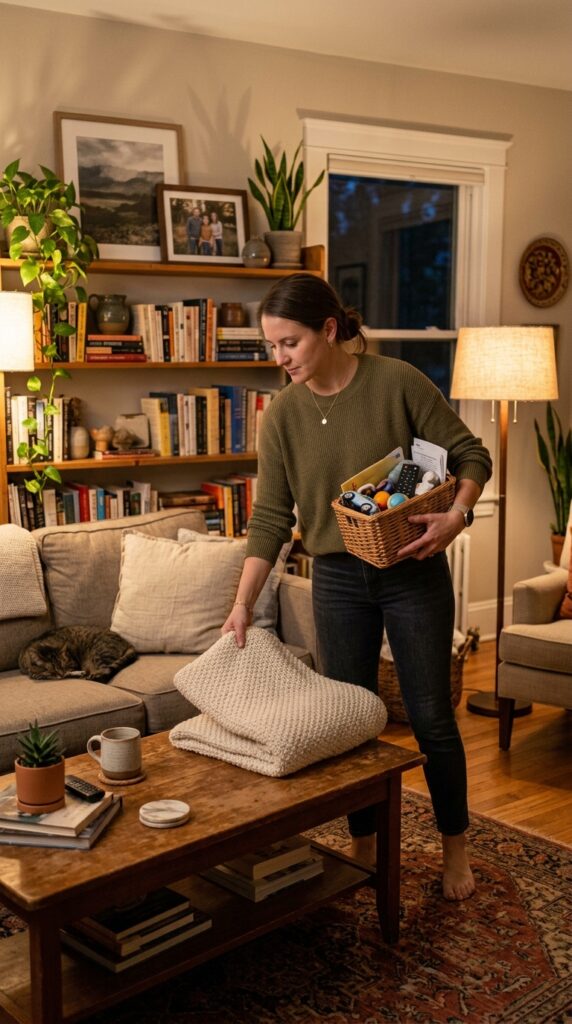
A short reset keeps small messes from becoming weekend projects. Placing cups in the kitchen, folding a throw, gathering laundry, and clearing one surface can make the home feel settled before bed. Warm lamp light and quiet music can make the routine feel less like cleaning.
Set a timer and move through the main living areas with a basket for misplaced items. Return easy objects immediately and leave deeper organization for another day. A lot of people continue far beyond the timer and turn the habit into an exhausting nightly chore. Stop after ten minutes. A carry basket may cost between $10 and $30, but any sturdy container can work.
18. End Feminine Home Habits With Gratitude for What You Have
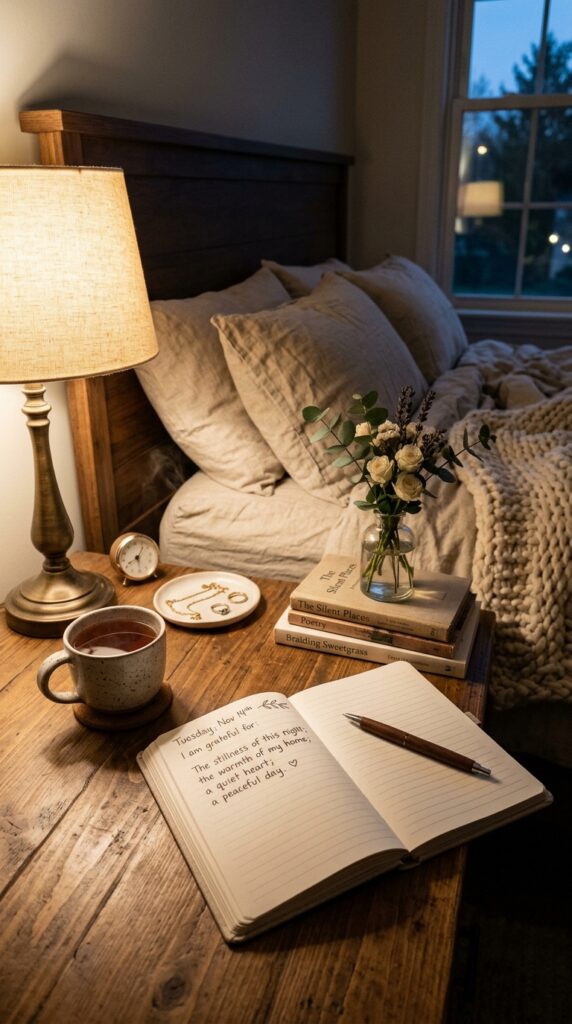
A peaceful home is not created only through cleaning and storage. It also grows from noticing what already supports you. A warm bed, useful kitchen, favorite chair, or repaired piece of furniture may carry comfort that is easy to overlook.
Before bed, notice one thing in your home that made the day easier. You might write it in a notebook or simply say it quietly. I always recommend this habit when someone wants a change without starting over. Avoid using gratitude as a reason to ignore repairs, clutter, or needs that deserve attention. Appreciation and improvement can exist together. A small journal may cost between $8 and $25, while a spoken reflection is free.
Create a Peaceful Home Through Small Daily Care
A calm home does not require expensive furniture, endless storage, or rooms that always look ready for photographs. It usually comes from small habits that keep everyday life moving. Opening the curtains, clearing one surface, putting laundry away, and resetting the kitchen can make your surroundings feel easier to live in.
These 18 feminine home habits that create a peaceful space are meant to fit around real schedules. Begin with one or two routines connected to the area that causes the most stress. Choose a five minute kitchen reset if mornings begin with dirty dishes, or add closed storage if visible clutter makes it hard to rest.
Use what you already own before buying baskets, lamps, trays, or new decor. Wash the fabric, repair the chair, clear the table, and move storage closer to where it is needed. Steady care often creates more comfort than constant shopping.
Which feminine home habit would you try first? I’d love to hear what you’re planning.
Frequently Asked Questions
How can I make my home feel more peaceful without redecorating?
Begin by clearing one visible surface, opening the curtains, and using warm lamps in the evening. Wash bedding, cushion covers, and curtains before buying new pieces. Small changes in light, fabric, and clutter can noticeably change a room.
What home habits should I start with when I feel overwhelmed?
Choose one morning habit and one evening habit. You might make the bed after airing the room and complete a ten minute reset before sleeping. Avoid trying to organize every area during the same week.
How can I keep my home feminine without using lots of pink?
Use soft fabric, curved shapes, flowers, warm lighting, natural wood, mirrors, and gentle colors such as cream, sage, dusty blue, mauve, and taupe. Feminine styling can come from texture and detail rather than one specific color.
How do I stop clutter from returning?
Store items close to where you use them and make each system easy to follow. Declutter before buying containers, then label storage that is not opened often. Short daily resets are easier to maintain than occasional long cleaning sessions.
What are the most useful home organization items?
Laundry baskets, wall hooks, drawer dividers, trays, and closed storage boxes solve many everyday problems. Measure the available space before shopping. Choose storage based on a real need rather than appearance alone.