
15 Feminine Bedroom Essentials for a Softer Lifestyle
A bedroom can quickly become a place where laundry piles up, beauty products cover every surface, and harsh lighting makes it difficult to unwind. You may want a softer, more feminine room, but replacing all your furniture or copying an expensive makeover is rarely realistic.
These 15 feminine bedroom essentials for a softer lifestyle focus on comfort, beauty, and practical organization. You will find ideas for layered bedding, warm lighting, curtains, mirrors, storage baskets, personal wall art, and a calm vanity setup. Each item serves a purpose while adding gentle color, soft fabric, natural wood, or woven texture to the room.
You do not need to buy everything at once. Begin with the part of your bedroom that causes the most frustration. Fresh bedding may help if the room feels tired, while closed storage can solve visual clutter. Each idea includes placement advice, affordable swaps, a common mistake to avoid, and a realistic price range. The aim is to create a bedroom that supports rest, getting dressed, reading, and everyday routines without feeling empty or overly staged.
1. Feminine Bedroom Essentials Begin With Layered Bedding
Layered bedding gives the room an immediate sense of softness. Fresh cotton sheets, a smooth duvet, two comfortable pillows, and a textured throw create a bed that looks inviting without becoming difficult to maintain. Blush, cream, dusty blue, warm white, and soft taupe work beautifully together because they feel gentle under natural morning light.
Start with breathable sheets and a duvet cover you can wash easily. Add one lightweight quilt or throw across the lower third of the bed. Two sleeping pillows and one decorative cushion are usually enough for a practical setup. In my experience, the biggest mistake is adding so many pillows that they end up on the floor every night. Focus on fabric and comfort rather than quantity. A basic bedding refresh may cost between $50 and $150. You can spend less by keeping your current duvet and changing only the pillowcases or throw.
2. Soft Linen or Cotton Curtains
Curtains soften hard window lines and help the bedroom feel more private. Lightweight linen or cotton panels move gently with the air and filter bright sunlight into a warm glow. Cream, pale pink, muted beige, and soft gray work well with many aesthetic bedroom ideas because they add texture without dominating the room.
Hang the curtain rod several inches above the window and extend it beyond both sides. This placement can make the window appear wider and allows more daylight to enter when the panels are open. Choose curtains that nearly touch the floor rather than ending halfway down the wall. A lot of people buy thin decorative panels without checking whether they need privacy or light control. Add a simple roller shade behind them when needed. Curtain panels and a rod generally cost between $35 and $120. Secondhand fabric panels or simple cotton sheets can offer an affordable alternative.
3. A Warm Bedside Lamp
A warm bedside lamp creates a softer evening atmosphere than a bright ceiling light. A fabric shade, ceramic base, or small glass lamp can add gentle shape and color beside the bed. The warm pool of light makes reading, journaling, or applying hand cream feel calmer at the end of the day.
Choose a lamp that fits the scale of your bedside table. The bottom of the shade should sit near shoulder level when you are seated in bed, making the light useful without shining directly into your eyes. Use a warm LED bulb rather than a cool blue white one. What I personally love about this update is that even an inexpensive lamp can change how the room feels after sunset. Avoid buying a tiny lamp that provides only decorative light. A useful bedside lamp and bulb may cost between $25 and $75. A thrifted base with a new shade can cost less.
4. A Soft Rug Beside the Bed
A soft rug adds warmth beneath your feet and gives the sleeping area a clearer visual boundary. A low pile wool blend, washable cotton rug, or textured woven style can soften hard flooring while bringing muted color into the room. Cream, dusty rose, faded blue, and beige patterns work well with natural wood furniture.
Place the rug beneath the lower two thirds of the bed so it extends on both sides, or use a smaller runner beside the area where you step down each morning. Measure the floor before shopping. In my experience, the biggest mistake is choosing a rug that is too small, which can make the furniture look disconnected. A washable runner may cost between $30 and $80, while a larger bedroom rug often ranges from $80 to $250. Layering an affordable flat weave over a rug pad can provide extra comfort without buying a thick luxury rug.
5. Feminine Bedroom Essentials for a Calm Vanity
A calm vanity gives daily beauty and grooming products a clear home. A small mirror, ceramic tray, hairbrush, and a few regularly used items can create a polished corner without covering the entire surface. Warm wood, soft fabric, and a rounded mirror keep the area inviting and practical.
Group daily skincare and fragrance on one tray. Store backups, hair tools, and less frequently used makeup inside drawers or labeled baskets. Add a small lamp if the vanity does not receive enough natural light. A lot of people display every product they own, which makes cleaning difficult and creates visual clutter. Keep only the items used most days within reach. A compact vanity may cost between $80 and $250, but a simple desk and tabletop mirror can create the same function for $40 to $120. Drawer dividers usually cost another $10 to $30.
6. A Full Length Mirror With a Simple Frame
A full length mirror makes getting dressed easier and reflects light around the bedroom. A slim wood, brass toned, white, or black frame can suit both soft traditional rooms and modern home decor trends. Leaning it near a wardrobe can create a relaxed look, while wall mounting saves floor space.
Place the mirror where you can step back far enough to see a complete outfit. Position it near natural light, but avoid an angle that produces harsh glare. Secure any leaning mirror according to the manufacturer’s safety instructions, especially in homes with children or pets. What I personally love about this piece is that it supports both bedroom styling and practical outfit planning. Avoid placing it where it reflects the room’s most cluttered corner. Full length mirrors generally cost between $50 and $180. Secondhand frames can be painted for an affordable decor update.
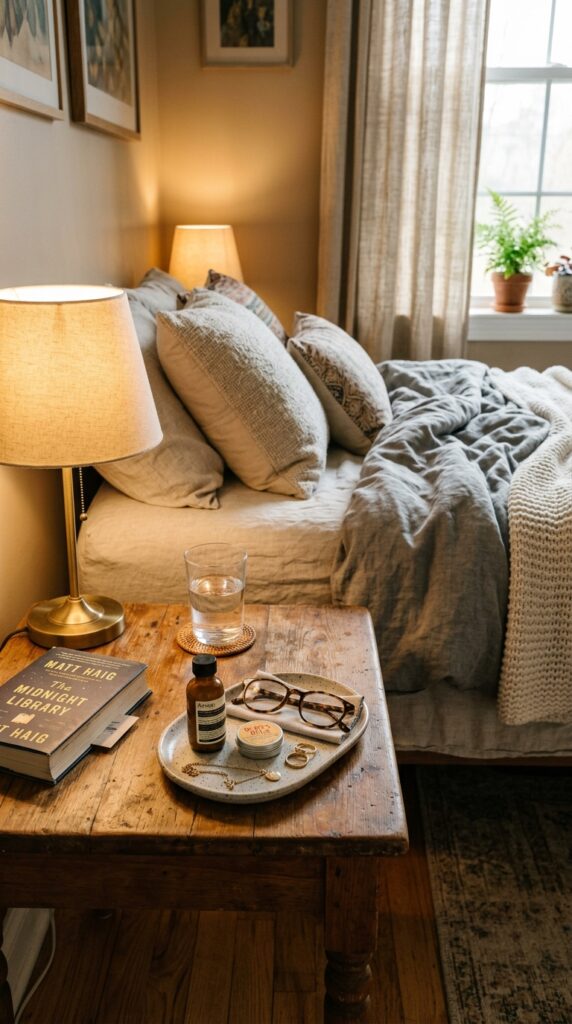
7. A Neat Bedside Tray
A bedside tray keeps small evening items from spreading across the nightstand. A shallow wood, marble effect, or ceramic tray can hold hand cream, lip balm, jewelry, glasses, and a small perfume bottle. The grouped arrangement creates a clean surface while keeping everything easy to reach.
Choose a tray that leaves enough open space for a lamp, book, and glass of water. Remove empty packaging and items that belong in another room during a quick evening reset. In my experience, the biggest mistake is treating the tray as a place for every small object in the bedroom. Limit it to four or five useful items. A bedside tray usually costs between $10 and $35. You can also repurpose a serving plate, shallow basket, or decorative box lid you already own. Clean the tray regularly because dust and product residue can collect underneath bottles.
8. A Gentle Home Fragrance
A light fragrance can make the bedroom feel fresh and familiar. Linen sprays, reed diffusers, dried lavender, or a candle used safely can add soft floral, clean cotton, vanilla, or warm wood notes. The scent should remain subtle enough that the room still feels comfortable after the door has been closed.
Choose one fragrance method rather than layering several strong products. Place a diffuser on a stable surface away from fabric and direct sunlight. If you use candles, keep them away from bedding and curtains, and never leave them unattended. A lot of people use heavy fragrance to cover stale air when the room actually needs ventilation or laundry. Open the windows regularly and wash fabrics first. A diffuser or linen spray may cost between $10 and $35. Dried herbs in a small breathable pouch offer a lower cost option.
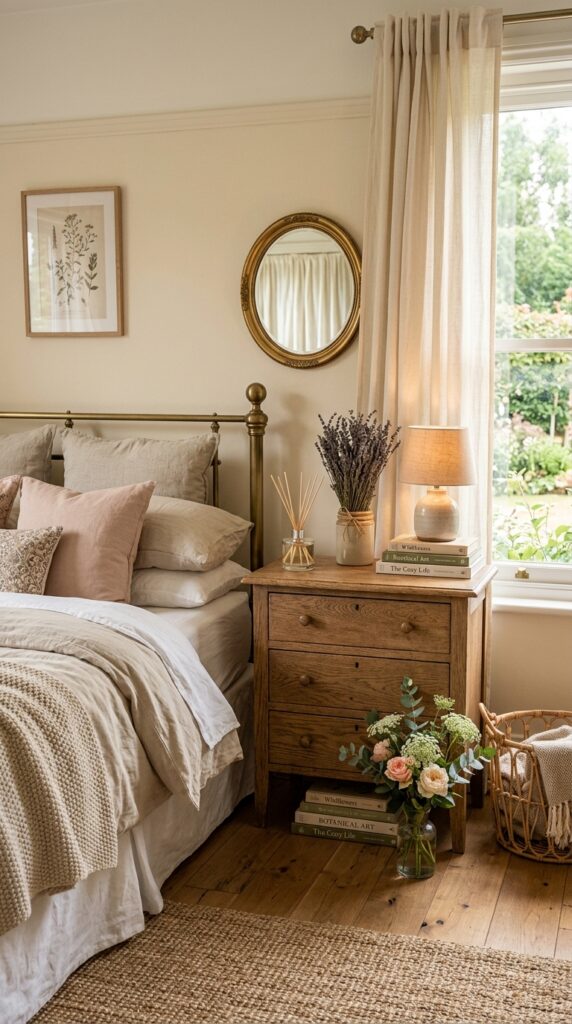
9. Fresh Flowers or an Easy Houseplant
Flowers and greenery bring natural color into the bedroom. A small vase of seasonal stems can soften a dresser, while an easy plant adds life throughout the year. Pink flowers, eucalyptus, trailing vines, and leafy green plants look especially warm beside cream fabric and natural wood.
Choose a plant that suits the actual light in your room. Keep it near a suitable window rather than placing it in a dark corner for styling alone. For flowers, remove leaves below the waterline and refresh the water every few days. What I personally love about this idea is that one small arrangement can bring more character than several decorative objects. Avoid crowding every surface with plants that are difficult to maintain. A small houseplant may cost between $10 and $35, while a market bouquet often ranges from $5 to $20. Garden clippings can be free.
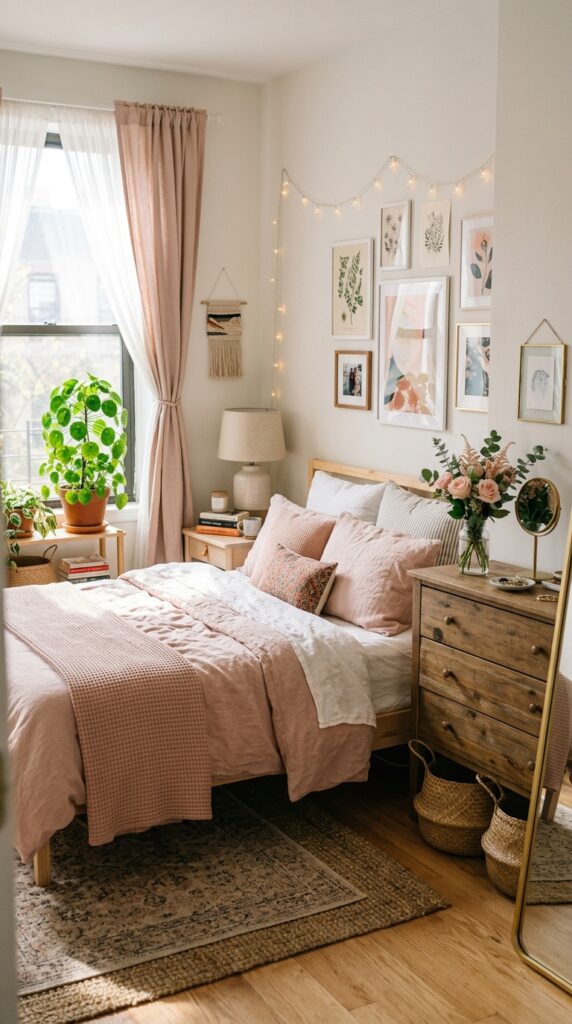
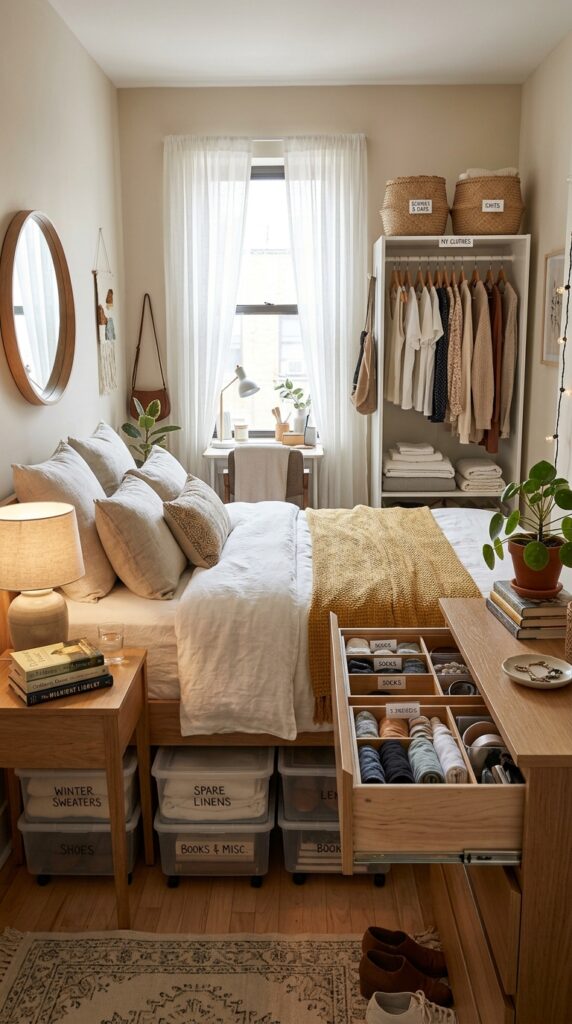
10. Small Space Feminine Bedroom Essentials With Closed Storage
Closed storage keeps practical items nearby without leaving everything visible. Lidded baskets, underbed boxes, drawer dividers, and a small chest can hold extra bedding, beauty products, seasonal clothing, and cables. Woven texture and fabric bins soften the room while supporting small space storage.
Measure the available space before purchasing containers. Use low boxes beneath the bed for folded linens or off season clothes, and label them so you do not need to open every lid. A lot of people buy containers first, then discover they do not fit the shelf or hold the intended items. Declutter before organizing and avoid storing damaged pieces you no longer use. Underbed boxes and baskets usually cost between $15 and $60 each. Repurposed shoe boxes covered with paper or fabric can organize drawers for much less.
11. Comfortable Sleepwear and a Light Robe
Soft sleepwear adds comfort to evening and morning routines. Breathable cotton, modal, linen, or light satin can feel gentle against the skin while adding muted color to an open wardrobe or dressing chair. Cream, blush, floral prints, and dusty blue create a soft look without needing elaborate detailing.
Keep two or three reliable sets in an easy to reach drawer. Hang a lightweight robe on a wall hook or the back of the door so it does not end up across a chair. In my experience, the biggest mistake is choosing sleepwear only for appearance when the fabric feels hot, stiff, or difficult to wash. Comfort and care instructions matter more. A quality pajama set may cost between $25 and $70, while a robe often ranges from $30 to $90. Affordable cotton sets can work just as well when the seams and fit feel comfortable.
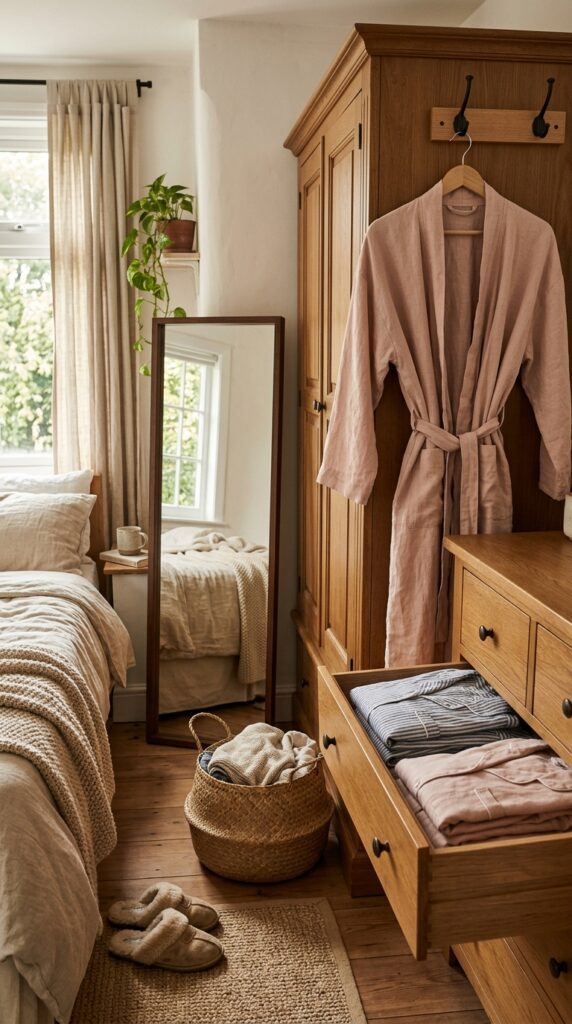
12. Personal Wall Art That Feels Meaningful
Wall art gives the bedroom personality without taking up floor or drawer space. Botanical prints, family photographs, gentle landscapes, fabric art, or handwritten pieces can bring color and meaning above a bed, dresser, or reading chair.
Choose one large piece or a small group of two to four frames. Repeat colors already found in the bedding or curtains so the room feels connected. A lot of people hang several tiny frames too far apart, making the wall feel scattered. Arrange the frames on the floor first and measure the spacing before making holes. Hang artwork near eye level and avoid placing heavy unsecured frames directly above the bed. Prints and frames may cost between $25 and $120. Personal photographs or printable art in thrifted frames provide a lower cost option.
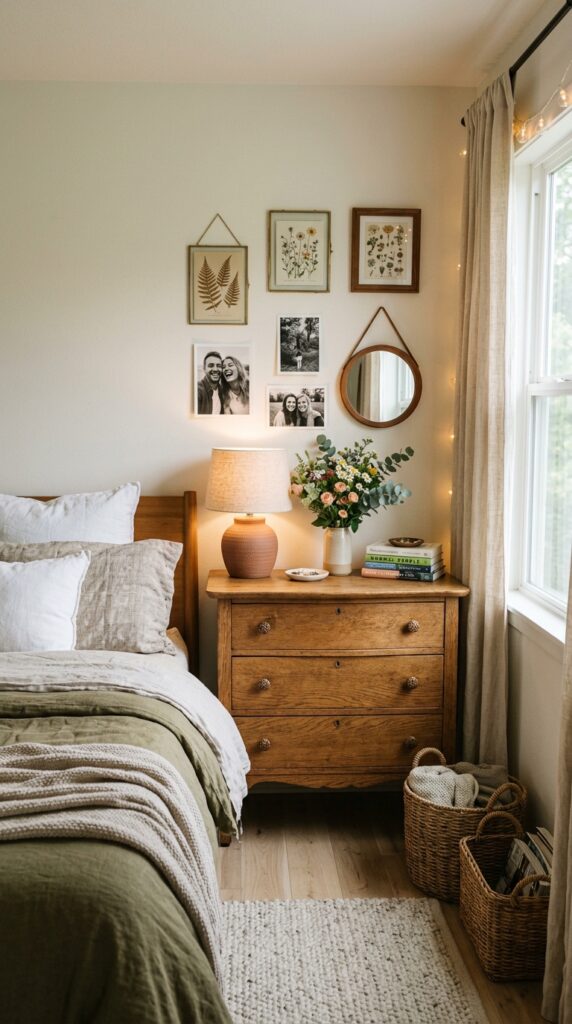
13. A Small Reading or Journaling Corner
A reading corner gives the bedroom a purpose beyond sleeping and storing clothes. A comfortable chair, floor cushion, or bench beside a lamp can become a place for journaling, tea, or a few quiet pages before bed. Soft upholstery and a textured throw make the area feel inviting.
Use the space you have rather than forcing in oversized furniture. A narrow chair can fit beside a window, while a floor cushion works in a compact room. Add a small table or wall shelf for a book and drink. What I personally love about this setup is that it creates a screen free corner without requiring a separate room. Avoid turning the chair into permanent clothing storage. Place a laundry basket nearby and reset the seat each evening. A chair, lamp, and side table may cost between $80 and $250, though rearranging existing furniture can cost nothing.
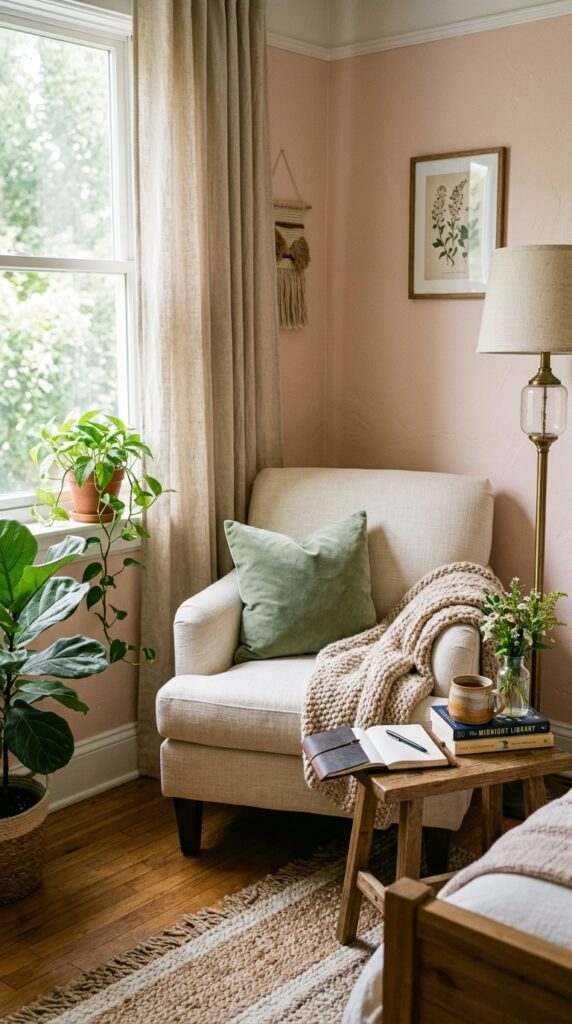
14. A Soft, Limited Color Palette
A gentle color palette helps the bedroom feel connected even when the furniture comes from different places. Warm white, cream, blush, muted mauve, pale blue, sage, and natural wood create a calm background. Deeper accents such as burgundy, charcoal, or chocolate can add definition in small amounts.
Choose one main neutral, one soft secondary color, and one darker accent. Repeat them through bedding, curtains, art, and small accessories rather than buying matching furniture sets. In my experience, the biggest mistake is adding every soft color at once, which can make the room feel busy. Photograph the room in daylight to see which shades already dominate. Paint may cost between $30 and $80 per room, while changing cushion covers, artwork, or a throw can refresh the palette for $20 to $70.
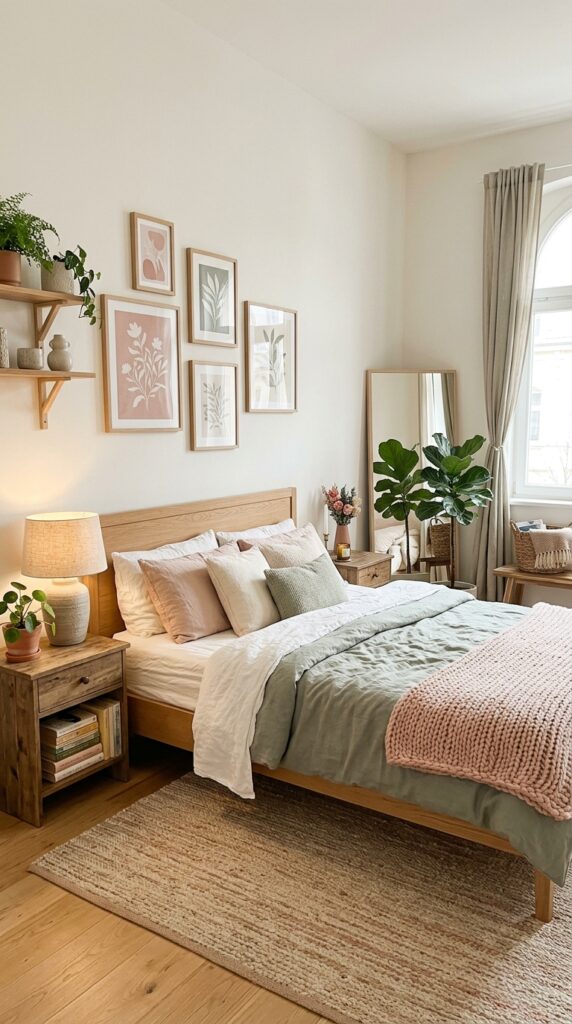
15. Final Feminine Bedroom Essentials for a Daily Reset
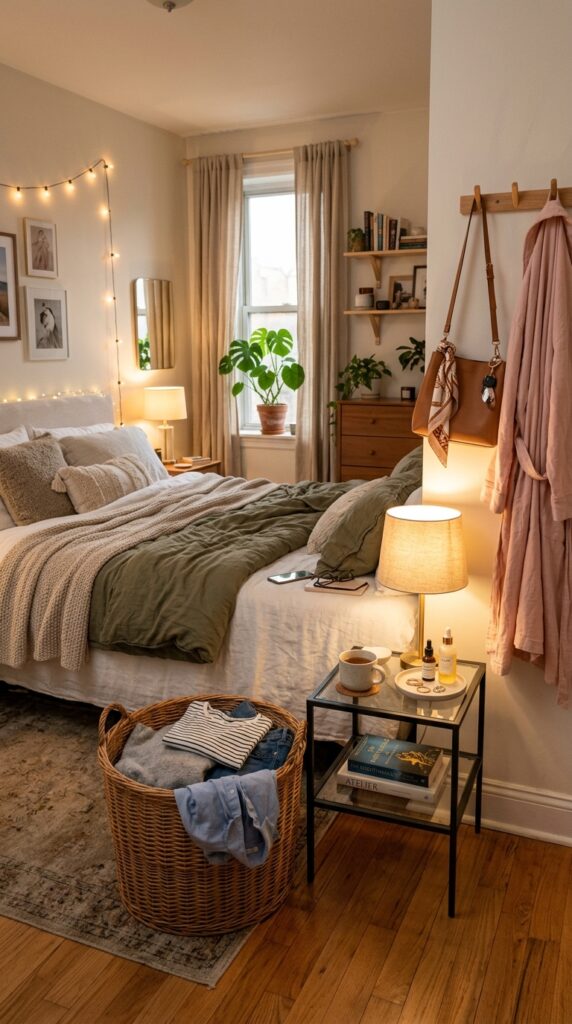
A simple reset system keeps a soft bedroom from becoming overwhelmed by clothes, cups, bags, and beauty products. A laundry basket, wall hook, entry tray, and clear bedside surface give daily items an obvious place. The room feels easier to maintain because putting something away takes only a few seconds.
Place the laundry basket close to where you usually change clothes. Add hooks for a robe, handbag, or tomorrow’s outfit, and keep a small basket for items that belong in another room. Set a five to ten minute timer each evening to clear the main surfaces. A lot of people create complicated organization systems with too many categories. Keep each storage solution broad and easy to use. A basket, set of hooks, and tray may cost between $25 and $75. Use containers you already own before purchasing new ones.
Create a Softer Bedroom One Essential at a Time
A feminine bedroom does not need expensive furniture, a large floor plan, or shelves filled with decorations. The most useful rooms feel comfortable because they support everyday routines. Soft bedding helps you rest, warm lighting makes evenings calmer, and practical storage keeps clothing and personal items under control.
These 15 feminine bedroom essentials for a softer lifestyle can be added gradually. Begin with one or two changes connected to your biggest frustration. Replace harsh lighting if the room feels cold at night, or add a laundry basket and wall hooks if clothes collect on every chair.
Use what you already own before shopping. Wash the curtains, rearrange the mirror, clear the vanity, or move a favorite chair near the window. Small changes in placement and organization often make more difference than buying several new accessories.
Which feminine bedroom essential would you add first? I’d love to hear what you’re planning.
Frequently Asked Questions
How can I make my bedroom look more feminine without using pink?
Use soft fabric, curved shapes, warm lighting, flowers, linen curtains, and delicate artwork. Cream, sage, pale blue, taupe, and muted lavender can all create a gentle bedroom. Natural wood and woven baskets keep the palette warm.
What should I buy first for a softer bedroom?
Begin with the item that affects comfort most. Bedding is a useful first choice if your current sheets or duvet feel worn. A bedside lamp or practical storage may be more helpful when lighting or clutter is the main problem.
How do I decorate a feminine bedroom on a small budget?
Rearrange furniture, wash existing fabric, clear visible clutter, and reuse trays or baskets from other rooms. Change pillowcases, thrift a mirror, or print inexpensive wall art. Focus on one area at a time instead of buying a full matching set.
How can I keep a feminine bedroom from looking cluttered?
Limit the number of objects displayed on each surface. Store backup products and seasonal items in closed baskets, drawers, or underbed boxes. A short evening reset can keep clothing and personal items from collecting.
Which fabrics make a bedroom feel softer?
Cotton, linen, velvet, boucle, modal, and lightweight knitted fabric all add softness. Mix two or three textures rather than using the same material everywhere. Choose washable options for bedding and frequently handled items.