
15 Simple Self-Care Habits That Change Your Routine
It is easy to neglect yourself when the day fills up with work, errands, messages, and small tasks that never seem to end. You may keep promising to rest later, organize your room tomorrow, or start taking better care of yourself next week. By then, even a basic routine can feel tiring.
These simple self-care habits that change your routine are designed for real life. They do not require expensive products, long appointments, or hours of free time. Instead, they focus on small actions that make your mornings calmer, your home easier to manage, and your evenings more restful.
You will find practical ideas for grooming, food, movement, sleep, wardrobe care, organization, and quiet time. Each habit can be adjusted to fit your energy, schedule, and budget. You do not need to follow all fifteen at once. Choose one habit that solves a current problem, repeat it until it feels natural, then add another when you are ready.
1. Start Your Morning Without Checking Your Phone
The first few minutes of the morning can shape the mood of the whole day. When you reach for your phone immediately, your mind fills with messages, news, and other people’s plans before you have even left the bed. A quieter start feels softer. Natural light, fresh bedding, and a warm drink give you space to wake up at your own pace.
Place your phone on a dresser or shelf instead of beside your pillow. Wait at least 15 minutes before opening social media or email. Use that time to open the curtains, drink water, wash your face, or make tea. This habit costs nothing, though a simple alarm clock may cost $10 to $30 if you use your phone as an alarm. In my experience, the biggest mistake here is replacing scrolling with a long task list. Keep the first few minutes calm.
2. Make Your Bed Before Leaving the Room
A made bed gives your bedroom a clean center, even when the rest of the space is not fully organized. Smooth sheets, fluffed pillows, and a folded throw can make the room feel calmer in only a few minutes. Returning to a neat bed later also makes the evening feel more settled.
Keep the process simple enough to repeat daily. Pull up the sheets, straighten the duvet, arrange two or three pillows, and fold one throw across the bottom. You do not need several decorative cushions. If you want an update, a washable throw may cost $20 to $60, while new pillow covers may cost $10 to $30. A lot of people skip airing out the bed, but it makes all the difference. Open the window or pull back the covers briefly before making it. Avoid creating a setup that takes ten minutes to rebuild every morning.
3. Drink Water Before Your First Coffee
Starting the day with water can make your morning routine feel more caring and less rushed. A cool glass beside the bed or a filled bottle on the kitchen counter gives you an easy first step before coffee, breakfast, or work. The habit feels simple, but it can help you notice your body’s needs earlier in the day.
Fill a reusable bottle the night before and place it somewhere visible. Drink a small glass after waking, then continue sipping throughout the morning. A reusable bottle may cost $10 to $35, though any clean glass works. Add lemon, cucumber, or mint if you enjoy a little flavor. What I personally love about this is that it needs almost no preparation. Avoid forcing yourself to drink a large amount at once. Slow, regular sips are easier to maintain than turning hydration into another strict goal.
4. Follow Simple Self-Care Habits for Your Skin
A short skincare routine can help you feel fresh without filling your bathroom with products. Clean skin, a light moisturizer, and sunscreen create a simple sense of care. The routine feels especially calming when the products sit neatly on a tray instead of being scattered across the counter.
Choose three basic steps for the morning: gentle cleansing, moisturizer, and sunscreen. At night, cleanse again and apply a moisturizer that suits your skin. A simple routine may cost $25 to $70, depending on the brands you choose. I always recommend adding new products one at a time so you can notice how your skin responds. The common mistake is using several strong treatments together because they are popular online. Avoid anything that causes ongoing burning, redness, or discomfort, and follow product instructions carefully.
5. Eat One Meal Without a Screen
Eating while watching videos or answering messages can make a meal pass without you really noticing it. A screen-free meal feels slower and more restful. The colors of fresh fruit, warm toast, soup, or a simple grain bowl become part of the experience rather than background to another task.
Choose one meal each day to eat away from your phone, computer, or television. Sit at a table or clear one corner of the kitchen counter. Use a plate you enjoy and take a few minutes to eat without rushing. This habit costs nothing. A linen napkin or simple placemat may cost $8 to $20 if you want the setting to feel more inviting. In my experience, the biggest mistake here is expecting every meal to feel peaceful. Start with breakfast or lunch on quieter days. Avoid turning the meal into a photography session.
6. Take a Ten-Minute Walk
A short walk can break up a heavy afternoon and help you step away from indoor noise. Fresh air, moving shadows, and the steady rhythm of your steps can make your thoughts feel less crowded. It does not need to become a fitness challenge to be useful.
Choose a familiar route and walk for ten to fifteen minutes at a comfortable pace. Wear supportive shoes and clothing that suits the weather. This habit costs nothing, though comfortable walking shoes may cost $50 to $120 if you need a new pair. What I personally love about this is that it can fit between tasks without taking over the day. Avoid focusing on speed, distance, or calories. The point is to move gently and return feeling clearer, not exhausted.
7. Keep Your Everyday Clothes Ready to Wear
Self-care can include making daily tasks easier. A wardrobe filled with clean but wrinkled clothes still creates stress when you are getting dressed. Smooth fabric, repaired buttons, and a few reliable outfits can help mornings feel more manageable.
Choose five everyday outfits and keep the pieces easy to reach. Steam or press them after laundry day, then hang them together with matching trousers, skirts, or outer layers nearby. A handheld steamer may cost $25 to $60, while a lint roller costs around $5 to $12. A lot of people skip checking shoes and accessories until the morning, but it makes all the difference. Include the full look when planning. Avoid saving every favorite item for a future event. Wear the clothes that make your normal days feel better.
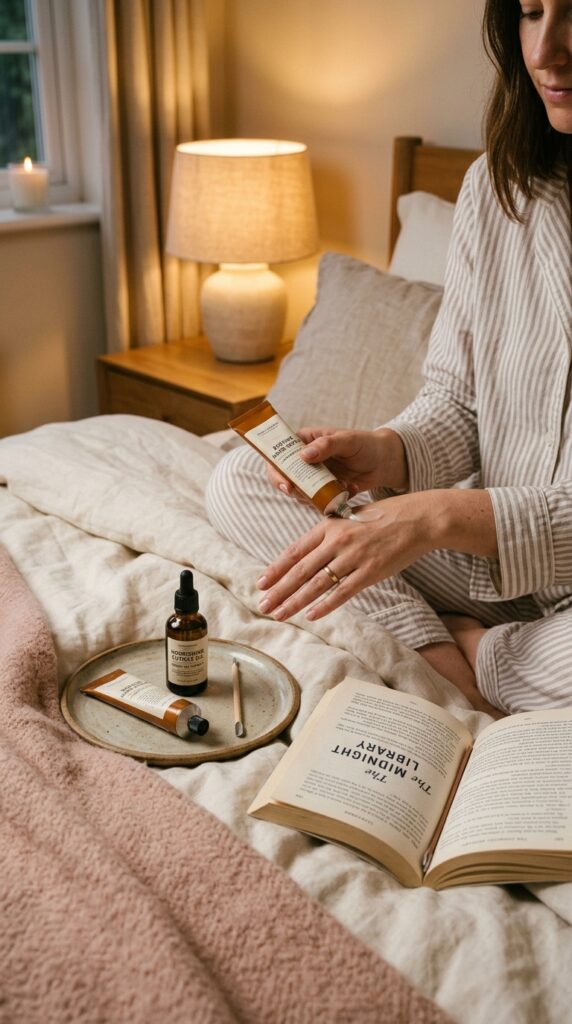
8. Moisturize Your Hands Before Bed
Hands can feel dry after washing, cleaning, typing, and moving through daily tasks. Applying hand cream at night creates a quiet closing ritual. Soft bedding, a gentle scent, and moisturized skin make the habit feel comforting without requiring a full beauty routine.
Keep a small tube of hand cream and cuticle oil beside your bed. Apply a thin layer after your final hand wash, then massage the product into the fingers and cuticles. A hand cream may cost $6 to $20, while cuticle oil usually costs $5 to $15. In my experience, the biggest mistake here is choosing a heavily scented product that becomes unpleasant at bedtime. Pick a mild formula you will use consistently. Avoid applying too much, since a greasy finish may make you skip the habit later.
9. Reset One Small Area Each Evening
A full home clean may feel impossible after a busy day, but resetting one small area can still make tomorrow easier. A clear bedside table, tidy bathroom counter, or organized sofa corner gives your eyes somewhere calm to rest.
Set a timer for ten minutes and choose one visible zone. Return loose items to drawers, fold the throw, clear cups, and wipe the surface. Use a basket for anything that belongs in another room. A storage basket or tray may cost $15 to $40, though you can reuse something you already own. I always recommend stopping when the timer ends. The common mistake is turning a short reset into an hour of cleaning. Avoid moving clutter from one surface to another. Give each frequent item a clear home.

10. Create a Five-Minute Grooming Routine
A quick grooming routine can help you feel awake and prepared even on quiet days. Brushed hair, moisturized skin, neat brows, and lip balm create a fresh look without heavy makeup or a long beauty session. The goal is comfort and care rather than appearing dressed for an event.
Keep the products together in a small basket or drawer. Your routine might include brushing your hair, applying moisturizer, using lip balm, and adding deodorant or fragrance. A basic setup may cost $20 to $50. What I personally love about this habit is that it works whether you are leaving home or staying in. Avoid adding too many steps at once. If the routine takes longer than five or ten minutes, you may stop using it on busy mornings.

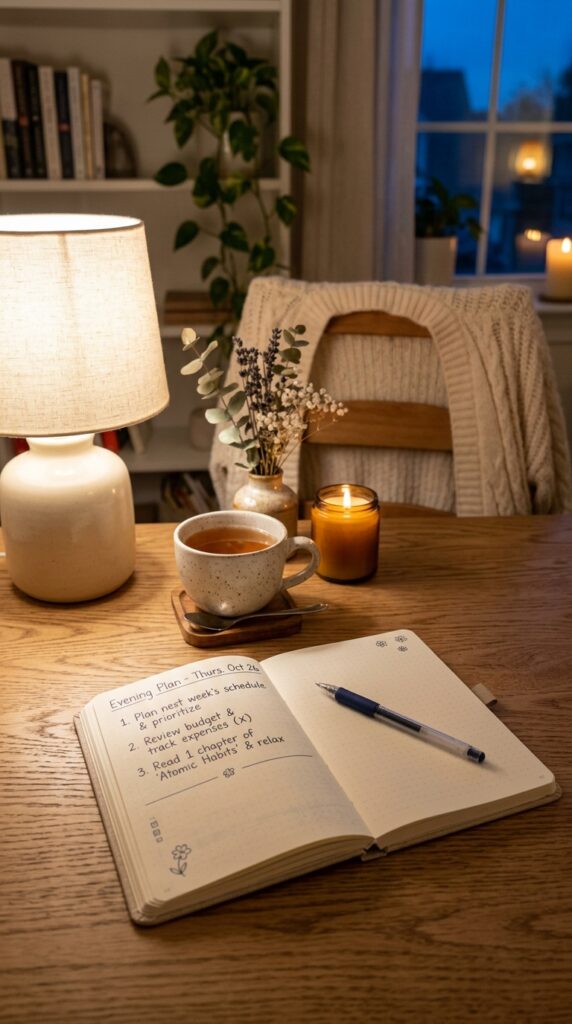
11. Write Down Tomorrow’s Top Three Tasks
A crowded mind can make it harder to rest. Writing down a few priorities before bed creates a clear place for unfinished thoughts. An open notebook, warm lamp, and quiet room can help the day feel complete without planning every minute of tomorrow.
Choose only three tasks that matter most. Make them specific, such as calling someone, finishing a work section, or buying groceries. A notebook and pen may cost $5 to $25, though a note on your phone also works. A lot of people create a list that is far too long and wake up already feeling behind. Keep it realistic. Avoid adding minor chores simply to make the list look productive. You can keep a separate page for everything else.
12. Choose One Quiet Hobby
A quiet hobby gives your attention somewhere restful to go. Reading, knitting, sketching, arranging flowers, baking, or working on a puzzle can help you step away from constant scrolling. The texture of paper, yarn, fabric, or dough makes the activity feel grounded and personal.
Pick one hobby that fits your space and budget. Keep the supplies together in a basket so you can begin without a long setup. A book may cost $10 to $20, a simple sketch kit around $15 to $35, and basic knitting supplies around $20 to $50. In my experience, the biggest mistake here is choosing a hobby because it looks attractive online. Choose something you actually enjoy. Avoid pressuring yourself to sell, post, or master it quickly.

13. Prepare a Simple Evening Drink
A warm drink can become a signal that the busy part of the day is ending. Herbal tea, warm milk, or a caffeine-free drink served in a favorite mug feels comforting beside soft light and clean sleepwear. The habit adds a small pause between daily tasks and bedtime.
Choose something that suits your routine and does not disturb your sleep. Prepare it at roughly the same time each evening and sit down while you drink it. Tea bags or loose tea may cost $5 to $20, while a reusable infuser may cost $8 to $18. What I personally love about this is that it creates a calming rhythm with very little effort. Avoid drinking a large amount immediately before bed if it interrupts your sleep. Keep the serving modest and the recipe simple.

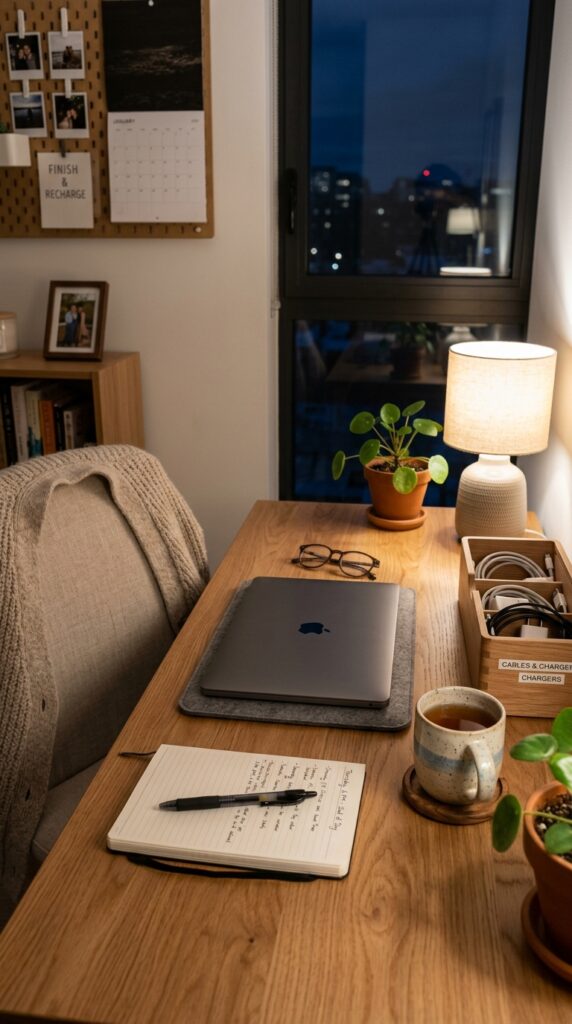
14. Set a Regular Time to Stop Working
When work continues into the evening without a clear ending, rest can feel incomplete. Closing your laptop, clearing the desk, and changing the room’s lighting creates a boundary between work and personal time. The space feels different once the cables are tucked away and the surface is calm.
Choose a realistic stop time and set an alarm ten minutes before it. Use those final minutes to save files, write tomorrow’s first task, close tabs, and put away work materials. A cable box or desk tray may cost $10 to $35, though the habit itself is free. I always recommend using a small closing ritual if you work from home. Avoid checking one more message after you have finished, since that often pulls you back into work mode.
15. Protect a Consistent Bedtime
A steady bedtime can make your whole routine feel more supportive. Dim lights, fresh bedding, cool air, and quiet surroundings help your body prepare for sleep. You may still have busy evenings, but returning to a familiar bedtime gives the day a gentle ending.
Choose a bedtime that fits your wake-up time and begin winding down 30 minutes earlier. Put away your phone, lower the lights, and complete only simple tasks such as washing your face or reading. A sleep mask may cost $8 to $25, while blackout curtains may cost $30 to $100 if light is a problem. In my experience, the biggest mistake here is waiting until you feel exhausted before going to bed. Start the routine before that point. Avoid using bedtime as the only free time you have by protecting small breaks earlier in the day.

Conclusion
Self-care does not have to be expensive, complicated, or saved for days when you have several free hours. It can begin with ordinary choices that reduce stress and make your surroundings easier to live in. Drinking water in the morning, preparing your clothes, clearing one surface, or going to bed at a steady time may seem small, but repeated habits shape the way your days feel.
These 15 simple self-care habits that change your routine are meant to fit around real responsibilities. Start with one or two ideas that address a problem you already notice. You might put your phone away in the morning, set a work stop time, or create a ten-minute evening reset.
Use what you already own before buying new products or organizers. A comfortable routine grows through repetition, not through completing every step flawlessly. Some days will still feel rushed, and that is normal. Return to the habits that help you feel rested, cared for, and less overwhelmed.
Which idea would you try first? I’d love to hear what you’re planning.
FAQs
What are the easiest self-care habits to start?
Begin with habits that take less than ten minutes, such as drinking water after waking, making your bed, applying hand cream, or writing down three tasks. These are easier to repeat because they do not require special equipment. Add another habit only after the first feels familiar.
How long does it take for a self-care habit to feel natural?
The timing varies from person to person and depends on how simple the habit is. Repeating it at the same point in your routine can make it easier to remember. Focus on consistency rather than counting a strict number of days.
Can self-care habits improve a busy routine?
Yes. Practical self-care can reduce small sources of stress, such as searching for clothes, working too late, or waking up to clutter. The goal is not to add more tasks. It is to make existing parts of the day feel easier.
How can I practice self-care without spending money?
Take a short walk, eat without a screen, tidy one surface, write in a notebook you already own, or go to bed earlier. You can also prepare clothes, turn off notifications, and sit quietly with a drink. Many useful habits require time and attention rather than shopping.
What should I do if I cannot maintain a routine?
Make the habit smaller. Instead of a 30-minute routine, try five minutes. Attach it to something you already do, such as moisturizing after brushing your teeth. Missing a day does not mean you need to start over.