16 Winter Self-Care Ideas for Cold and Cozy Days
Winter can make even simple routines feel heavier. Dark mornings, cold floors, dry indoor air, and shorter days can leave you wanting to stay wrapped in a blanket instead of keeping up with your usual schedule. Your home may also start feeling cluttered with coats, throws, mugs, skincare, and all the little things that appear when the weather turns cold.
These 16 winter self-care ideas for cold and cozy days are meant to make the season feel softer and easier to manage. You will find simple ways to create a warmer morning, care for dry skin, build a comfortable reading corner, prepare easy meals, organize winter essentials, and make evenings feel calmer.
You do not need to buy a whole new collection of candles, blankets, or beauty products. Most of these ideas work with items already in your bedroom, bathroom, kitchen, or closet. Pick one or two that solve a real problem first. Winter self-care should make your day feel lighter, not give you another long list to complete.
1. Create a Winter Self-Care Basket Beside the Sofa
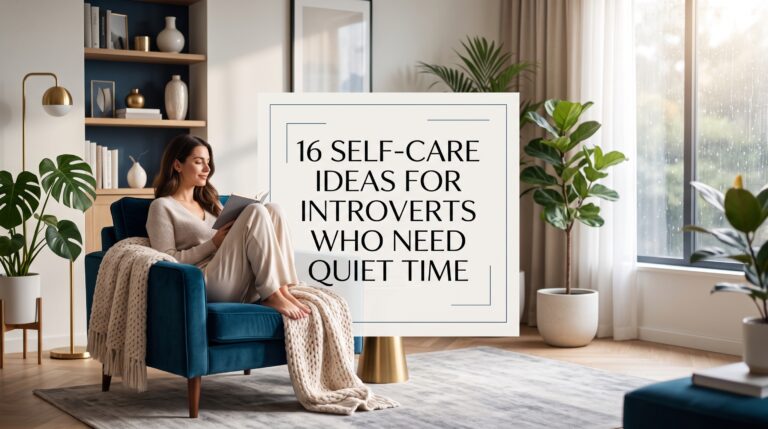
A winter comfort basket makes cold evenings easier because everything you reach for stays in one place. A woven basket filled with a textured throw, warm socks, hand cream, lip balm, a paperback, and tea can turn one corner of the living room into a cozy retreat without adding much clutter.
Choose a basket around 12 to 16 inches wide and keep it beside your sofa or favorite chair. Use items you already own before buying anything new. In my experience, the biggest mistake is filling a basket with decorative products that look pretty but never get used. Keep the contents practical and easy to wash or replace. A basic woven basket may cost between $15 and $35, while using an existing storage bin keeps the project free.
2. Build a Slower Morning Routine for Cold Days
Cold mornings can feel rushed when getting out of bed already takes extra effort. A softer routine with warm light, comfortable layers, and a hot drink can give you a more pleasant start without adding complicated habits.
Prepare your robe, slippers, and breakfast items the night before. Open the curtains as soon as you wake up, then give yourself ten quiet minutes before checking messages if your schedule allows. What I personally love about this approach is that it relies more on preparation than motivation. Avoid adding five new morning habits at once. Choose one or two changes that make getting ready easier. This routine can cost nothing. A pair of warm slippers or simple robe may cost around $20 to $50 if you genuinely need one.
3. Keep a Rich Hand Cream Near Every Busy Spot
Winter air can leave hands feeling dry, especially when you wash them frequently or move between cold outdoor air and heated rooms. Keeping hand cream where you actually need it makes the habit easier than searching through a bathroom cabinet.
Place one tube beside your bed, one near the kitchen sink, or one inside your everyday bag. Choose a formula you enjoy using so applying it never feels like a chore. A lot of people keep several half-used lotions scattered around the house and forget all of them. Finish one product before buying another. Hand creams commonly cost between $5 and $20. You can also place an existing bottle inside a small tray to make the area feel more organized.
4. Try a Warm Bath or Shower Evening
A warm bath or shower can make a cold evening feel quieter and more comfortable. Fresh towels, soft pajamas, gentle lighting, and a simple body care routine create a sense of warmth without needing an elaborate home spa.
Set out your towel, pajamas, moisturizer, and hairbrush before you begin. Keep the routine simple so you can move straight from the bathroom into bed or a comfortable chair afterward. In my experience, the biggest mistake is turning relaxation into a long list of beauty steps. Use the products you already know you enjoy. A fresh body lotion or bath product may cost between $8 and $25, while using your regular shower supplies costs nothing extra.
5. Winter Self-Care Ideas for a Cozy Reading Corner
A reading corner gives you somewhere to spend quiet winter evenings without defaulting to your phone or television. A comfortable chair, warm lamp, small side table, textured throw, and stack of books can make one unused corner feel much more inviting.
Move a chair close to a lamp or window and add only what you need. Keep a basket underneath for books, blankets, or magazines so the area stays tidy. What I personally love about this idea is that you can usually create it by rearranging furniture rather than shopping. Avoid filling the corner with decorative objects that leave no practical room for a mug or book. Rearranging costs nothing. A secondhand lamp, basket, or cushion may cost between $10 and $40 if something is missing.
6. Plan Two Easy Comfort Meals Each Week
Cold evenings often make cooking feel harder, especially after a long day. Having a couple of familiar comfort meals planned means you can eat something warm without spending an hour deciding what to make.
Choose dishes that use simple ingredients and reheat well, such as soup, pasta, rice bowls, baked potatoes, or a one-pan dinner. Make enough for leftovers if that suits your household. A common mistake is choosing complicated recipes because winter food is supposed to feel special. Your easiest meal can still be comforting. Basic ingredients for several portions may cost between $10 and $30, depending on what you already have. Plan around pantry staples before adding extra groceries.
7. Keep Winter Clothing Organized by the Door
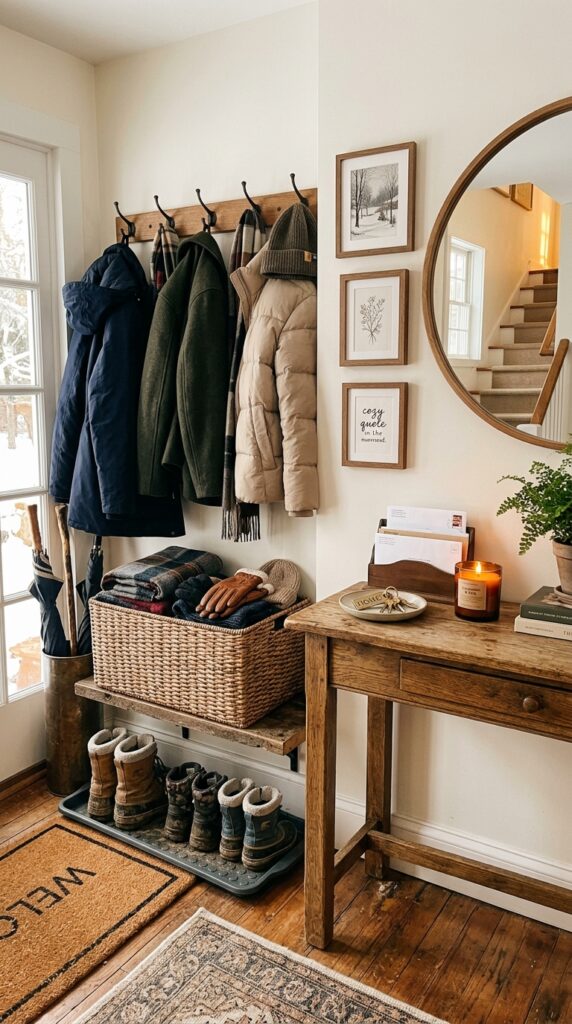
Coats, scarves, gloves, hats, and wet shoes can make an entryway feel messy very quickly. A simple storage system helps you leave and return home without dropping winter layers across chairs or floors.
Use wall hooks for coats, a small basket for hats and gloves, and a washable mat or shoe tray for boots. If several people share the space, give each person one hook or basket section. In my experience, the biggest mistake is creating storage that is too complicated to use when you walk in carrying bags. Keep everything within easy reach. Hooks and baskets may cost between $15 and $50, but existing bins or a spare tray can work just as well.
8. Make Your Bed Feel Warmer Without Buying Everything New
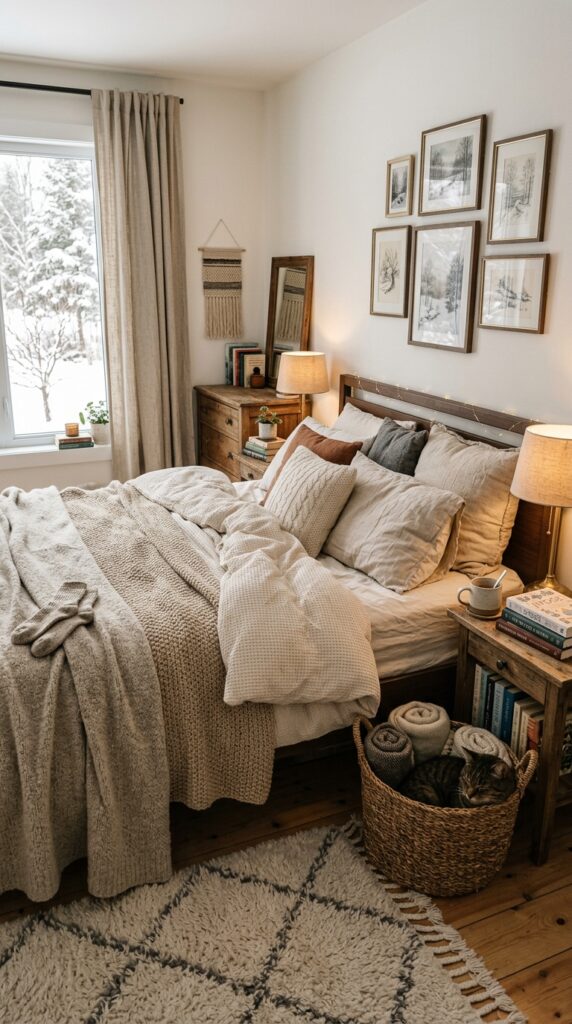
Your bedroom can feel much cozier in winter with a few simple layering changes. Crisp cotton sheets, an extra blanket, a textured throw, and warmer pillow covers create depth while still keeping the bed practical.
Start with bedding you already own. Fold an extra blanket across the lower third of the bed and add one or two warmer cushion covers rather than replacing the full set. A lot of people buy thick decorative bedding that looks beautiful but becomes frustrating to remove every night. Keep layers easy to use. This refresh can cost nothing if you work with existing linens. A new throw or pair of cushion covers may cost between $20 and $60.
9. Schedule an Afternoon Tea Break
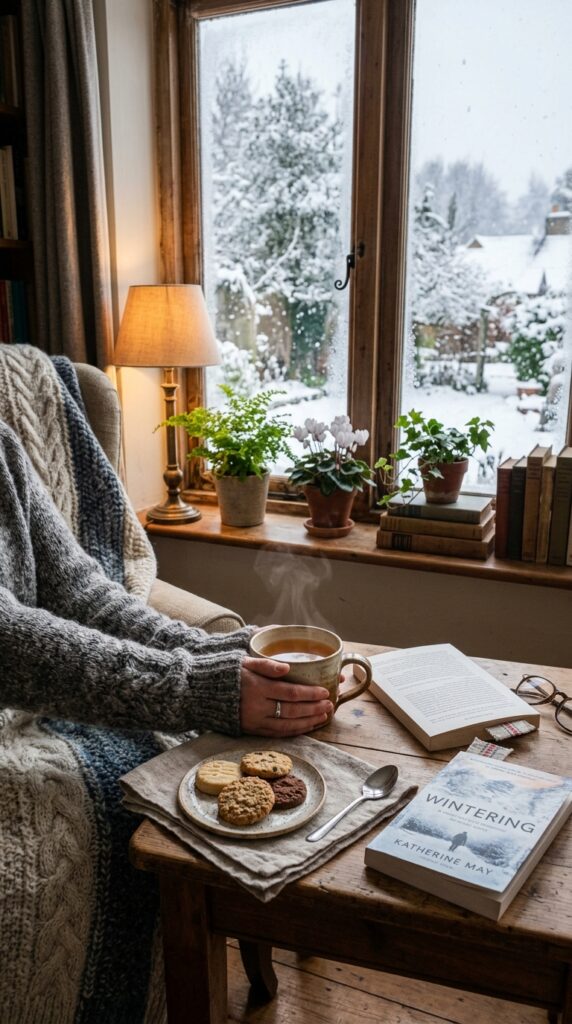
A warm drink can create a small pause in a busy winter afternoon. Tea, coffee, cocoa, or another favorite drink served in a ceramic mug can feel especially comforting beside a book, journal, or quiet window view.
Choose a regular time when you usually feel tired and make the break short enough to fit your day. Sit down for ten minutes rather than drinking while doing three other tasks. What I personally love about this habit is how simple it is. Avoid buying a large collection of teas before using what is already in your pantry. A box of tea may cost around $4 to $12, while a favorite mug and existing ingredients make the ritual almost free.
10. Create a Winter Skin Care Tray
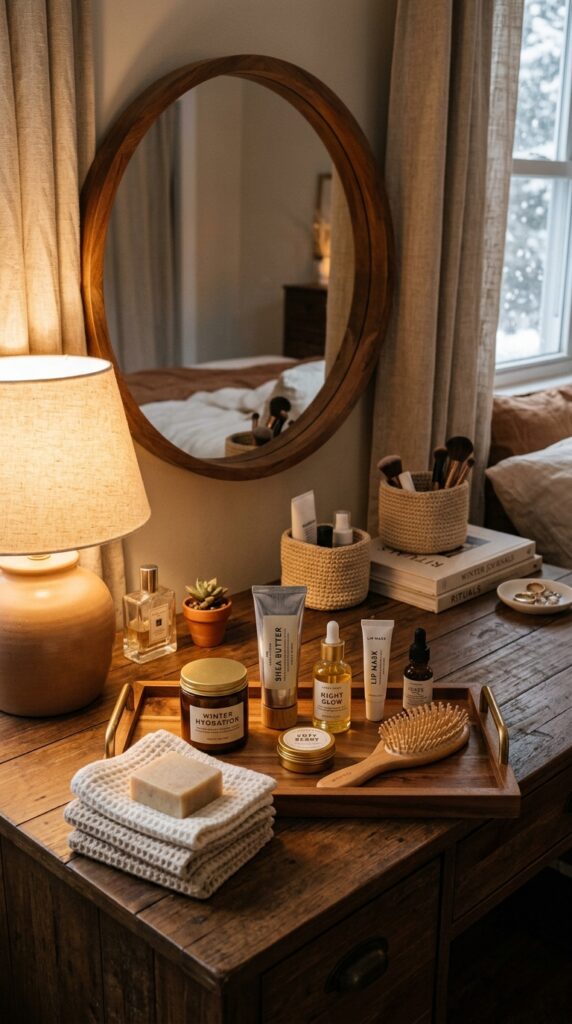
Winter routines can become cluttered when lotion, lip balm, hand cream, and skincare are spread across several drawers. Grouping the products you actually use on one tray makes the evening routine faster and easier.
Keep your regular moisturizer, lip balm, hand cream, and any other familiar products together near your bathroom mirror or bedroom vanity. Avoid adding new formulas simply because winter has started, especially if your current routine works well. In my experience, the biggest mistake is buying multiple products for the same purpose and creating more clutter than comfort. A small tray may cost between $10 and $25. Using a plate, shallow basket, or container you already own keeps the setup inexpensive.
11. Spend One Evening Without Unnecessary Screens
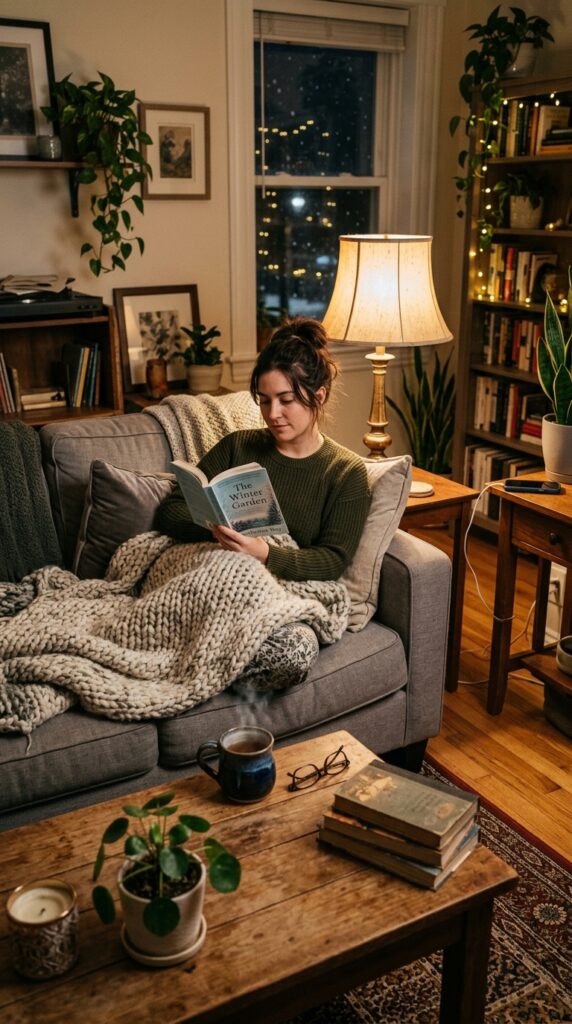
Long winter evenings can easily disappear into scrolling. Giving yourself one screen-light evening each week creates room for reading, cooking, crafts, music, or an early night without needing a strict digital detox.
Choose a two-hour window and place your phone on charge across the room. Keep one easy replacement activity ready, such as a paperback, puzzle book, knitting project, or journal. A lot of people remove the screen but forget to plan what comes next, then pick the phone up again within minutes. Make the alternative visible. This idea is free. A book from the library costs nothing, while a simple puzzle book or craft kit may cost between $5 and $30.
12. Add Gentle Movement to Cold Days
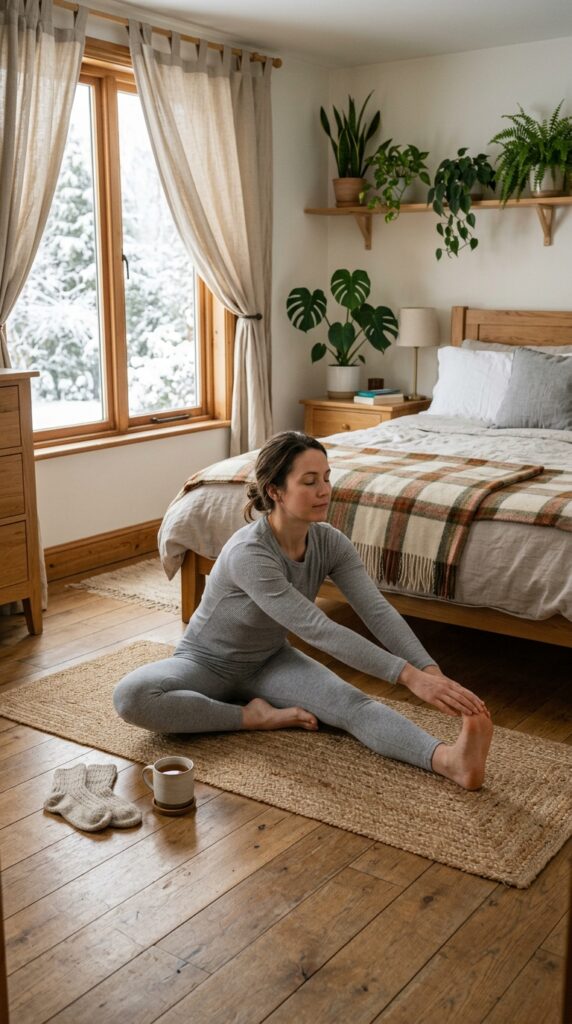
Cold weather can make staying under a blanket very tempting, especially when going outside feels unpleasant. A short stretching session, walk, or simple indoor workout can break up long hours spent sitting and give you a change of pace.
Choose an activity you can repeat without a lot of setup. Ten minutes of stretching beside the bed or a short walk during the brightest part of the day may fit more easily than a complicated routine. What I personally love about this approach is that it keeps the goal realistic. Avoid turning every movement session into a performance target. Use comfortable clothes and the space you already have. Walking is free, while a basic exercise mat may cost between $15 and $40.
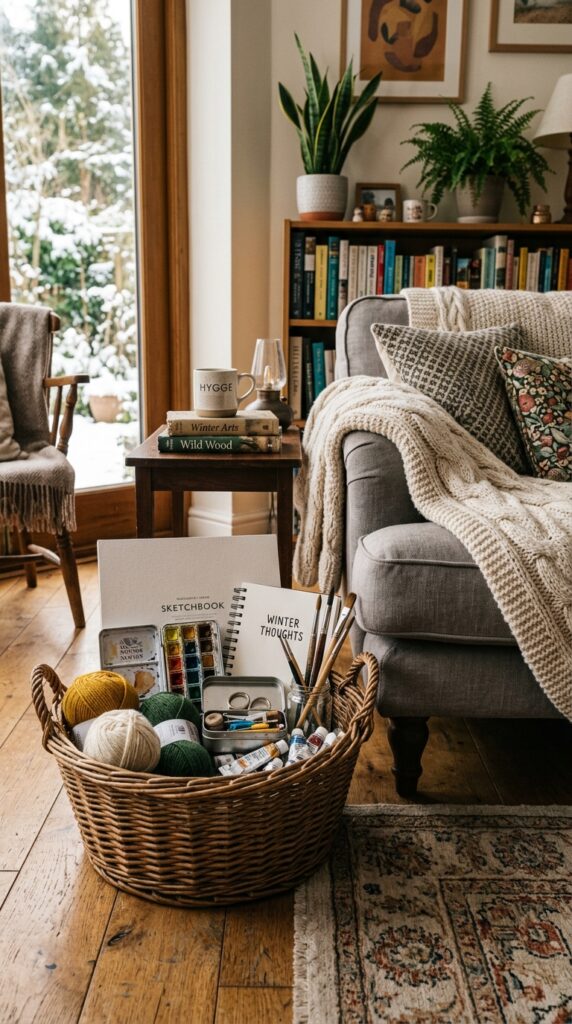
13. Keep a Winter Hobby Basket Within Reach
A hobby basket gives you something easy to pick up when cold weather keeps you indoors. Watercolor, knitting, embroidery, coloring, journaling, or puzzles can all create a quiet break without taking over the whole room.
Choose one hobby and keep only the supplies needed for a short session. Store the basket beside the sofa or under a side table so starting feels easy. In my experience, the biggest mistake is buying a large amount of craft supplies before the habit exists. Begin with a small set and add more only if you keep using it. A starter craft kit may cost between $10 and $40. Using pencils, yarn, magazines, or notebooks already at home can make the activity free.
14. Refresh One Small Area Instead of Cleaning Everything
Winter days spent indoors can make clutter feel more noticeable. Instead of turning that frustration into a full weekend cleaning project, choose one area that affects your daily routine and give it a quick reset.
Clear your bedside table, organize one bathroom drawer, tidy the coffee table, or sort the basket where scarves collect. Work for fifteen to twenty minutes and stop when the chosen area is done. A lot of people begin with one drawer and end up emptying the whole room. Keep the project contained. This kind of reset can cost nothing. If a divider, tray, or basket genuinely helps, expect to spend around $8 to $30.

15. Build a Sunday Winter Self-Care Routine
Sunday evenings can feel heavy when you are thinking about the week ahead. A short routine that combines preparation with comfort can help you feel more settled without turning the evening into a productivity marathon.
Check your calendar, prepare one outfit, refill your water bottle, and choose an easy breakfast for Monday. Then close the planner and move into something relaxing such as a warm shower or reading. I always recommend this when someone wants a change without starting over with a strict routine. Avoid spending the entire evening planning every hour of the week. Keep the practical section under twenty minutes. This routine can cost nothing, while a simple planner or bedside basket may cost $10 to $30.
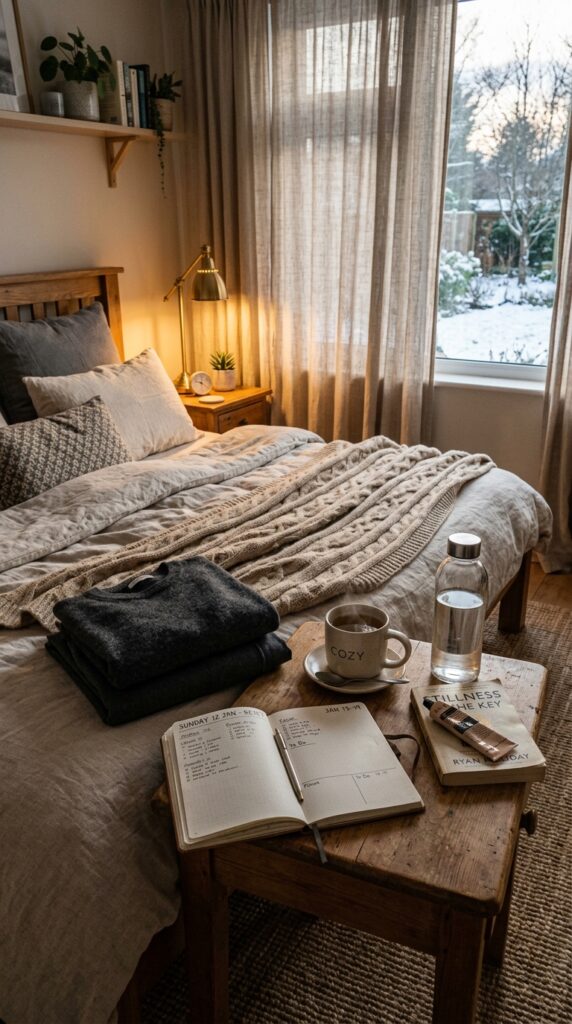
16. End the Day With a Simple Winter Wind-Down
A calm winter evening does not need a complicated ritual. Fresh pajamas, dim lighting, a tidy nightstand, and one relaxing activity can make bedtime feel much more inviting than scrolling until you are exhausted.
Choose three simple steps that you can repeat most nights. You might wash up, make tea, and read for ten minutes. Keep your phone away from the pillow if late-night scrolling tends to stretch your bedtime. What I personally love about this routine is that it works because it stays small. Avoid buying a collection of sleep accessories before testing the basics. This routine can be free. A book, soft socks, or bedside basket may cost between $10 and $30 if you want one small comfort.

Make Winter Self-Care Warm, Simple, and Useful
Winter self-care does not need to mean buying new candles, replacing your entire skincare routine, or creating a complicated schedule. Often, the changes that feel best are small ones: fresh bedding, a warm drink, an organized entryway, a simple meal, or a quiet evening with a book.
These 16 winter self-care ideas for cold and cozy days can be adapted to your home, budget, and daily routine. Start with one or two ideas that solve something that has been bothering you. Create a basket if winter essentials are scattered around the room, or plan two easy meals if cooking feels harder on dark evenings.
Use what you already own first. Rearranged furniture, existing blankets, library books, pantry ingredients, and a cleared drawer can make winter feel more comfortable without a large expense.
Which winter self-care idea would you try first? I’d love to hear what you’re planning.
Frequently Asked Questions
What are some easy winter self-care ideas at home?
Start with simple comforts such as warm showers, fresh bedding, a reading corner, an organized skincare tray, or an evening without unnecessary screens. Easy meals and a tidy winter entryway can also reduce everyday stress. Choose ideas that solve real problems in your routine.
How can I make winter feel cozier without spending much?
Use blankets, books, mugs, baskets, lamps, and clothing you already own in new ways. Rearrange one corner, layer existing bedding, and borrow books from the library. Small changes in lighting and organization can make a room feel warmer without major shopping.
What should I put in a winter self-care basket?
Useful options include warm socks, hand cream, lip balm, a paperback, tea, a small notebook, and a soft throw. Choose items you regularly use rather than filling the basket with decorative extras. Keep the basket small enough to store easily.
How can I stay motivated during cold winter days?
Keep routines simple and reduce the number of decisions you need to make. Preparing clothing, meals, or a morning drink ahead of time can make the day easier to start. Small goals are often more manageable than trying to overhaul your entire schedule.
What are good screen-free winter activities?
Reading, journaling, knitting, drawing, baking, puzzles, organizing a small area, and listening to music are easy options. Keep the supplies visible so starting does not require much effort. A hobby basket near the sofa can make screen-free evenings easier to repeat.