
16 Ways to Create a Feminine Daily Schedule That Feels Calm and Practical
Some days begin with missed alarms, unanswered messages, scattered clothes, and a task list that already feels too long. You may want a softer routine, but highly polished schedules online can seem unrealistic when you have work, study, family duties, or limited energy.
Learning 16 ways to create a feminine daily schedule is not about filling every hour with beauty routines or decorative activities. A supportive schedule should help you feel prepared, cared for, and less rushed. It can include a quiet morning drink, focused work periods, nourishing meals, simple grooming, movement, home resets, and enough time to rest.
This guide will help you arrange those habits around your real responsibilities. Each idea includes an easy way to begin, a mistake to avoid, and an approximate cost where a tool may be useful. You do not need to follow all sixteen steps every day. Choose the routines that solve your biggest problems first, then build a schedule that can change with your energy, workload, and season of life.
1. Create a Feminine Daily Schedule Around Your Real Wake Up Time
A calm morning begins with a wake up time that suits your actual responsibilities. Soft daylight through linen curtains, fresh cotton bedding, and a quiet drink can feel comforting, but only when the routine allows enough sleep. Waking extremely early is not automatically more graceful or productive.
Work backward from the time you need to leave home or begin work. Allow space for washing, dressing, breakfast, and a small delay. In my experience, the biggest mistake is copying a 5 a.m. routine when your evenings regularly end late. Choose consistency over an impressive hour. Keep your phone away from the pillow if early scrolling delays your start. A simple alarm clock may cost between $10 and $30, while adjusting your phone alarm costs nothing.
2. Give Yourself a Ten Minute Morning Buffer
Moving directly from sleep into messages, work, or household demands can make the whole morning feel abrupt. A short buffer gives you time to open the curtains, drink water, stretch, or sit quietly before the day becomes busy. The room feels gentler when warm light reaches clear surfaces and soft fabric.
Choose two or three actions that take no more than ten minutes together. You might make the bed, wash your face, and prepare tea. What I personally love about this habit is that it adds calm without requiring a long morning ritual. Avoid filling the buffer with several beauty steps, journaling prompts, and chores. It should reduce pressure, not create another checklist. This routine can be free. A water carafe, mug, or bedside tray may cost between $10 and $35.
3. Use a Short Grooming Routine as a Daily Anchor
A simple grooming routine can signal that the day has started. Brushed hair, moisturized skin, fresh clothing, and neat nails can help you feel prepared without requiring a crowded vanity or an hour in front of the mirror.
Keep your most used products together on one tray. Choose a routine that fits ordinary weekdays, then save longer beauty treatments for another time. A lot of people buy several new products when they want their mornings to feel more polished. This often creates clutter and decision fatigue. Use what already works before adding something new. A basic collection of moisturizer, hair care, hand cream, and lip balm may cost between $20 and $60. The goal is consistent care rather than a complicated routine.
4. Choose Three Priorities Instead of a Long Task List
A crowded task list can make the day feel unsuccessful before it begins. Choosing three priorities creates direction while leaving room for meals, travel, and unexpected needs. A clear notebook beside a warm drink feels easier to approach than a page filled with twenty urgent tasks.
Write one important responsibility, one practical task, and one personal action. Complete those before adding more. In my experience, the biggest mistake is treating every task as equally urgent. Ask which items truly need attention today and which can wait. A paper planner may cost between $10 and $35, while a phone note or simple sheet of paper is free. Keep the wording specific, such as “send project draft” instead of “work on project.”
5. Build Your Feminine Daily Schedule Around Focus Blocks
Constantly switching between messages, work, cleaning, and social media can leave you tired without producing much progress. Focus blocks create clear periods for one type of task. A quiet desk, clean surface, and soft natural light can make concentrated work feel less scattered.
Choose a block between twenty five and ninety minutes, depending on your attention and responsibilities. Silence unnecessary notifications and keep only the materials needed for that task nearby. Follow the block with a short break to stand, refill water, or rest your eyes. A common mistake is scheduling several long sessions without recovery time. Begin with one focused period and adjust from there. A basic timer is free on most phones, while a physical timer may cost between $10 and $25.
6. Prepare a Simple Breakfast You Will Actually Eat
Breakfast feels supportive when it is easy enough to prepare on a normal weekday. Warm oats, toast with eggs, yogurt with fruit, or a simple smoothie can add color and texture to the morning without requiring a long recipe.
Choose two or three reliable options and keep the ingredients visible or grouped together. Prepare fruit, overnight oats, or dry ingredients the evening before when mornings are rushed. A lot of people plan elaborate breakfasts, then skip eating because the routine takes too long. Build around your appetite and schedule. Storage jars or containers may cost between $10 and $35, while using existing bowls and containers costs nothing. Sit down for a few minutes when possible instead of eating while searching for clothes or packing a bag.
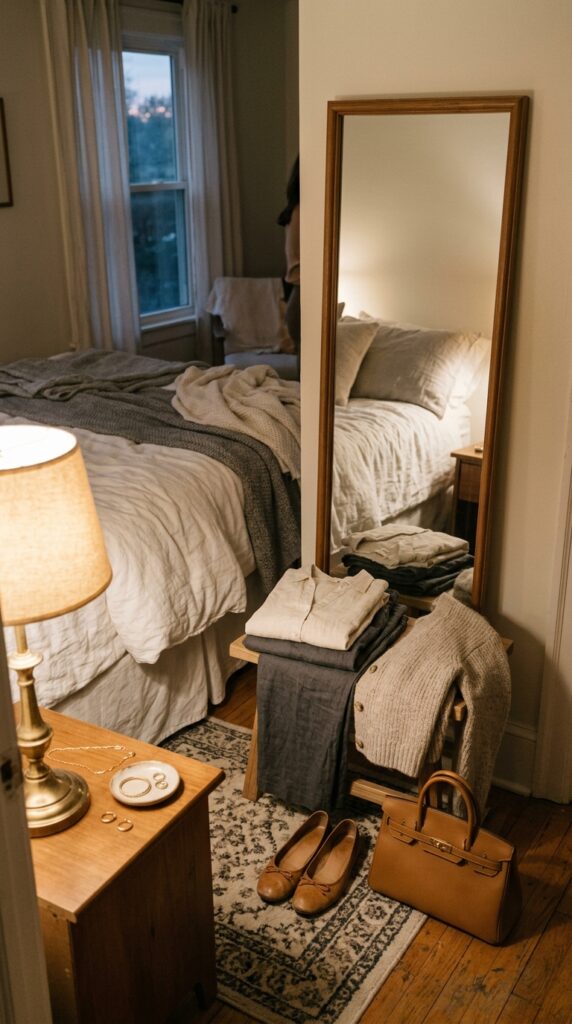
7. Plan Your Outfit the Night Before
Choosing clothes in a hurry can lead to uncomfortable combinations, missing buttons, or shoes that do not suit the weather. Preparing an outfit at night gives you time to consider fabric, movement, temperature, and your actual plans.
Hang the main pieces together and place shoes, a bag, and one accessory nearby. Check the weather before deciding. What I personally love about this habit is that it reduces morning decisions without requiring a larger wardrobe. Avoid choosing an outfit only because it looks attractive on a hanger. Sit, walk, and move comfortably in the clothes. An over door hook may cost between $10 and $25. A small steamer can cost between $25 and $60, though careful folding and hanging may be enough.
8. Add Gentle Movement Where It Naturally Fits
Movement does not need to become a long workout placed into an already full day. A walk after breakfast, stretching between work blocks, or a short evening yoga session can help your body feel less tense. Soft cotton clothing, fresh air, and a steady pace often make movement easier to repeat.
Choose a time connected to an existing habit. Stretch after making the bed or walk after lunch. In my experience, the biggest mistake is planning exercise for the busiest part of the day, then feeling guilty when it does not happen. Start with ten to twenty minutes and adjust based on your energy. A basic exercise mat may cost between $15 and $40. Walking and simple stretches require no equipment.

9. Protect a Real Lunch Break
Eating while answering emails or standing at the kitchen counter can make the middle of the day feel unfinished. A real break gives your attention and body a chance to reset. A simple meal on a ceramic plate, fresh water, and a clear table can create a welcome pause.
Schedule at least fifteen to thirty minutes when possible. Move away from your work surface and put the phone aside for part of the meal. A lot of people skip lunch to finish more work, then lose focus later in the afternoon. Prepare easy components such as cooked grains, chopped vegetables, soup, or sandwiches ahead of time. Food containers may cost between $15 and $50. A packed lunch can also reduce spending compared with frequent takeout.

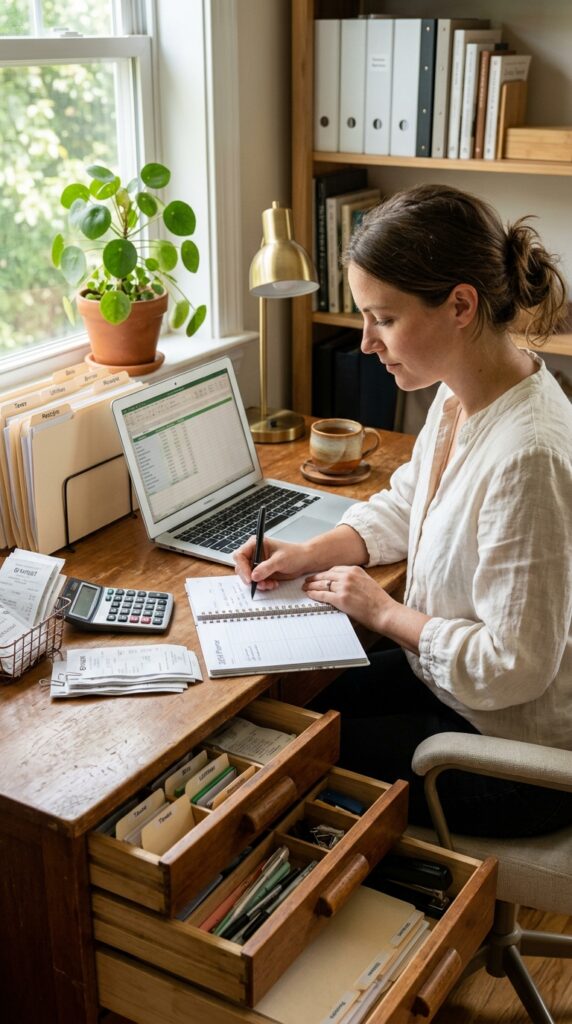
10. Create a Feminine Daily Schedule With an Admin Hour
Small practical tasks can scatter across the week and occupy more mental space than they deserve. An admin block gives bills, appointments, emails, returns, and household planning a clear place. A tidy desk, labeled folder, and simple notebook can make these jobs feel more contained.
Choose one or two regular sessions each week rather than handling every message the moment it arrives. Group similar actions together, such as booking appointments or paying bills. In my experience, the biggest mistake is allowing the admin block to grow into several hours of unrelated browsing. Write a short list before starting and stop when the scheduled time ends. File folders and a small document box may cost between $10 and $40. Digital folders and calendar reminders are free.
11. Schedule a Short Afternoon Pause
Energy often drops in the afternoon, especially after several hours of work or study. A quiet pause with water, tea, fresh air, or gentle stretching can help you return to the day without forcing yourself through exhaustion.
Set aside ten to fifteen minutes and choose an activity that does not create more stimulation. Step outside, sit near a window, or make a warm drink. What I personally love about this habit is that it prevents a small energy dip from becoming hours of distracted scrolling. Avoid using the entire pause to check social media, especially if it leaves you more restless. This routine can cost nothing. A favorite mug, small tray, or herbal tea may cost between $5 and $25.

12. Give Home Care a Clear Time Limit
Household tasks can expand until they fill every available hour. A defined reset period keeps the home functional without turning your schedule into constant cleaning. Folded linen, clear counters, and an empty chair can create calm without making the room look unused.
Choose one ten to twenty minute home reset each day. Focus on dishes, laundry, visible surfaces, or items that affect tomorrow morning. A lot of people begin with a quick tidy and continue into drawers, closets, and deep cleaning. Use a timer and stop when it ends. A carry basket for misplaced items may cost between $10 and $30. Hooks, trays, and storage bins may cost between $10 and $40 when they solve a repeated problem.

13. Make Time for One Personal Interest
A daily schedule should include something that is not connected to productivity, appearance, or other people’s needs. Reading, sketching, sewing, gardening, music, or learning a language can make the day feel more personal.
Choose an activity that fits into twenty or thirty minutes. Keep the supplies easy to reach so beginning does not require a long setup. In my experience, the biggest mistake is turning a relaxing interest into another performance goal. You do not need to post it, master it quickly, or earn money from it. Library books and free tutorials can keep the cost low. A basic hobby kit may range from $15 to $70, depending on the activity.

14. Create a Gentle Evening Beauty Reset
An evening routine can help separate the active day from rest. Washing your face, brushing your hair, changing into fresh sleepwear, and applying hand cream can create a soft transition without becoming a long beauty ritual.
Keep the routine simple and place the products together. Dim the lighting and use a warm bedside or vanity lamp when possible. A lot of people wait until they are extremely tired, then skip every step. Begin the reset earlier, perhaps after dinner or your final household task. A basic evening care collection may cost between $20 and $60. Use products you already tolerate well instead of buying a new routine all at once.

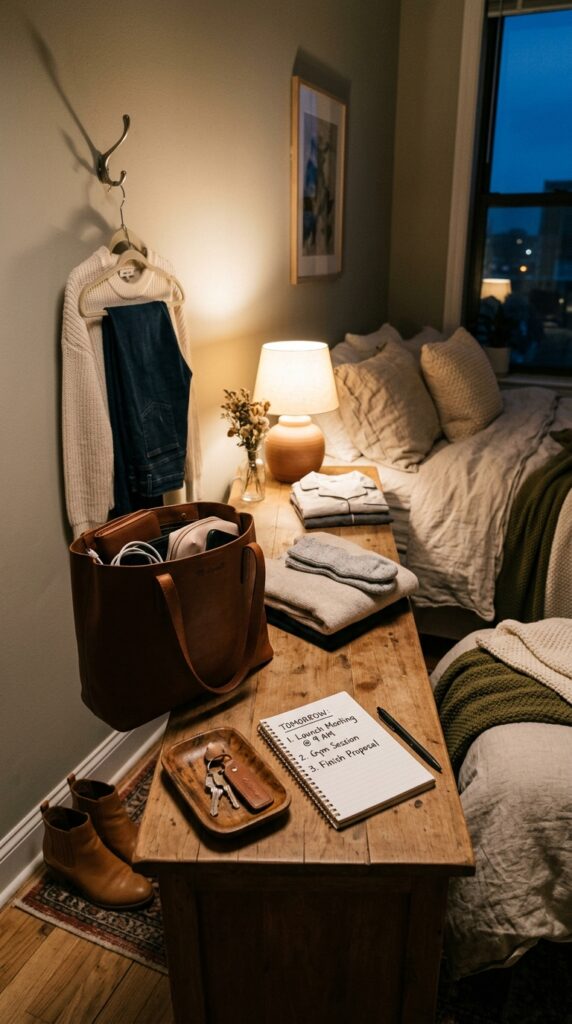
15. Prepare Tomorrow Before You Start Winding Down
A few minutes of preparation can make the next day feel less rushed. Packing your bag, checking your calendar, setting out clothing, and clearing the kitchen table create a sense of closure. Warm light, a clean surface, and neatly placed essentials can make the home feel ready for rest.
Write tomorrow’s three priorities and place keys, documents, or lunch supplies where you will see them. What I personally love about this habit is that it reduces early morning searching. Avoid using this time to begin new work or review every unfinished task. Keep it short and practical. An entryway tray or wall hook may cost between $10 and $35, while calendar reminders are free.
16. Keep Your Feminine Daily Schedule Flexible
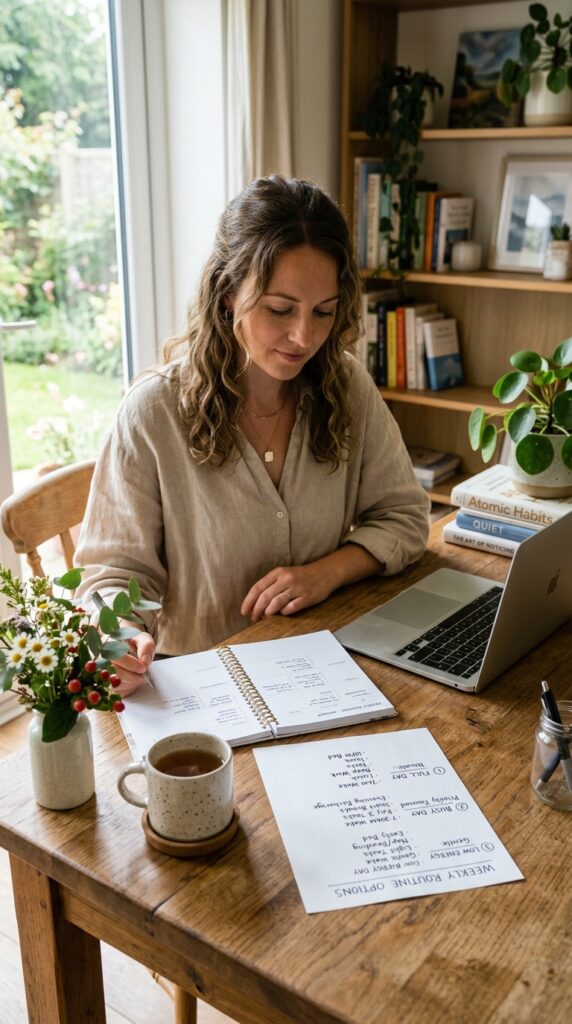
A supportive routine should change when your workload, energy, health, or responsibilities change. Some days may include a full morning routine and an evening hobby. Other days may require a simple meal, essential work, and early rest. Both can belong within a well planned life.
Create a full version, a busy day version, and a low energy version of your schedule. In my experience, the biggest mistake is believing that a changed routine means you have failed. Flexibility helps habits survive real life. Review your schedule once a week and remove anything that no longer helps. This reflection costs nothing. A planner may cost between $10 and $35 if you enjoy writing, but a digital calendar works just as well.
Create a Schedule That Supports Your Real Life
A feminine routine does not need to be decorative, expensive, or filled with activities from morning until night. It can simply help you move through the day with more care. A prepared outfit, nourishing lunch, focused work period, and short evening reset may do more for your peace than a highly detailed timetable.
These 16 ways to create a feminine daily schedule are meant to be adjusted. Begin with one or two habits connected to your biggest source of stress. Prepare tomorrow’s clothes if mornings feel chaotic, or protect a lunch break if work regularly takes over your day.
Use what you already own before buying planners, organizers, clothing, or beauty products. A notebook, phone timer, clean tray, and comfortable outfit are enough to begin. The most useful schedule is one you can follow during ordinary weeks, not only when everything goes according to plan.
Which part of your daily schedule would you change first? I’d love to hear what you’re planning.
Frequently Asked Questions
What makes a daily schedule feel feminine?
A feminine schedule may include personal care, comfortable style, nourishing meals, a calm home, relationships, and rest. It does not need to follow one appearance or lifestyle. The most important feature is that it supports your needs and values.
How can I create a feminine routine when I work full time?
Build habits around the time you already control. Prepare clothes and lunch at night, use a short morning buffer, and schedule one evening reset. Keep weekday routines shorter than weekend routines.
Do I need to wake up early for a calm daily schedule?
No. Your wake up time should support enough sleep and fit your responsibilities. A consistent routine matters more than waking at a fashionable hour. Work backward from when you need to begin the day.
How do I follow a schedule without feeling restricted?
Use time blocks and priorities rather than planning every minute. Leave open space between demanding tasks and create shorter versions for busy days. Review the schedule regularly and remove habits that create unnecessary pressure.
What should I add to my schedule first?
Begin with the area causing the most stress. Prepare the night before if mornings feel rushed, or create a focused work block if distractions are the main problem. One repeated habit is easier to maintain than sixteen changes at once.