
18 Feminine Evening Routine Ideas for a Calm Night
Evenings can disappear quickly when you move from work, errands, or household tasks straight into scrolling, unfinished chores, and a cluttered bedroom. By the time you get into bed, your mind may still feel busy and your space may not feel restful. A calmer night does not require a long beauty routine or an expensive bedroom makeover.
These 18 feminine evening routine ideas for a calm night focus on simple habits that make the end of the day feel softer and more organized. You will find practical ways to reduce visual clutter, care for your skin and hair, prepare for tomorrow, and create a bedroom that feels warm rather than staged.
Each idea can be shortened or adjusted around your schedule. You might have an hour to unwind, or you may only have fifteen minutes after a long day. The goal is to build a routine that supports your real life through warm light, fresh cotton, comfortable sleepwear, a clear bedside table, and fewer morning decisions.
1. Begin Your Feminine Evening Routine by Putting Away Your Phone
A quiet evening becomes difficult when messages, short videos, and notifications keep pulling your attention back to the screen. Placing your phone away from the bed creates a small boundary between the busy outside world and your personal nighttime space. The room can feel noticeably calmer when the brightest object is no longer in your hand.
Choose a specific place for your phone, such as a charging tray on a dresser or a shelf across the room. Start with fifteen screen free minutes before bed instead of creating a strict rule you cannot maintain. In my experience, the biggest mistake here is relying on willpower while keeping the phone beside the pillow. Move it physically out of reach. A simple charging tray may cost between $8 and $25, while using an existing bowl or dish costs nothing.
2. Replace Bright Overhead Light With a Softer Glow
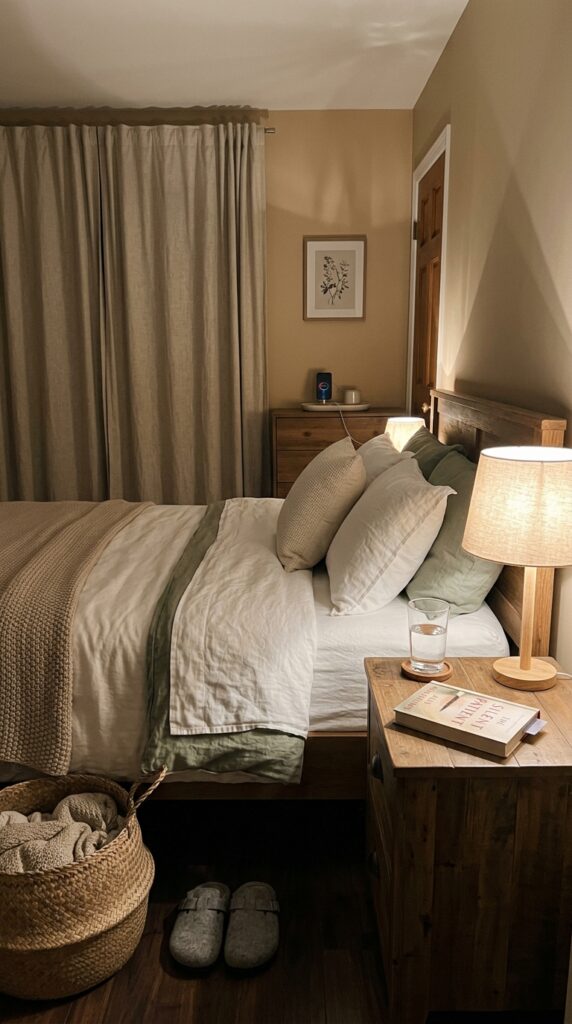
Bright overhead lighting can make the bedroom feel active and unfinished, even when the day is nearly over. A bedside lamp, shaded floor lamp, or small wall light creates a warmer pool of light around the places you actually use. Soft shadows across linen bedding and natural wood help the room feel quieter.
Switch off the main light thirty to sixty minutes before bed and use one or two smaller lamps instead. Choose warm bulbs and place them near the bed, vanity, or reading chair. A lot of people buy several decorative lights before checking what they already own. Simply changing a harsh bulb can make a noticeable difference. Warm LED bulbs usually cost between $5 and $15, while a basic bedside lamp may range from $20 to $60. Keep candles away from bedding and never leave an open flame unattended.
3. Reset One Visible Surface
A cluttered vanity, bedside table, or bathroom counter can keep your mind focused on unfinished tasks. Clearing one small surface gives the room a cleaner visual line without turning the evening into a full cleaning session. A simple tray with hand cream, a book, and a water glass often feels more restful than scattered products.
Choose one surface and set a five minute timer. Return daily items to drawers, place loose products in a basket, and throw away rubbish. What I personally love about this habit is that the result is visible right away. Avoid trying to reorganize an entire room late at night, since that can create more mess and delay rest. A small tray or woven basket generally costs between $8 and $30, but a repurposed box or dish works well too.
4. Take a Warm Shower Without Rushing
A warm shower can mark the point where the active part of the day ends. Fresh towels, gentle steam, and a familiar body wash create a comforting transition into the evening. The routine does not need to be long or filled with several products to feel restorative.
Place your towel, sleepwear, and basic shower products within reach before you begin. Keep daily items in a small caddy so the edge of the tub or shower floor stays clear. In my experience, the biggest mistake is saving every grooming task for the same evening. Separate longer hair care or body care steps from your basic nightly shower when time is limited. A shower caddy usually costs $10 to $30, while replacing worn towels may cost between $20 and $60.
5. Keep Nighttime Skin Care Simple
An evening skincare routine feels easier to maintain when it includes only the products you actually use. Cleansing away makeup, applying moisturizer, and caring for dry lips can create a clean, comfortable finish to the day. A tidy bathroom tray makes the routine feel calm instead of complicated.
Store your evening products together so you do not search through drawers. Follow product instructions and introduce new items one at a time. A lot of people create a long routine after seeing several products online, then stop because it takes too much time. Start with a cleanser and moisturizer that suit your skin, then add other products only when needed. A simple routine may cost between $20 and $70, depending on the formulas you choose. Use sunscreen during the day rather than as an evening step.
6. Choose Feminine Sleepwear That Feels Comfortable
Comfortable sleepwear can help the evening feel more settled, especially after wearing structured clothes all day. Soft cotton, breathable linen, or smooth satin in muted pink, cream, blue, or floral prints can add a gentle visual touch without sacrificing ease.
Choose fabric according to the weather and how you sleep. Cotton sets work well for regular use, while a light robe is useful during skincare or hair care. What I personally love about this step is that you can improve it using pieces you already own. Fold your favorite set in an easy to reach drawer rather than mixing it with daily clothing. Avoid buying sleepwear based only on appearance if the fabric feels scratchy or too warm. A comfortable set may cost between $20 and $60, while a robe often ranges from $25 to $80.
7. Prepare a Warm Evening Drink
A warm drink can create a slow, familiar pause before bed. Herbal tea, warm milk, or another caffeine free option can feel comforting when served in a ceramic cup beside a book or journal. The steam, soft light, and quiet kitchen sounds make an ordinary habit feel more personal.
Keep a small selection of drinks together in one basket or cabinet. Prepare only what you will actually enjoy, and avoid very large servings if they interrupt your sleep with extra bathroom trips. A lot of people turn this into an elaborate ritual and buy several unused tea blends. Begin with one familiar option. A ceramic mug and tea basket may cost between $10 and $35, while using what is already in your kitchen keeps the habit inexpensive. Consider your own dietary needs when choosing ingredients.
8. Lay Out Tomorrow’s Outfit
Choosing clothes at night can remove one of the first decisions from your morning. A clean blouse, comfortable trousers, simple dress, or layered knit looks more inviting when it is ready beside coordinated shoes and a bag. This also gives you time to notice wrinkles, missing buttons, or weather problems.
Check the forecast and your schedule before choosing. Hang the outfit on a wardrobe hook and place accessories in a small dish. In my experience, the biggest mistake is planning clothing that looks attractive but does not suit the actual day. Consider walking, meetings, weather, and comfort. Closet organization does not require a complete system. An over door hook may cost between $10 and $25, while matching hangers usually range from $15 to $40.
9. Pack Your Bag Before Bed
Searching for keys, chargers, documents, or lip balm can turn a calm morning into a rushed one. Packing your bag in the evening gives each necessary item a clear place and helps you notice anything that needs charging, cleaning, or replacing.
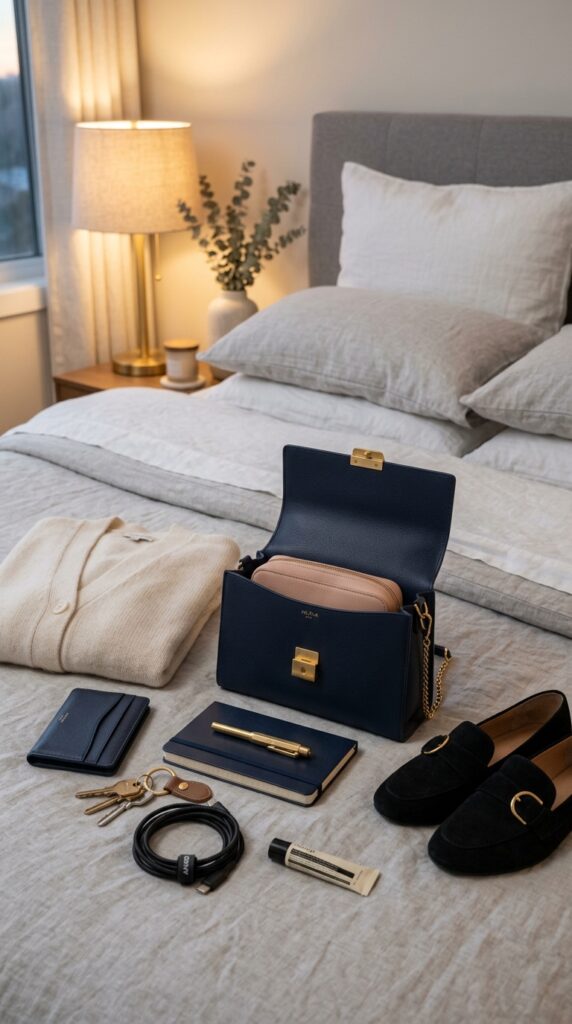
Empty old receipts and rubbish first, then add only what you need for the next day. Use a small pouch for loose items such as cables, makeup, or medication. A lot of people keep adding things without removing anything, which makes the bag heavy and difficult to search. Reset it regularly rather than buying a larger one. A small organizer pouch may cost between $8 and $25. Place the packed bag near your shoes or the door so it is easy to remember.
10. Add Journaling to Your Feminine Evening Routine
A few written lines can help move unfinished thoughts out of your mind and onto paper. The page might hold a worry, a good moment, or one thing you want to remember. A notebook beside a warm drink and soft lamp light creates a private pause without requiring a long writing session.
Try writing what went well, what felt difficult, and what can wait until tomorrow. Keep the journal on the bedside table or near your evening chair. What I personally love about this habit is that there is no need to make the pages decorative. Avoid turning journaling into another task you need to perform well. Three honest sentences are enough. A notebook and pen may cost between $8 and $25, while any unused notebook at home will work.
11. Read Something Away From a Screen
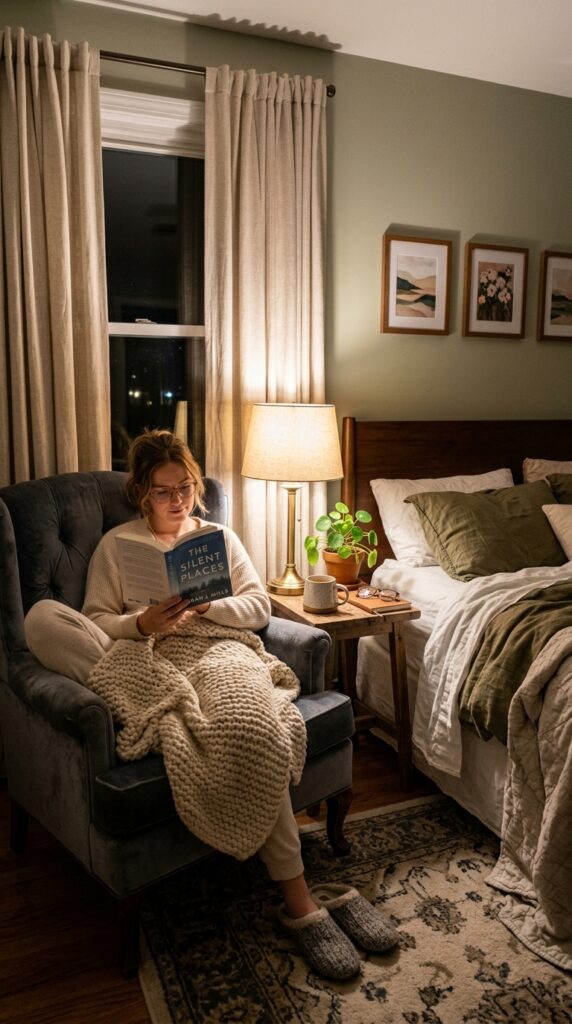
Reading a physical book or printed magazine can give your attention one quiet place to rest. The soft sound of turning pages and the weight of a book feel different from scrolling through fast moving content. A reading chair, bedside lamp, and textured throw can make even ten minutes feel separate from the day.
Keep one book visible rather than stacking several unfinished choices beside the bed. Choose something enjoyable and easy to return to. In my experience, the biggest mistake is selecting difficult reading because it seems more productive. Evening reading should not feel like homework unless that is what you genuinely enjoy. Use a bookmark and stop when you feel tired. A paperback may cost between $10 and $25, while a library book keeps the habit free.
12. Stretch Gently for Five Minutes
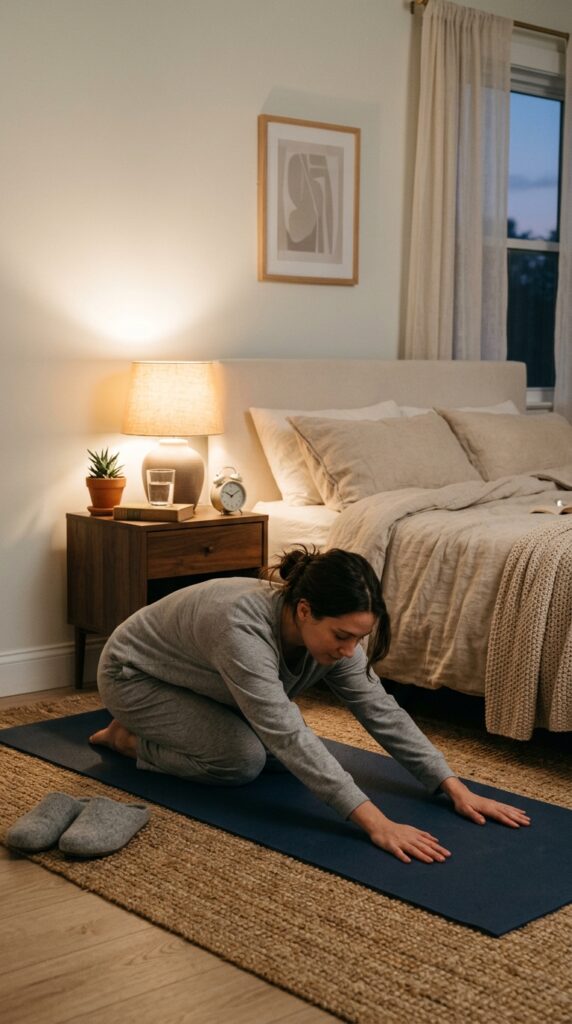
A brief stretch can help you notice where your body feels tight after sitting, standing, driving, or working. Slow shoulder movements, gentle forward folds, and ankle circles can fit into a small bedroom corner without becoming a full exercise session.
Choose movements that feel comfortable and stop if anything causes pain. Use a mat, rug, or folded blanket and keep the routine between three and ten minutes. A lot of people choose a long video, then skip stretching entirely when the evening is busy. Create a shorter version you can remember without instructions. A simple exercise mat usually costs between $15 and $40. Loose cotton sleepwear or leggings allow you to move comfortably without changing into a separate outfit.
13. Refresh the Bed Before Getting In
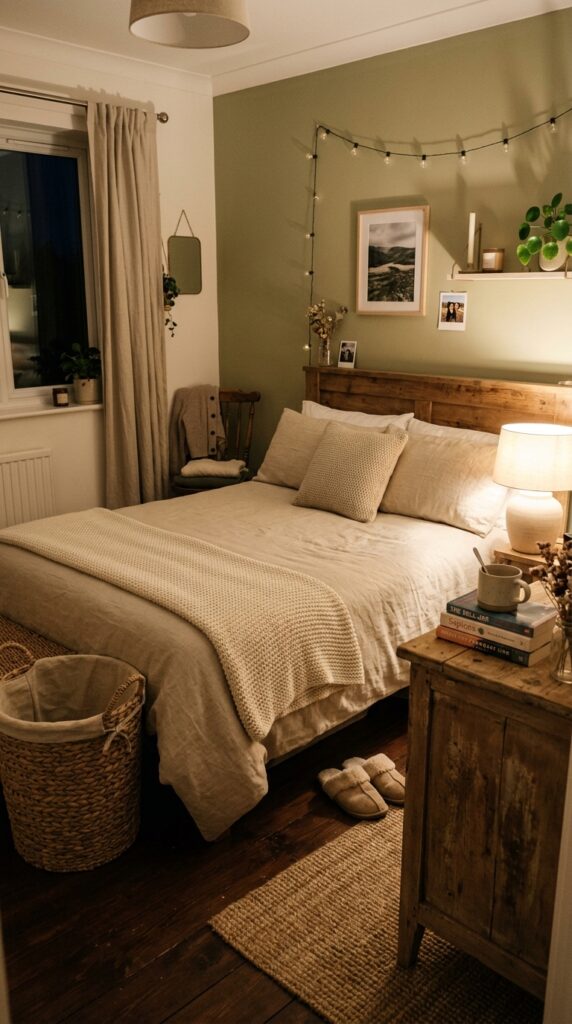
A bed feels more inviting when the sheets are smooth, the pillows are arranged, and clothes are not piled across the duvet. This small reset creates a clear place to rest, even when the rest of the room is not completely organized.
Pull the bedding straight, shake out the pillows, and fold the throw near the foot of the bed. Place worn clothing in a basket rather than on a chair. A lot of people add too many decorative cushions and then move them to the floor every night. Keep only the pieces you are willing to arrange regularly. A woven laundry basket may cost between $20 and $50, while fresh pillowcases generally range from $15 to $40. Wash bedding according to its care label.
14. Protect Your Hair Overnight
A simple nighttime hair routine can reduce morning tangles and help your style last longer. A loose braid, low twist, bonnet, scarf, or soft hair tie can keep hair more secure while you sleep. The best method depends on your hair texture, length, and usual styling.
Keep your nighttime brush, scarf, bonnet, or ties in one drawer near the mirror. Detangle gently from the ends upward and avoid securing the hair too tightly. In my experience, the biggest mistake is copying a method that does not suit your own texture. Choose comfort over a complicated routine. A satin bonnet or scarf often costs between $10 and $30, while soft ties may cost $5 to $15. Wash fabric hair accessories regularly to keep them fresh.
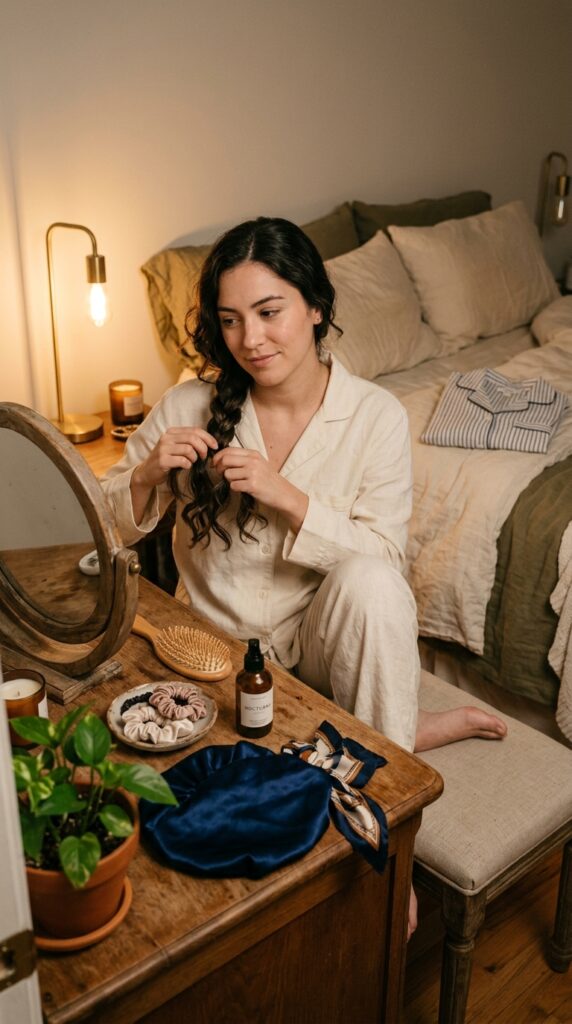
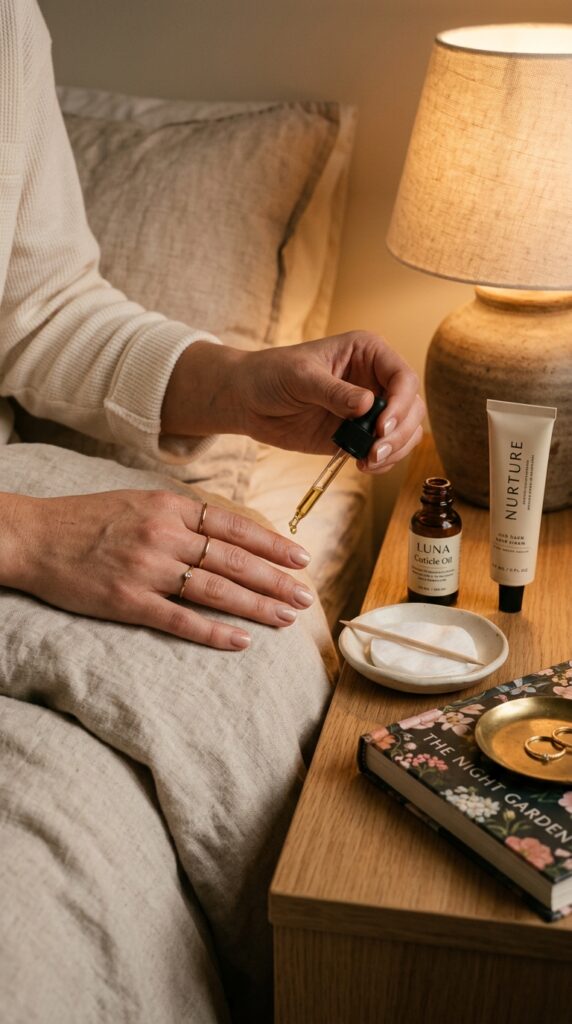
15. Care for Your Hands and Nails
Hands often feel dry after washing, cleaning, typing, or working through the day. Applying hand cream and a small amount of cuticle oil can become a short finishing step before bed. The soft scent and smooth texture feel especially comforting beside fresh cotton sheets.
Keep one hand cream and one cuticle oil on the bedside table or vanity. Massage a small amount into the skin and around each nail. What I personally love about this habit is that it takes less than two minutes. Avoid applying so much product that your hands feel slippery against bedding or your phone. A hand cream and basic cuticle oil usually cost between $10 and $30. You can also use a small amount of plain moisturizer around the nails if you do not own a separate oil.
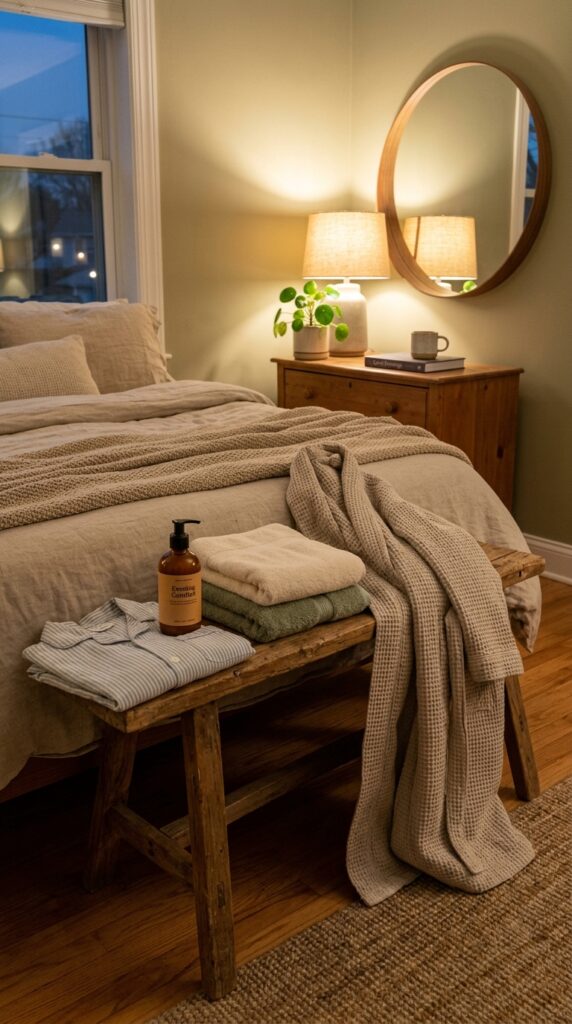
16. Use Body Lotion as a Quiet Finishing Ritual
Applying lotion after a shower can make the evening feel complete. A light formula, soft robe, and warm bathroom light create a gentle transition into sleepwear. Choose a fragrance that feels calm to you, or use an unscented product if you prefer something simple.
Store one daily lotion where you can reach it instead of keeping several half used bottles in different rooms. Apply it to areas that tend to feel dry and give it a moment to absorb before dressing. A common mistake is buying several scented products that compete with one another. One light fragrance is often enough. Body lotion generally costs between $10 and $30, while a richer cream may range from $15 to $40. Follow product instructions if your skin is sensitive.
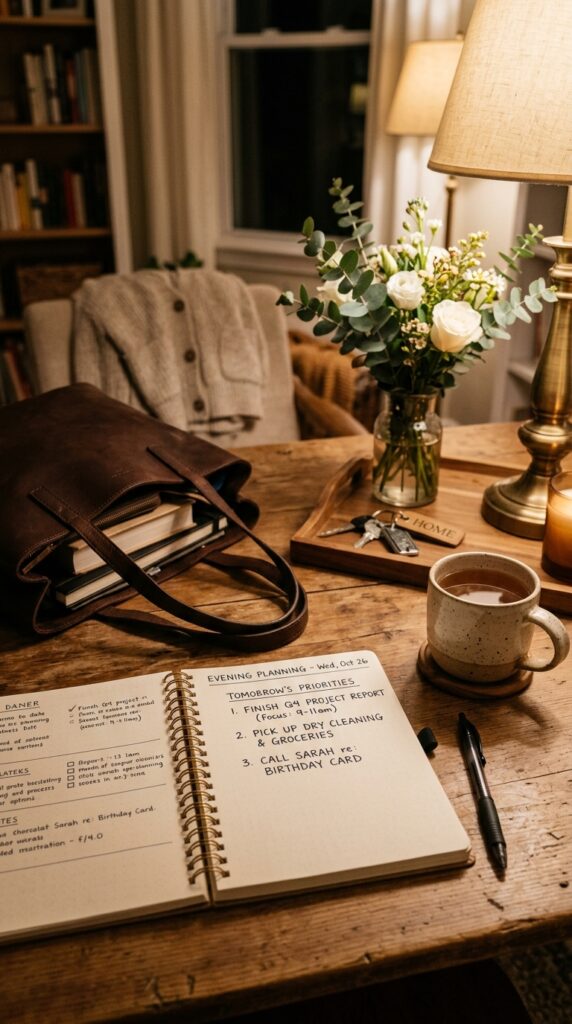
17. Write a Short Plan for Tomorrow
A short plan helps prevent tomorrow’s responsibilities from circling through your mind at night. Writing down appointments, one main task, and a few smaller reminders gives those thoughts a clear place to wait.
Use a paper planner, note card, or calendar app before putting your phone away. Choose three realistic priorities rather than writing every possible task. In my experience, the biggest mistake is creating a long list that already feels impossible before the morning begins. Leave open space for delays, rest, and unexpected needs. A planner may cost between $10 and $35, but scrap paper works just as well. Place the finished list beside your packed bag or breakfast area.
18. Close Your Feminine Evening Routine With a Quiet Bedroom Check
The final minutes before bed can be very simple. Dim the remaining light, check that doors are locked, place water beside the bed, and make sure anything electrical is safely switched off. This small check helps the room feel settled and ready for the night.
Create the same short order each evening so you do not have to think about it. Check the door, close the curtains, place your phone away, and turn on the alarm. I always recommend this when someone wants a calm night without building a long routine. Avoid adding several new steps at once. A routine that takes three minutes is more likely to last than one that takes an hour. Use the lamp, tray, alarm, and storage items you already own before purchasing anything new.
Create an Evening Routine That Supports Your Real Life
A calm evening does not require a luxury bathroom, a large beauty collection, or a bedroom that always looks camera ready. The most useful routines are usually small. Clearing one surface, laying out tomorrow’s clothes, or reading for ten minutes can create a softer end to an ordinary day.
These 18 feminine evening routine ideas for a calm night are meant to fit around your responsibilities rather than create more pressure. Start with one or two habits that solve a current problem. Put your phone across the room if scrolling keeps you awake, or pack your bag at night if mornings feel rushed.
Use what you already own before buying new organizers, lamps, sleepwear, or skincare. Fresh pillowcases, a cleared tray, and a favorite mug can make familiar surroundings feel more comforting. Let the routine remain flexible on busy nights.
Which feminine evening routine idea would you try first? I’d love to hear what you’re planning.
Frequently Asked Questions
How long should an evening routine take?
An evening routine can take anywhere from ten minutes to an hour, depending on your schedule. Start with a short version that includes three or four useful habits. A routine you can repeat regularly is more helpful than a long one you often skip.
What should I include in a simple nighttime routine?
Focus on basic care, preparation, and a calmer environment. You might wash your face, prepare tomorrow’s clothes, clear the bedside table, and put your phone away. Add other habits only when they fit naturally.
How can I make my bedroom feel calmer at night?
Use warm lamps instead of bright overhead light and clear one visible surface. Keep laundry in a basket and limit decorative items on the bed. Fresh bedding, closed curtains, and fewer glowing screens can also make the room feel quieter.
Do I need expensive products for a feminine evening routine?
No. Many useful habits cost nothing, including laying out clothes, packing your bag, stretching, journaling, and clearing clutter. Use the products and storage items you already own before buying anything new.
How can I stay consistent with an evening routine?
Connect each habit to something you already do. For example, pack your bag after dinner or apply hand cream after turning on the bedside lamp. Keep a shorter version for busy evenings so the routine remains realistic.